Industry News

Apparel industry insights for B2B buyers, covering sourcing trends, sustainability and compliance standards, supply chain developments, trade regulations, Incoterms® 2020, and market changes affecting apparel production and international sourcing.

Synthetic fleece fabric showing microfibers shedding under running water, environmental laboratory setting.

Microfiber Pollution Regulation: California AB 1628 and EU Microfiber Rules

08/07/2026

JINJIANG, China — Microfiber pollution from synthetic textile washing is now subject to regulatory action in both California and the European Union, with material implications for garment exporters serving outdoor, activewear, and fast fashion categories where synthetic fiber content is highest. For mid-market apparel brands sourcing synthetic-rich product ranges, the 2026 regulatory landscape is no longer about voluntary commitments but about binding rules with enforcement teeth. California AB 1628: Microfiber Filtration California Assembly Bill 1628, signed in 2024, requires microfiber filtration on new washing machines sold in California starting January 1, 2027. While the bill targets washing machine manufacturers, the implication for apparel brands is that synthetic garments sold in California will increasingly be washed under filtration conditions that capture a portion of shed microfibers. For garment exporters, the direct impact of AB 1628 is modest in the short term. The bill does not impose microfiber testing or certification requirements on apparel products directly. However, brands may begin to request microfiber-shed data on synthetic products, particularly for activewear and outdoor categories where the issue has received significant consumer attention. EU Microfiber Pollution Initiatives The EU has taken a different regulatory approach, focusing on: EU Strategy for Textiles and the Circular Economy (2022): Identified microfiber pollution as a priority and called for industry action, voluntary commitments, and pre-competitive research. REACH restrictions on synthetic textile microfibers: Under review as of 2026, with a potential restriction proposal expected in 2027 or 2028. Eco-design for Sustainable Products Regulation (ESPR): Includes textile products in scope, with potential microfiber-related requirements under delegated acts. The EU approach is more comprehensive than California’s, with potential requirements extending from product design to consumer information and end-of-life management. What Brands Are Doing Major outdoor and activewear brands have been active on microfiber pollution for several years. The most common responses include: Yarn selection: Use of longer filament yarns, texturized constructions, and tighter weaves that reduce shedding during washing. Fabric construction: Brushed and raised finishes tend to shed more than flat weaves; some brands are reformulating constructions to reduce shedding. Treatment chemistry: Durable water repellent (DWR) and other finishing treatments can either increase or decrease shedding depending on formulation. Consumer information: Care labeling that recommends cold water washing and lower spin speeds to reduce shedding. Take-back and recycling: Brand-operated take-back programs that capture garments at end of life, reducing the cumulative microfiber load. Testing and Documentation For garment exporters serving brands with microfiber commitments in 2026: Shed rate testing: Some brands now request microfiber shed rate testing per methodologies like AATCC TM212 or similar. Tests typically involve washing samples under standardized conditions and counting shed fibers. Construction documentation: Yarn specification, fabric construction, and finishing chemistry documentation are increasingly requested. Care labeling alignment: Care labels should be consistent with the brand’s microfiber-reduction recommendations, particularly for cold wash and gentle cycle guidance. Practical Implications for Garment Exporters For a factory serving outdoor, activewear, or fast fashion brands with microfiber commitments in 2026: Document yarn and construction choices — brands increasingly want to understand the construction choices that affect microfiber shedding. Maintain care label accuracy — cold wash and gentle cycle recommendations should be standard for synthetic-rich products. Track microfiber-related regulatory developments — EU REACH restriction proposals and ESPR delegated acts will shape compliance requirements through 2027 and 2028. Engage with buyer microfiber requests — most major brands now have microfiber-related questionnaires or technical requirements. The Bottom Line Microfiber pollution is now subject to binding regulation in California and pending EU restrictions, with material implications for apparel brands sourcing synthetic-rich product ranges. For garment exporters, the 2026 priority is documenting construction choices, maintaining care label accuracy, and tracking regulatory developments as EU REACH and ESPR evolve through 2027 and 2028.

Stacked shipping paperwork with a digital tablet displaying customs forms, freight forwarding office setting.

DDP Shipping Terms and Apparel Margins: Incoterms 2024 in Practice

08/07/2026

JINJIANG, China — The 2024 update to the International Chamber of Commerce’s Incoterms rules tightened the obligations and risk-allocation logic for DDP (Delivered Duty Paid) shipping terms. For mid-market apparel exporters, the practical 2026 question is when DDP makes sense for EU and US-bound product, and when other terms (DAP, FOB, EXW) deliver better landed-cost economics. DDP places the full responsibility for import clearance, duty payment, and final delivery on the seller. For garment exporters, this can simplify buyer relationships and reduce buyer-side administrative burden, but it also concentrates significant cost and compliance risk on the exporter. What Incoterms 2024 Changed for DDP The 2024 Incoterms update introduced several changes that affect DDP specifically: Insurance requirements: DDP now explicitly references ICC A or similar terms for cargo insurance, eliminating the previous ambiguity about insurance responsibility under DDP. Security clearance obligations: DDP now explicitly includes security-related clearance obligations in the seller’s responsibility, particularly relevant for products subject to security screening at import. Documentation responsibilities: DDP now clarifies that the seller is responsible for both pre-shipment and post-shipment documentation, including any certificates or permits required for import. Cost allocation: DDP’s cost allocation rules are unchanged in the 2024 update, but the updated insurance and security clarifications affect the practical total cost burden on the seller. When DDP Makes Sense for Garment Exporters DDP is generally most useful in the following situations: Small-volume buyers with limited import infrastructure. A buyer without customs brokers or import compliance resources benefits from the seller handling the full import process. Buyers new to international sourcing. Brands entering the import business for the first time benefit from DDP during the learning phase. Specific regulatory environments with high import compliance complexity. Some destinations (Brazil, India) have complex import regimes where the seller’s local expertise on DDP can be valuable. Pre-cleared and pre-paid programs. Some brands use DDP for specific programs where the landed cost is fixed in advance, with the seller absorbing any duty or clearance variation. When DDP Doesn’t Make Sense DDP is generally less suitable in these situations: Large-volume buyers with established import infrastructure. Major brands typically prefer DAP or FOB, retaining control over their own import clearance and duty payment. Buyers with specific customs broker relationships. Buyers who use preferred brokers benefit from those relationships under non-DDP terms. Products subject to destination-specific quotas or restrictions. Buyers with quota allocation need to retain control of their own imports. Variable duty environments. Destinations with frequent duty rate changes (e.g., ongoing Section 301 adjustments) make DDP risky for the seller. Margin Implications For a garment exporter offering DDP terms, the margin implications are: Direct cost pass-through: Most major brands expect DDP pricing to include all duties and clearance costs as a pass-through, with no margin on those components. Risk buffer: Sellers typically include a 3-7 percent risk buffer in DDP pricing to cover duty rate changes, clearance delays, and unexpected charges. Cash flow impact: DDP terms push payment of duties and clearance costs to the seller, with reimbursement typically 30-60 days after shipment. This affects seller cash flow. Compliance liability: Under DDP, the seller is liable for import compliance failures, including any penalties or seizure events. Practical Recommendations For a garment exporter negotiating 2026 terms with mid-market buyers: Default to DAP or FOB for established large-volume buyers, unless the buyer specifically requests DDP. Offer DDP selectively for small-volume buyers, new-to-import buyers, or specific regulatory environments where the seller has expertise. Include risk buffers in DDP pricing — typically 3-7 percent on top of the expected duty and clearance cost. Maintain duty rate monitoring for key destinations, particularly the US (Section 301 changes), EU (CBAM, anti-dumping), and any destination with frequent policy changes. Document the cost components in DDP pricing so buyers can see the breakdown and understand what they are paying for. The Bottom Line DDP shipping terms simplify buyer relationships and reduce buyer-side administrative burden, but concentrate cost and compliance risk on the seller. The 2024 Incoterms update clarified insurance and security obligations under DDP but did not change the fundamental cost-allocation logic. For mid-market garment exporters, DDP makes sense for small-volume buyers and specific regulatory environments, while established large-volume buyers typically benefit from DAP or FOB terms.

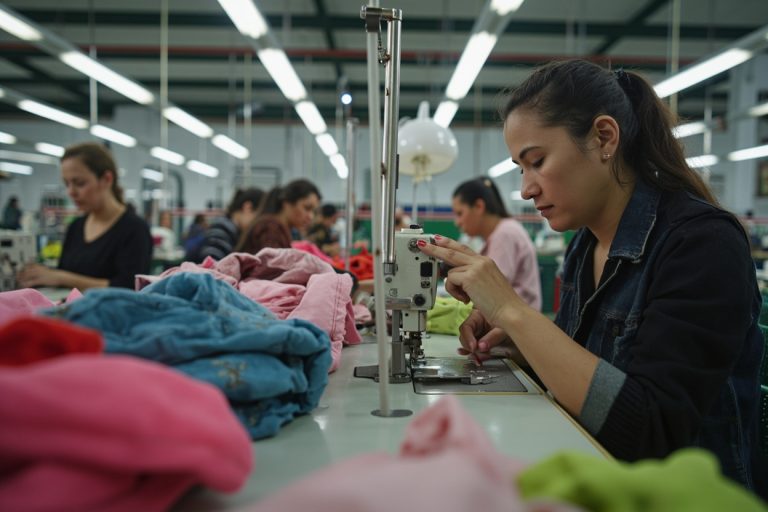
Garment factory production line with workers sewing children's outerwear, organized workstations.

Bangladesh RMG Wage Developments: 2024-2026 Cost Trajectory

08/07/2026

JINJIANG, China — Bangladesh’s ready-made garment (RMG) sector remains the lowest-cost major sourcing destination for mid-market apparel, but the cost trajectory has shifted materially over the past three years. Annual wage revisions, compliance investments, and currency movements have all contributed to a 25-30 percent cumulative increase in Bangladesh RMG labor costs since 2022. For mid-market apparel brands running multi-country sourcing strategies, the practical 2026 question is not whether Bangladesh remains cost-competitive, but how the cost gap with Vietnam and China has narrowed and which product categories are still most cost-effectively produced in Bangladesh. Wage Trajectory 2022-2026 Bangladesh RMG wages are set through a tripartite process involving the government, factory owners’ associations, and worker representatives. The minimum wage was revised in late 2023, with the new wage structure taking effect in stages through 2024: Pre-2023 minimum wage: Tk 12,500 per month (approximately USD 113 at 2023 exchange rates) Post-2023 minimum wage: Tk 12,500 (Tier 1) to Tk 38,000 (Tier 7) per month, depending on skill grade (approximately USD 113 to USD 345 at 2024 exchange rates) Annual increment structure: 5 percent annual increment on the base wage, plus inflation adjustments in some years The 2023 revision represented a substantial increase at the upper skill tiers, with Tier 7 wages rising by approximately 50 percent. The lower-tier increases were more modest, in the 25-30 percent range. Compliance Cost Increases Beyond wage increases, Bangladesh RMG factories have seen substantial increases in compliance costs since 2022: Accord and Alliance inspections: Building safety remediation costs continue for many factories, with remediation budgets typically running $1-3 million per affected factory. Worker welfare and benefits: Increased contributions to worker provident funds, gratuity schemes, and health insurance have added 1-2 percent to total labor cost. Energy and utility costs: Bangladesh power tariffs have increased by approximately 20 percent since 2022, with corresponding impact on factory utility costs. Insurance premium increases: Fire and building insurance premiums have increased materially for factories in high-rise buildings, reflecting industry-wide risk reassessment. Currency Effects The Bangladeshi taka has been relatively stable against the US dollar over the past three years, with modest depreciation of 2-4 percent annually. This stability has allowed factories to absorb wage and compliance increases without major margin compression. The Indian rupee, by contrast, has been more volatile, and the Vietnamese dong has been actively managed by the State Bank to maintain export competitiveness. The Bangladesh approach of letting the taka depreciate modestly has been a factor in maintaining cost competitiveness. Cost Comparison with Vietnam and China For a representative mid-market woven shirt in 2026: Bangladesh direct labor: USD 0.65-0.85 per shirt Vietnam direct labor: USD 0.85-1.10 per shirt China direct labor: USD 1.10-1.40 per shirt The Bangladesh cost advantage in direct labor has narrowed from approximately 50 percent over Vietnam in 2020 to approximately 25-30 percent in 2026. The narrowing reflects wage increases in Bangladesh, wage stability in Vietnam and China, and the relative impact of compliance costs on each country. What This Means for Sourcing Strategy For mid-market brands running sourcing strategies across Bangladesh, Vietnam, and China in 2026: Bangladesh remains the cost leader for basic woven and knit apparel. The cost gap with Vietnam and China persists, particularly for cotton-rich basic programs. Bangladesh is less competitive for complicated outerwear and short-lead-time production. Lead times of 6-10 weeks and limited technical outerwear capacity favor Vietnam and China. Bangladesh is less competitive for technical compliance certifications. Factories with current GOTS, OEKO-TEX, and ISO 14001 certifications are concentrated in Vietnam and China. Multi-country sourcing strategies are increasingly the norm. Most major brands now run Bangladesh for basic cotton programs, Vietnam for knitwear and US-bound product, and China for complicated outerwear. The Bottom Line Bangladesh RMG labor costs have risen by 25-30 percent since 2022, with annual wage revisions, compliance investments, and utility costs all contributing. Bangladesh remains the lowest-cost major sourcing destination for basic woven and knit apparel, but the cost gap with Vietnam and China has narrowed. Multi-country strategies that match product category to country cost structure will continue to be the most resilient approach for mid-market brands in 2026.

UKCA conformity marking stamp on a textile care label with UK flag colors in the background.

UKCA Marking for Textiles: Post-Brexit UK Compliance Requirements

08/07/2026

JINJIANG, China — The UKCA (United Kingdom Conformity Assessed) marking is the post-Brexit UK equivalent of the EU CE marking. For garment exporters selling finished goods into the UK market, the practical 2026 question is whether UKCA applies to a given product category, and if so, what documentation is required. For most mainstream apparel — woven shirts, knit tops, trousers, dresses, sweaters, basic outerwear — UKCA does not apply. The UKCA marking regime covers products where third-party conformity assessment is required, and most consumer clothing falls outside this scope. UKCA applies in apparel primarily to specific product categories: personal protective equipment (PPE), some children’s sleepwear, and certain technical or safety-related garments. What UKCA Covers (and What It Doesn’t) The UKCA regime applies to product categories where conformity assessment was required under EU CE marking rules before Brexit. For apparel, the relevant categories are: Personal protective equipment (PPE): Workwear with protective functions (heat-resistant, chemical-resistant, cut-resistant, high-visibility) falls under PPE Regulation 2016/425 and requires UKCA marking for the UK market. Children’s sleepwear with flammability requirements: Children’s nightwear sold in the UK must comply with the Nightwear (Safety) Regulations 1985 (amended). UKCA marking is generally not required for compliance with the flammability regulations themselves, but technical documentation demonstrating compliance is required. Specific technical garments: Some technical garments with safety or regulatory functions (e.g., medical compression garments, certain sports safety equipment) may require UKCA. For mainstream apparel that does not fall into these categories, UKCA is not required. The garment can still be sold in the UK with appropriate labeling (fiber content, care instructions, country of origin) and compliance with general consumer protection regulations. UKCA vs CE for Northern Ireland Under the Windsor Framework, Northern Ireland continues to follow EU rules for goods, including the CE marking regime. Goods sold in Northern Ireland require CE marking (or UKCA + CE dual marking in some cases), while goods sold in Great Britain (England, Wales, Scotland) follow UKCA rules. For garment exporters, the practical implication is: UK-bound goods (England, Wales, Scotland): follow UKCA rules Northern Ireland-bound goods: follow EU CE rules EU-bound goods: follow EU CE rules Dual marking (both CE and UKCA) is permitted for goods that need to be sold in both markets. For mid-market apparel that does not require either marking, dual marking is not required. Documentation Requirements for UKCA-Marked Apparel For apparel that does require UKCA marking (PPE, certain children’s sleepwear, some technical garments), the documentation requirements include: Technical file: Documentation demonstrating the product’s conformity with relevant UK regulations, including design drawings, material specifications, and test reports. UK Declaration of Conformity (UK DoC): A document identifying the product, the manufacturer, the relevant UK regulations, and the standards used to demonstrate conformity. Test reports: From UK-accredited laboratories (UKAS accreditation) or laboratories recognized under the UK’s mutual recognition agreements with other accreditation bodies. UKCA marking: The product must carry the UKCA marking in the form specified by UK regulations, with the marking visible on the product or its packaging. Practical Steps for Garment Exporters For a factory exporting apparel to the UK market in 2026: Determine whether UKCA applies. Most mainstream apparel does not require UKCA. Confirm with your UK buyer or compliance consultant if uncertain. For UKCA-marked apparel, maintain UK-specific technical files. UK technical file requirements differ from EU technical file requirements in some respects. Verify laboratory accreditation. For UKCA testing, use UKAS-accredited laboratories or laboratories recognized under UK mutual recognition agreements. Track labeling requirements. UK fiber content labeling, country of origin marking, and care labeling follow UK-specific regulations that may differ from EU rules. For Northern Ireland-bound goods, follow EU rules. CE marking continues to apply for Northern Ireland under the Windsor Framework. The Bottom Line UKCA marking applies to a narrow subset of apparel: PPE, some children’s sleepwear, and certain technical garments. For mainstream apparel, UKCA is not required, though UK-specific labeling and compliance requirements still apply. Garment exporters that have correctly determined whether their product categories require UKCA, and that maintain UK-specific technical files where required, are in the strongest position for the UK market in 2026.

Young tree planted in soil next to a measuring tape, symbolizing carbon insetting in textile supply chains.

Carbon Insetting vs Offsetting: Practical Guidance for Apparel Exporters in 2026

08/07/2026

JINJIANG, China — Carbon claims are under increasing scrutiny from regulators, consumers, and buyers. For garment exporters serving brands with carbon commitments, the distinction between carbon insetting and carbon offsetting has become practically important, both for compliance with tightening greenwashing regulations and for buyer credibility. The practical 2026 question for garment exporters is no longer whether to engage with carbon claims at all, but which types of carbon claims are credible, compliant with buyer requirements, and resilient to expected regulatory changes. Definitions: Insetting vs Offsetting The terms insetting and offsetting both refer to carbon reduction claims, but they describe fundamentally different approaches: Carbon offsetting refers to purchasing carbon credits from external projects (reforestation, renewable energy, methane capture, etc.) to compensate for emissions that occur elsewhere. Offsetting does not reduce the buyer’s or supplier’s actual emissions; it finances reduction activities elsewhere. Carbon insetting refers to carbon reduction investments within the buyer’s or supplier’s own value chain. Insetting activities include renewable energy installations at supplier facilities, energy efficiency upgrades, low-carbon material substitution, and supplier-level emission reduction programs. Insetting is generally considered more credible than offsetting because the reductions occur within the value chain being claimed and are subject to the buyer’s own operational control. Offsetting has been criticized as greenwashing when used as a substitute for actual emissions reduction. Regulatory Pressure on Offsetting EU and US regulators have tightened their stance on offset-based carbon claims over the past two years: EU Empowering Consumers Directive (2024): Explicitly bans generic environmental claims based on offsetting without specifying whether the offsetting achieves actual emissions reduction. EU Green Claims Directive (proposed 2023): Requires third-party verification of all environmental claims, including carbon claims based on offsetting. UK CMA Green Claims Code (2021, updated 2024): Requires carbon claims based on offsetting to clearly state that the offsetting compensates for but does not reduce actual emissions. US FTC Green Guides (revised 2023, proposed update 2025): Tightens requirements for carbon offset claims, requiring clear disclosure of the offsetting mechanism and its limitations. For garment exporters serving brands with carbon claims, the practical impact is that offsetting-based claims are increasingly subject to regulatory scrutiny, while insetting-based claims are receiving more favorable treatment. What This Means for Garment Exporters For a factory serving EU and US brands with carbon commitments in 2026: Prioritize insetting opportunities. Energy efficiency upgrades, renewable energy installations, and low-carbon material substitution at the factory level are increasingly the preferred path for buyer carbon claims. Verify offsetting claims. If a buyer is using offsetting-based claims, the factory may be asked to provide documentation of the offsetting project (location, vintage, methodology) to support the buyer’s regulatory compliance. Document factory-level emission reductions. Most buyers now request annual facility-level energy data, with the assumption that reductions at the facility level will be claimed as insetting rather than offsetting. Watch for buyer guidance. Most major brands are now publishing their carbon claims methodologies, including how insetting and offsetting are used. Factories should align their documentation with buyer-specific methodologies. Practical Insetting Investments for Garment Factories For a factory considering insetting investments in 2026, the most common investment categories are: On-site solar PV: Capital costs have declined 30-40 percent since 2020, with payback periods of 4-6 years at typical Asian factory electricity prices. Solar thermal for process heat: Particularly relevant for wet-processing facilities (dyeing, finishing, washing). Energy efficiency upgrades: LED lighting, high-efficiency motors, heat recovery from compressed air and steam systems, smart HVAC controls. Renewable energy procurement: Power purchase agreements (PPAs) or renewable energy certificates (RECs) for off-site renewable energy that supplies the factory’s grid. Low-carbon material substitution: Recycled polyester, recycled cotton, low-impact cellulose fibers, regenerative cotton. The Bottom Line Carbon insetting is replacing offsetting as the preferred approach for credible carbon claims in apparel, with regulatory pressure increasingly disfavoring offsetting. Garment exporters that prioritize facility-level emission reductions, document them rigorously, and align with buyer-specific carbon claims methodologies will be in the strongest position as greenwashing regulations tighten through 2026 and 2027.

Clear plastic bottle flakes beside virgin polyester pellets, showing rPET recycling feedstock.

Recycled Polyester (rPET) Feedstock Market: 2026 Supply and Pricing Outlook

08/07/2026

JINJIANG, China — Recycled polyester (rPET) feedstock has moved from a sustainability marketing claim to a mainstream sourcing consideration for mid-market apparel. As of mid-2026, the rPET market is balancing growing EU and US buyer demand against feedstock supply constraints and the entry of textile-to-textile recycling at limited scale. For garment exporters serving brands with recycled content commitments, the practical 2026 question is no longer whether to offer rPET options but how to manage the cost premium, supply reliability, and documentation requirements that come with recycled content claims. Market Size and Demand Global rPET demand for textile applications reached approximately 4.5 million tonnes in 2025, representing roughly 18 percent of total polyester fiber demand for apparel. The demand is concentrated in EU markets (driven by EPR schemes and recycled content mandates) and in US markets (driven by brand voluntary commitments). EU demand for rPET in apparel is expected to grow at 12-15 percent annually through 2028, driven by: The EU Single-Use Plastics Directive and connected recycled content targets Member-state EPR schemes that reward recycled content in apparel Brand voluntary commitments under the Sustainable Apparel Coalition and equivalent initiatives Consumer pressure on major brands to demonstrate recycled content progress US demand for rPET in apparel is also growing, but at a more modest pace (8-10 percent annually) and is more dependent on individual brand commitments. Feedstock Sources and Supply The rPET feedstock used in apparel comes primarily from two sources: Post-consumer bottle flake: PET bottles collected through municipal recycling programs, sorted, cleaned, and processed into flake or pellet. This is the dominant rPET feedstock for apparel today, accounting for roughly 75 percent of apparel-grade rPET. Post-industrial scrap: Pre-consumer waste from textile and packaging manufacturing, processed into fiber. This accounts for the remaining 25 percent. A third source — textile-to-textile recycling — is emerging but remains limited in scale. Several commercial-scale facilities opened in 2024–2025, but the combined output is still well under 5 percent of apparel-grade rPET demand. 2026 Pricing Outlook rPET prices have fluctuated significantly over the past 24 months. As of mid-2026, the price premium for apparel-grade rPET over virgin polyester is approximately 25-35 percent on a per-kilogram basis, depending on quality grade and certification level. The price premium has narrowed from the 50-80 percent premium of 2022-2023, as feedstock supply has expanded and certification infrastructure has matured. The premium is expected to continue narrowing through 2027 as more rPET production capacity comes online, but a meaningful premium will likely persist due to: Higher collection and sorting costs for post-consumer feedstock Stricter certification requirements (GRS, RCS) that add compliance costs Quality differences that affect downstream manufacturing efficiency Quality and Certification Not all rPET is suitable for all apparel applications. Apparel-grade rPET must meet specific quality criteria for: Viscosity and molecular weight: Critical for fiber spinning Contamination levels: Particularly important for white and light-colored yarns Color consistency: Some rPET feedstocks have inherent color variations that require blending FDA and EFSA food-contact compliance: Required for some technical applications The two main certification standards for apparel-grade rPET are: GRS (Global Recycled Standard): Covers recycled content verification, chain of custody, social and environmental practices, and chemical restrictions RCS (Recycled Content Standard): Covers recycled content verification and chain of custody only GRS certification is the dominant standard for EU and US brands. RCS is a lighter-weight alternative that some brands accept for lower-tier product lines. Practical Implications for Garment Exporters For a factory serving brands with recycled content commitments in 2026: Verify rPET source documentation. GRS or RCS certificates should accompany every rPET shipment, with the certificate matching the volume claimed. Plan for the 25-35 percent price premium. rPET orders typically run 25-35 percent above virgin polyester equivalent, with the premium varying by quality grade. Build supplier relationships with 2-3 GRS-certified rPET suppliers. Single-source rPET supply is risky given the market volatility. Track recycled content claims carefully. The EU and US markets have tightened recycled content claim requirements, with verification via third-party audits increasingly expected. Consider textile-to-textile options for premium ranges. Several brands are beginning to specify textile-to-textile rPET for premium product ranges, with a willingness to pay higher prices for the cleaner feedstock story. The Bottom Line rPET demand is growing at double-digit rates in EU markets and high single-digit rates in US markets, with a 25-35 percent price premium over virgin polyester expected to persist through 2027. The rPET market is no longer a niche sustainability play but a mainstream sourcing consideration. Garment exporters that build GRS-certified supply chains with multiple sources and robust documentation will be in the strongest position as recycled content commitments tighten through 2027 and 2028.

Textile laboratory inspection scene with technician examining fabric label and quality test apparatus.

Vietnam TBT Updates: New Textile Labeling and Testing Requirements for 2026

08/07/2026

JINJIANG, China — Vietnam’s National Technical Regulation on textiles — commonly referenced by its QCVN designation — received a substantive update in 2025 that affects all garment and textile exports into Vietnam for both domestic consumption and re-export to other markets. The update tightens requirements on fiber content labeling, restricted substances, and quality testing for textile imports, with phased entry into force through 2026–2027. For mid-market garment exporters using Vietnam as a manufacturing hub for EU and US brands, the practical impact of the updated QCVN is to align Vietnam’s textile standards more closely with major destination-market requirements. Factories that already comply with EU REACH, US CPSC, and OEKO-TEX will see the changes as a documentation and labeling exercise rather than a chemical-substance reformulation exercise. What’s New in the 2025 QCVN Update The 2025 QCVN update covers four main areas: Fiber content labeling: Updated tolerance thresholds for fiber composition claims, with stricter requirements for multi-fiber blends and recycled content claims. Restricted substance list: Aligned with the latest EU REACH restrictions, including expanded PFAS limits, additional phthalates, and tightened heavy-metal migration thresholds. Quality testing: New requirements for color fastness to washing, perspiration, and light on specific garment categories. Documentation: Strengthened requirements for technical files, including test reports from ISO 17025-accredited laboratories and supply chain traceability documentation. The practical effect for garment exporters is that Vietnam now requires compliance documentation — test reports, technical files, supply chain declarations — that is broadly aligned with what EU and US buyers already request. Implementation Timeline The 2025 QCVN update entered into force on January 1, 2026, with phased compliance timelines: January 1, 2026: New fiber content labeling requirements apply to all textile imports. July 1, 2026: Restricted substance list updates apply. January 1, 2027: Quality testing and documentation requirements apply. Textile products imported into Vietnam before each respective date can continue to be sold under the previous requirements until existing inventory is exhausted. New imports must meet the updated requirements from the effective date. Documentation Requirements For garment exporters shipping to Vietnam, the documentation requirements now include: Test reports from ISO 17025-accredited laboratories for restricted substances, color fastness, and fiber content verification Technical file including product specifications, fabric specifications, and production process documentation Supply chain traceability documentation for fiber origin, particularly for natural fibers and recycled content claims Care labeling in Vietnamese or with Vietnamese translation for products intended for the domestic Vietnamese market For garment exporters using Vietnam purely as a manufacturing hub (with finished goods re-exported to EU or US buyers), the documentation may not need to accompany every shipment, but should be maintained on file for customs and regulatory inspections. Compliance Costs and Practical Impact For garment exporters using Vietnam as a manufacturing hub, the practical compliance costs are modest: Test reports: Most EU and US-destined production already requires similar testing, so the marginal cost is documentation rather than retesting. Documentation: The technical file and supply chain documentation requirements align with buyer-specific documentation already requested by major EU and US brands. Labeling: For finished goods intended for re-export (not Vietnamese domestic sale), labeling changes are limited to internal documentation rather than physical label changes. For garment factories selling finished goods into the Vietnamese domestic market, the impact is more substantial. Domestic labeling in Vietnamese, additional testing for restricted substances, and stricter fiber content claims require active compliance work. Practical Steps for 2026 For garment exporters using Vietnam as a manufacturing hub: Update internal documentation templates to align with the new QCVN requirements. Most major brands’ technical pack templates already cover the new requirements. Confirm test reports cover all the new restricted substance limits. If using existing test reports from 2024 or earlier, verify they include the updated substance panel. Verify laboratory accreditation — the QCVN requires ISO 17025 accreditation. Most major testing labs are accredited, but smaller or specialized labs may not be. Maintain supply chain documentation for fiber content claims, particularly for recycled and natural fiber claims. Train Vietnamese customs brokers and import partners on the new requirements to avoid clearance delays. The Bottom Line The 2025 QCVN update brings Vietnam’s textile standards closer to EU and US requirements, with phased entry into force through 2026–2027. For garment exporters already aligned with EU REACH, US CPSC, and OEKO-TEX, the practical impact is documentation and labeling rather than reformulation. For factories selling into the Vietnamese domestic market, the impact is more substantial and warrants active compliance work.

Corporate sustainability report binder on a clean desk with data visualization, glass windows in background.

EU CSRD Scope 3 Reporting: What Garment Exporters Need to Know for 2026

08/07/2026

JINJIANG, China — The European Union’s Corporate Sustainability Reporting Directive (CSRD) entered its first reporting cycle in 2024 for the largest in-scope companies, with successive waves of smaller companies phased in over 2025–2029. For mid-market apparel brands sourcing from Asian factories, CSRD is reshaping what buyers ask suppliers to provide — not directly, since CSRD applies to EU-domiciled companies, but indirectly through Scope 3 value chain disclosure requirements. For garment exporters, the practical CSRD impact is already landing in 2026 supplier questionnaires, technical-pack requests, and audit preparations. The factories that understand what their EU buyers are reporting — and why — are in a much stronger position than those that respond to every Scope 3 request as an isolated compliance task. How CSRD Phasing Affects Apparel Brands CSRD reporting applies in waves to EU-domiciled companies: Wave 1 (2024 reporting): Companies already subject to the Non-Financial Reporting Directive (NFRD) — roughly 12,000 large EU companies, including most major apparel brands and retailers. Wave 2 (2025 reporting): Other large companies not previously subject to NFRD, including non-EU companies with significant EU activity that meet the size thresholds. Wave 3 (2026 reporting): Listed SMEs, with simplified reporting requirements. Wave 4 (2027–2029 reporting): Non-EU companies with significant EU activity, including non-EU parent companies of EU subsidiaries. For a typical mid-market apparel brand sourcing from Asian factories, the EU buyer is most likely in Wave 1 or Wave 2 — already subject to Scope 3 disclosure requirements that cascade into supplier questionnaires. What Brands Are Disclosing Under CSRD CSRD requires companies to disclose material sustainability matters across environmental, social, and governance dimensions. For apparel brands, the most material Scope 3 categories are: Category 1: Purchased goods and services — emissions and human rights impacts of upstream suppliers, including garment factories and fabric mills Category 4: Upstream transportation and distribution — logistics emissions from fabric and finished-goods transport Category 11: Use of sold products — in some apparel categories, use-phase impacts (washing, drying) can be significant Category 12: End-of-life treatment of sold products — disposal and recycling pathways For each material category, brands must disclose the scope of impact, the policies in place, the actions taken, the metrics used, and the forward-looking targets. The standards under CSRD (the European Sustainability Reporting Standards or ESRS) require primary data from suppliers where available, with estimates where primary data is not yet available. What Garment Exporters Should Expect in 2026 For a factory serving EU mid-market brands in 2026, the most common supplier-facing requests are: Facility-level energy data (monthly electricity consumption, grid mix, renewable share, thermal energy) Water data (consumption, source, discharge treatment for wet-processing factories) Chemical inventory (compliance with ZDHC or buyer-specific MRSLs) Workforce data (headcount, working hours, living wage gap analysis, grievance mechanism documentation) Product carbon footprint for representative SKUs, calculated per ISO 14067 or buyer-specific methodology Most major brands now have annual supplier questionnaires that capture this data, often aligned with the Higg Facility Environmental Module (FEM) and the Higg Social & Labor Module (SLM). Practical Steps for Garment Exporters For a factory preparing for CSRD-driven buyer requests in 2026: Complete a Higg FEM self-assessment for the most important production facility. This is the foundation most EU buyers accept for facility-level environmental data. Document workforce data per the Higg SLM framework or buyer-specific questionnaires. Include wage data, working hours, and grievance mechanism documentation. Establish a product carbon footprint calculation methodology for representative SKUs. Use ISO 14067 or a buyer-specific methodology. Build the calculation on mill-level energy data. Maintain data documentation — CSRD requires assurance, which cascades from buyer reports back to supplier data. Keep audit-ready documentation for at least 3 years. Communicate with EU buyers proactively — most brands appreciate supplier outreach about CSRD readiness and can offer guidance on buyer-specific requirements. The Bottom Line CSRD is reshaping what EU apparel brands ask of their Asian suppliers. The factories that are prepared with facility-level energy data, workforce data, and product carbon footprints will be in the strongest position as CSRD reporting tightens through 2027–2029. For garment exporters, the practical question is no longer whether to invest in CSRD-ready data infrastructure, but how quickly to build it.

Water droplets beading on a technical outerwear fabric, hydrophobic coating visible.

PFAS in Outdoor and Activewear: Where the 2026 Bans Actually Apply

08/07/2026

JINJIANG, China — Per- and polyfluoroalkyl substances (PFAS) — the broad class of “forever chemicals” used in water-repellent finishes, stain-resistant coatings, and certain dye auxiliaries — are now subject to a patchwork of national and regional bans that materially affect outdoor and activewear supply chains. For garment exporters serving European, North American, and Australian markets, understanding where the bans actually apply — and where they don’t — is essential for both product compliance and forward product planning. The current PFAS regulatory landscape in 2026 is best understood as a mosaic: federal and state-level rules in the US, EU-wide and member-state-level rules in Europe, and similar initiatives in Australia, Canada, and Japan. The rules vary by product category, by PFAS sub-class, by concentration threshold, and by date of entry into force. What’s Actually Banned in 2026 EU-wide: The EU’s REACH universal PFAS restriction proposal was submitted in 2023 and has been under review since. As of mid-2026, the EU has not adopted a universal PFAS restriction, but several PFAS sub-classes are restricted under existing REACH entries and under specific product regulations: PFOA and related compounds (since 2020) PFOS and related compounds (since 2009) C9–C14 PFCAs and related compounds (since 2023) Specific PFAS used in textile finishing chemicals under the Detergents Regulation EU member-state level: Several EU member states have moved ahead of EU-wide restrictions: France: banned all PFAS in food contact materials, cosmetics, and ski wax (effective 2026); textile restrictions under review Germany: BfR-recommended restrictions on PFAS in textiles under the Chemicals Act amendment Denmark: national PFAS ban in consumer products, including textiles, effective 2026 United States: There is no federal PFAS ban, but state-level rules are increasingly consequential: New York: S4630A ban on PFAS in apparel (signed 2023, effective phased through 2026) California: AB 1817 ban on PFAS in apparel and textiles, effective 2025–2026 phased rollout Minnesota, Vermont, Washington: similar state-level restrictions, varying effective dates Australia: no federal PFAS ban, but state-level initiatives are advancing in line with the EU and US. The patchwork means that a single garment exported globally may need to comply with several different PFAS rules depending on destination. What’s Not Banned (But Should Be Monitored) Several PFAS sub-classes remain in widespread use in outdoor and activewear as of mid-2026: Short-chain PFAS alternatives (e.g., C6 fluorotelomer-based DWR treatments) are not universally banned but face increasing restrictions under state-level rules and OEKO-TEX aggregate-PFAS limits PTFE-based membranes (used in waterproof breathable laminates) are PFAS but are typically exempt under current bans as “essential use” Specific PFAS used in printing inks and dye auxiliaries are restricted in some jurisdictions but not others For a factory running 30–50 outdoor and activewear styles, the practical 2026 question is not “are PFAS banned” but “which PFAS are restricted in which destination markets.” Practical Compliance Steps for 2026 For garment exporters serving multi-destination outdoor and activewear markets: Map your DWR treatment chemistry by destination. Different destinations restrict different PFAS sub-classes. Your fabric mill’s DWR stack may need to vary by destination. Verify your PFAS test reports against the most restrictive destination (typically California AB 1817 or New York S4630A). Meeting the strictest standard usually covers all other destinations. Identify non-PFAS DWR alternatives. C0 (fluorine-free) DWR treatments have matured significantly and are now widely used in mainstream mid-market outdoor wear. Performance is approaching conventional C6 DWR for most use cases. Check your lamination and membrane chemistry. PTFE-based membranes are typically exempt from current PFAS bans, but PU-based and TPU-based alternatives may be more restrictive in destination markets with broad PFAS rules. Document PFAS declarations per destination. Most major brands now require a destination-specific PFAS declaration as part of the technical pack. The Bottom Line PFAS in outdoor and activewear is regulated, not banned universally. The 2026 patchwork of federal, state, and member-state rules requires destination-specific compliance rather than a single global standard. Garment exporters that build PFAS compliance into their technical packs by destination, and that have validated non-PFAS DWR alternatives ready, will be in the strongest position as restrictions continue to tighten through 2026 and 2027.

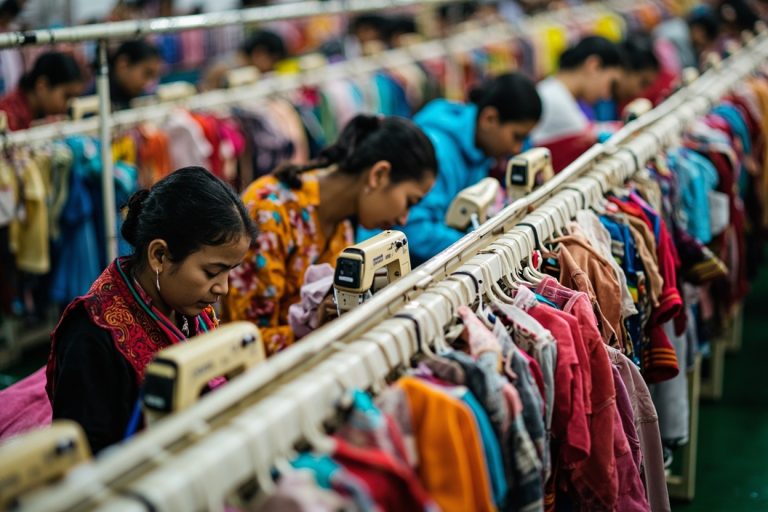
Garment factory production line with workers sewing outerwear, organized industrial setting.

Bangladesh vs Vietnam vs China: 2026 Manufacturing Cost Comparison for Mid-Market Brands

08/07/2026

JINJIANG, China — Mid-market apparel brands sourcing across multiple Asian countries in 2026 face a more complicated cost comparison than at any time in the past decade. Labor cost convergence in Vietnam and Bangladesh, capacity additions in both countries, and continued cost discipline in China have narrowed the historical cost gap, while tariff exposure and lead-time considerations continue to favor different countries for different product categories. The conventional wisdom that China is 30–40 percent more expensive than Bangladesh for labor-intensive apparel no longer holds. As of mid-2026, the all-in cost gap between China and Bangladesh for a comparable mid-market woven shirt is closer to 12–18 percent, and the gap is even narrower for knit products where China’s supply chain integration offsets its labor cost disadvantage. Where Each Country Leads China retains its cost leadership in: Complicated outerwear (puffer jackets, bonded shells, technical fleece) Heavy knits and sweater programs with high yarn complexity Complicated prints and embroideries requiring multi-process capacity Short-lead-time production (3–4 week fabric-to-finished-goods windows) Quality consistency at scale for premium mid-market and premium-private-label programs Vietnam has gained share in: Basic knitwear (tees, fleece hoodies, activewear) Simple woven bottoms and denim Programs with US tariff exposure Brands prioritizing supply chain diversification away from China Bangladesh remains competitive in: Basic knitwear at the lowest cost tier Large-volume basic woven bottoms (chinos, basic denim, basic shirts) Programs where lead time can be extended to 10–12 weeks Cotton-rich product categories Cost Components Comparison For a representative mid-market woven shirt in 2026: Direct labor: China $1.10–$1.40, Vietnam $0.85–$1.10, Bangladesh $0.65–$0.85 Fabric: China $2.20–$2.80, Vietnam $2.30–$2.90, Bangladesh $2.40–$3.00 Trims: China $0.40–$0.55, Vietnam $0.45–$0.60, Bangladesh $0.45–$0.60 Overhead: China $0.85–$1.10, Vietnam $0.75–$0.95, Bangladesh $0.65–$0.85 Total landed (FOB): China $4.55–$5.85, Vietnam $4.35–$5.55, Bangladesh $4.15–$5.30 The total landed cost gap is now narrower than at any point in the past decade. Labor cost differentials have narrowed most sharply: Bangladeshi factory wages have risen by approximately 8 percent annually over the past five years, while Chinese factory wages have stabilized at the higher end of the historical range. Tariff and Trade Considerations For US-bound apparel, the tariff landscape materially affects the cost comparison: China-origin to the US: Section 301 tariffs remain in place, with most apparel categories in the 7.5–15 percent tariff band Vietnam-origin to the US: duty-free under most-favored-nation rates for in-quota categories Bangladesh-origin to the US: duty-free under most-favored-nation rates for in-quota categories For a US-bound woven shirt at $5 landed cost, the Section 301 differential alone is approximately $0.40–0.85 per shirt. This is a meaningful cost difference that has driven much of the mid-market diversification to Vietnam and Bangladesh over the past five years. For EU-bound apparel, all three origins face the same EU tariff regime (standard EU GSP rates), so the cost comparison is closer to a pure landed-cost comparison. Lead Time Considerations China retains a meaningful lead-time advantage for time-sensitive production: China fabric-to-finished-goods: 3–4 weeks for most knit and woven products Vietnam: 4–6 weeks Bangladesh: 6–10 weeks For brands with seasonal programming or fast-replenishment models, the Chinese lead-time advantage remains a meaningful offset to some cost differential. The Bottom Line for Q4 2026 The China-versus-rest-of-Asia cost gap is at its narrowest in a decade, but the relative competitiveness varies materially by product category. Complicated outerwear, technical knits, and short-lead-time production remain most cost-effective in China. Basic knitwear and woven bottoms at the lowest cost tier are increasingly competitive in Vietnam and Bangladesh, especially for US-bound product where Section 301 tariffs apply. The most successful mid-market brands in 2026 are running multi-country sourcing strategies that match product category to country cost structure, rather than defaulting to a single sourcing destination. For Chinese garment exporters serving this market, the implication is clear: the Chinese factory’s competitive advantage is shifting from labor cost to supply chain integration, lead time, and complicated-product capability.