Buyer Guide

Stack of compliance paperwork and EU regulatory documents on wooden desk

US Pushes for EU CSDDD Carveout: What Apparel Buyers Must Watch

08/27/2026

The United States has formally asked the European Union to scale back the Corporate Sustainability Due Diligence Directive (CSDDD) and the Corporate Sustainability Reporting Directive (CSRD) for American firms and their overseas suppliers. A five-page submission from the U.S. Mission to the EU warns that the bloc’s recently narrowed sustainability rules still create unreasonable burdens on U.S. commerce. For apparel brands and retailers sourcing from Asia, the dispute could redraw the map of supplier audits and traceability obligations that define EU-bound production today. Washington asked the European Commission to designate the United States a "negligible risk" jurisdiction under CSDDD, to presume compliance for companies operating under U.S. corporate-governance rules, and to exclude non-EU companies from the directive’s direct scope wherever possible. It also wants due diligence and enforcement confined to a company’s EU subsidiaries or European business partners, and to goods produced in, or services supplied from, the EU. The most consequential demand for fashion concerns the second tier and beyond. Washington has asked that producers and farmers that do not directly supply a CSDDD-covered company not face audits or information requests. Critics including advocacy group SOMO told Sourcing Journal that this would exclude the cotton growers, spinners, tanneries and mills where many of the industry’s most serious forced-labor, wage and environmental risks are concentrated. "Over 90 percent of human rights and labor abuses happen deep in supply chains, beyond the first tier," said SOMO’s Joseph Wilde-Ramsing. The dispute plays out against an already-shrunken CSDDD. The EU’s Omnibus I simplification package lifted the directive’s threshold to more than 5,000 employees and €1.5 billion in net worldwide turnover, removed the climate-transition-plan requirement and eliminated the harmonized civil-liability regime. Companies are expected to begin complying with the revised due-diligence requirements in July 2029. CSRD was similarly narrowed, with mandatory data points cut by more than 60 percent. For OEM and ODM factories in China, Bangladesh, Vietnam and other hubs, the practical message is to expect more buyer requests, not fewer. EU brands will keep asking for evidence beyond the cut-and-sew floor: mill-level chemical inventories, fiber origin documentation, tier-two wage records and cotton provenance. Smart factories should maintain updated mill-to-garment traceability files, OEKO-TEX Standard 100 and GOTS certificates, and ZDHC-aligned wastewater reports, so they can answer buyer questionnaires in days rather than weeks. As an OEKO-TEX Standard 100-certified OEM/ODM factory with more than 12 years serving EU and U.S. buyers, Northern Garment supports clients navigating overlapping CSDDD, CSRD and UFLPA documentation requirements through maintained fabric-traceability records, certified mill lists and English-language compliance documentation. Sources: [Sourcing Journal: US Seeks EU Due Diligence Carveout for American Firms]

Garment factory compliance folder on a desk showing an OEKO-TEX Standard 100 certificate, supplier map, social audit report, chain-of-custody one-pager, and cotton fabric swatches

EU CSDDD Supply Chain Due Diligence: What Apparel OEMs Need to Know in 2026

08/25/2026

The European Union's Corporate Sustainability Due Diligence Directive (CSDDD) is moving from policy text to a hard procurement filter for apparel brands and retailers. In recent trade talks, the United States has asked Brussels to carve out American companies from key obligations — but apparel importers selling into the EU market will still face the full weight of the new rules, regardless of where their parent company is headquartered.For OEM and ODM factories in Asia, this is not an abstract compliance debate. EU buyers are already rewriting their sourcing questionnaires to ask suppliers about traceability, raw-material origin, subcontractor disclosure, and grievance-mechanism documentation. A factory that cannot produce an OEKO-TEX certificate, a valid Social Audit (Sedex/BSCI/SA8000), and a basic supplier code of conduct is being quietly deprioritized on EU shortlists.Three things are worth watching:1. Risk-based due diligence — EU buyers must map their supply chains and identify human-rights and environmental risks at every tier. Tier 1 (cutting/sewing) is no longer enough; tier 2 (fabric mills) and tier 3 (yarn spinners) data will be requested.2. Climate disclosure alignment — CSDDD ties into CSRD climate reporting. Expect EU brands to ask factories for Scope 1/2/3 estimates and energy-mix information, especially for fabric-intensive categories like knitwear and outerwear.3. Contractual flow-down — Clauses requiring the supplier to cascade due-diligence obligations to subcontractors are becoming standard in EU purchase orders.Practical steps for OEM partners serving EU buyers:Keep OEKO-TEX Standard 100, GOTS, or GRS certificates current and ready to share at the sampling stage — not after the PO.Maintain a one-page supplier map covering fabric mills, trim suppliers, and any subcontracted lines.Document a basic grievance channel (worker hotline, suggestion box, or third-party mechanism) and have evidence ready during audits.Be ready to share annual energy consumption and any renewable-energy procurement at the factory level.Quanzhou Northern Garment has held OEKO-TEX Standard 100 certification for eight consecutive years, with documented supply-chain mapping for children's outerwear, swimwear, activewear, and lifestyle knitwear lines. For buyers navigating CSDDD compliance, that documentation saves weeks of questionnaire back-and-forth at the inquiry stage.The US-EU carveout debate is unlikely to soften EU enforcement for Asian OEM partners. If anything, the political pressure is accelerating the shift toward verified, documented, and traceable supply chains — exactly the lane well-prepared factories already operate in.

Stacked intermodal shipping containers at a port at golden hour, with one open container showing neatly folded garments in clear packaging ready for global dispatch.

State of Fashion 2026 Confirms Tariffs as the Single Largest Sourcing Variable for Apparel Brands

08/21/2026

The Business of Fashion and McKinsey State of Fashion 2026 report, published in late 2025 and re-validated through the first half of 2026, confirms what B2B sourcing teams have been operationalising for the past eighteen months: tariffs and trade disruption are now the single most important factor shaping apparel industry decisions. The report cites 76 percent of fashion executives as identifying responses to trade disruptions and tariffs as the leading priority for 2026, ahead of consumer demand shifts, technology adoption, and ESG compliance.The underlying tariff landscape has consolidated into a recognisable map. Effective duties on Chinese-origin apparel under the revised Section 301 framework now sit at roughly 12.5 percent plus the 10 percent base reciprocal rate, while apparel from Vietnam and Bangladesh carries meaningfully lower headline rates though with narrower margin floors. The European Union’s reciprocal tariff ceiling, set at 15 percent for finished garments, has been stable since mid-2026, and the EU’s separate Regulation 2026/1455 — adjusting duties on imports of certain goods originating in the United States — has added a further variable for North America–Europe cross-trade. The net effect is that landed-cost modelling has become a standing weekly exercise for any brand running multi-origin sourcing, not a one-off annual review.For OEM/ODM suppliers in Asia, the report’s findings translate into three operational shifts. First, dual-country routing is mainstream. Buyers in the AW27 and SS28 planning cycles are testing Vietnam, Bangladesh and Indonesia as parallel production options for tariff-sensitive categories, while keeping China for technical outerwear, complex sampling, and lower-volume specialty programmes. Second, origin documentation is now a sales tool. Buyers issuing new RFQs in the second half of 2026 are asking for country-of-fibre declarations, manufacturing facility identifiers, and forced-labour audit trails as part of the standard supplier package, not as a premium ask. Third, transparent cost build-ups are expected. A landed-cost calculation that does not break out fabric, trims, CMT, packaging, freight, and relevant duties is no longer accepted by procurement teams running matrix sourcing.For a Quanzhou-based apparel manufacturer, the response is to position the factory as a partner in the documentation and routing work, not just a production line. Northern Garment has supported buyers through AW27 planning with multi-origin material sourcing, mill-direct fabric chains with retained yarn-level records, and a sampling team that can ship counter-samples within seven working days. For buyers whose SS28 lines are still being scoped, the sourcing desk is open for an early planning conversation.Source: The Business of Fashion / McKinsey State of Fashion 2026; tariffstool.com 2026 country rate table, 2026-08.

Stacked intermodal shipping containers being loaded onto a container ship at an Asian port at golden hour

Revised US Section 301 Tariffs Reshape Asian Apparel Sourcing Through 2026

08/20/2026

Recent revisions to Section 301 of the US Tariff Act are reshaping apparel sourcing strategies across Asia, with effective duty rates on finished garments now sitting at noticeably different levels depending on country of origin. Industry reporting citing US Customs data puts effective duties on Chinese-origin apparel at roughly 35.6%, on Vietnamese apparel at around 28.1%, and on Bangladeshi apparel meaningfully lower, creating a structural tariff gap that is already influencing buyer matrix decisions. For US apparel brands, the result has been a measurable reallocation of order volume. EightX analysis of 2025 US Census import data shows cotton apparel continuing to gain US import share while China cedes share to Vietnam, Bangladesh, India and Cambodia. Dhaka-based trade reporting confirms that Bangladesh is capturing a near-term opportunity in cotton-heavy programs, supported by duty advantages and improved capacity in woven categories. For China-based OEM/ODM manufacturers such as Quanzhou Northern Garment, the new tariff environment does not close off the US market but does shift the types of programs that make commercial sense. High-volume, basic cotton knits face the steepest competitive pressure from lower-tariff origins, while specialty categories — performance outerwear, technical fleece, structured jackets, swimwear with complex construction, and lifestyle products with higher fabric content per unit — remain viable and often preferred when buyers value speed-to-market, lower MOQ flexibility, and tighter development cycles. The sourcing shift is also driving new conversations about origin diversification within Chinese supplier groups themselves. Buyers increasingly ask whether a supplier can offer matched production in Vietnam or Bangladesh for tariff-sensitive programs while keeping development, sampling and small-batch production in China. Suppliers that can credibly answer that question — through partner factories, owned offshore lines, or documented capacity alliances — are well placed for the next round of US sourcing decisions. Looking ahead through 2026, the Section 301 environment is expected to remain volatile, with buyers hedging across at least three origins for any program of meaningful size. Manufacturers that combine competitive landed-cost math with verifiable compliance documentation and reliable lead times will remain in the buyer matrix regardless of which way the next tariff revision swings.

Industrial apparel production line with multiple workers operating sewing machines under fluorescent lights in a spacious facility.

Vietnam Apparel Manufacturing Capacity Continues to Expand Through 2026 Despite Tariff Volatility

08/19/2026

Vietnam's apparel export trajectory has continued upward through the first half of 2026, with industry data compiled by Fibre2Fashion and the Vietnam Textile and Apparel Association pointing to double-digit year-on-year growth in knitwear and outerwear segments despite repeated tariff adjustments under the new Section 301 framework. The combination of EVFTA duty-free access to the European Union, CPTPP preference into North America, and a maturing domestic fabric base has kept Vietnam at the top of the diversification queue for buyers rebalancing away from single-country China sourcing.For OEM/ODM buyers running multi-country sourcing strategies, the practical question in late 2026 is no longer whether Vietnam can absorb additional volume — the country's installed capacity has clearly answered that — but rather how to structure the buyer-factory relationship so that quality and lead-time discipline survive the rapid scale-up. The most consistent feedback from European buyers in 2026 is that factory selection criteria have shifted from price and MOQ toward documentation maturity, in-house sampling capacity, and demonstrated ESG audit cadence.For sourcing teams planning AW27 and SS28 capacity, three working principles are now shaping the conversation:Treat capacity as a relationship, not a transaction. Vietnam's largest mills and cut-make-trim operations are increasingly closing their booking calendars 8-10 months ahead of ship date. Buyers who establish multi-season planning conversations with their CMT partner — sharing forecast volume and category mix — are getting priority capacity slots and tighter cost discipline.Pressure-test fabric sourcing early. Vietnam's domestic mill base is strongest in knit and basic woven categories, and is steadily improving in technical outerwear. Buyers with heavy cotton or specialised fabric briefs should still treat fabric sourcing as a parallel conversation, often with China-based mill partners supporting the Vietnam cut-and-sew step.Build documentation into the PO, not after it. Buyers selling into the EU and North America should expect their Vietnam partners to provide country-of-origin declarations, fibre traceability, and audit trails as part of the standard PO package. This is no longer a premium ask — it is the procurement floor.The broader lesson for 2026 is that the apparel sourcing map is no longer a single country — it is a network, and Vietnam has earned a stable place at the centre of it. Buyers who organise their sourcing around documented, repeatable, multi-country workflows will be the ones who capture the upside of Vietnam's continued capacity build-out.Northern Garment supports buyers structuring China-Vietnam hybrid sourcing through a Quanzhou-based sampling team that can coordinate counter-samples, fabric sourcing, and production hand-off across both factory networks. If your AW27 line is being scoped for Vietnam execution, our sourcing desk is open for an early planning conversation.Source: Fibre2Fashion, 2026-08-08

Global shipping container port at dusk with cargo cranes and freight ship, representing 2026 US Section 301 apparel tariff impact on Asian sourcing

US Section 301 Tariffs Reshape Asian Apparel Sourcing for OEM/ODM Buyers

08/18/2026

The United States Trade Representative has finalised a new wave of Section 301 tariffs covering 60 apparel-producing economies, and the reaction across Asia this week is less about the headline rates and more about the second layer of measures quietly tucked inside them. According to Sourcing Journal's analysis of the USTR announcement, 42 countries now sit in a 12.5% tariff band — including China, Vietnam, Japan, Thailand, South Korea, the Philippines and Singapore — while 18 countries, among them Sri Lanka, Bangladesh, Malaysia, India, Indonesia, Pakistan and Cambodia, are placed in a lower 10% band.For OEM/ODM buyers running multi-country sourcing, the most consequential change is not the percentage but the new textile mechanism. Garments assembled with U.S.-origin inputs, including U.S. cotton, can now enter the United States free of Section 301 duties. The provision is expected to benefit Bangladesh, Cambodia, Indonesia and Malaysia most directly, and is initially set to run for three years. Industry voices in India have already warned that tariff parity will mean little if competitors receive exemptions that India does not.For Quanzhou-based manufacturers, the message is straightforward: headline tariff rates are no longer the only variable. Three practical implications for OEM/ODM partners sourcing out of China in late 2026:Material origin is now a margin lever. Garments using U.S. cotton or other U.S.-origin textile inputs can be re-engineered to qualify for the new textile mechanism. Buyers asking for origin documentation will become the norm, not the exception.Dual-country routing will accelerate. Expect more buyers to test Vietnam or Bangladesh for next-season capacity while keeping China for technical outerwear and complex sampling. The factory that can speak to both setups wins the long-term relationship.Compliance documentation is now a sales tool. Traceability records, country-of-origin declarations, and forced-labour audit trails have moved from "nice to have" to table stakes for new RFQs.Vietnam's foreign ministry has already stated it will continue negotiations with Washington, and Bangladesh's commerce minister framed the new structure as a replacement of existing duties rather than an additional burden. Either way, U.S. demand is expected to soften as costs pass through, which makes supplier flexibility and short lead-time sampling more valuable than ever.For buyers building SS27 and AW27 lines, the right question is no longer "where is the cheapest country" but "which supplier can document origin, pivot between countries, and hold quality across both?" Northern Garment supports buyers through this transition with multi-origin material sourcing, full traceability documentation, and a sampling team in Quanzhou that can ship counter-samples within seven working days.Source: Sourcing Journal, 2026-08-15

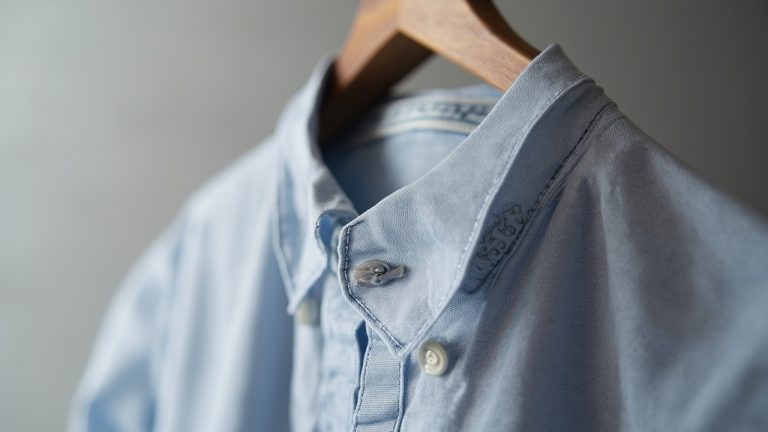
Close-up of a custom-made light blue shirt collar showing precise stitching and embroidered monogram detail on a wooden hanger

Custom Apparel Details: 12 Things Buyers Should Look At Before Approving a Bulk Order

08/17/2026

The difference between a custom apparel order that ships on time and one that ends up in a claims folder usually traces back to a handful of details a buyer either specified clearly — or didn’t. At Quanzhou Northern Garment Co., Ltd., we work with private-label brands and buying offices on OEM (build to buyer’s tech-pack) and ODM (build to a brief) production for swimwear, outerwear, activewear and hoodies. After twelve years and tens of millions of garments, the same twelve details keep showing up on every well-run order, and their absence keeps showing up on every problematic one. This is the checklist we walk every new buyer through before a tech-pack is finalized. The details that define custom apparel: precise topstitching along the collar band, clean buttonhole, embroidered monogram, structured collar roll — every one of these is a checklist line item on a well-run custom order. 1. Fabric Specification: More Than a Composition Line “80% nylon / 20% spandex” is not a fabric spec — it’s a starting point. A buyer-ready fabric spec includes fiber composition, weight (GSM or oz/yd²), width (cuttable), stretch percentage and recovery, finished hand-feel (soft, firm, brushed, slick), color fastness ratings to the relevant agents (chlorine, sea water, light, perspiration), pilling grade, and any required certifications (OEKO-TEX Standard 100, GOTS, REACH compliance, recycled-content documentation). The clearer the spec, the fewer surprises when the lab-dip arrives. 2. Tech-Pack Completeness A tech-pack should function as a contract. The four sections that most often go wrong are: measurement spec (with tolerance, e.g. ±1 cm), construction notes (seam type, SPI, topstitch position), BOM (bill of materials — every trim, label, hardware item), and artwork files (vector for prints, separated by color). If any of these are vague, expect at least one round of revisions and added lead time. We have a one-page tech-pack template we share with buyers who are sourcing their first capsule. 3. Sample Rounds: PPS, Fit Sample, and Pre-Production Sample Buyers sometimes compress the sample stage to save time and end up costing a week downstream. The standard cadence for our lines is: a pre-production sample (PPS) made from bulk fabric and trims, couriered for buyer approval; a fit sample pulled from the first cut bundle to confirm the line is sewing to spec; and a final bulk-shipment reference sample retained in our archive for any future re-order. Each round has a defined approval window (typically 3 working days) — holding any of them up pushes the bulk date back by the same amount. 4. Stitch Quality and Seam Construction Stitch quality is the easiest thing to check and the most common reason a finished garment gets rejected. Look at the stitches per inch (SPI) — 10–12 SPI is typical for main seams, 8–10 for topstitch on woven outerwear, 14+ for elastic application on swimwear. Confirm seam type (4-thread overlock for stretch, 5-thread safety stitch for high-stress seams, lockstitch for crisp topstitch). Inspect buttonholes, bartacks at pocket corners, and the symmetry of collar points. These are the QC checks our line-walkers run on every bundle. 5. Trims and Hardware Buttons, zippers, snaps, hooks, sliders, drawstring tips, toggles, metal rings — every hardware item on the BOM should be sourced from an approved supplier with a documented specification (size, finish, tensile strength, color match against a Pantone or physical sample). Custom hardware usually adds 7–10 days to lead time and a tooling charge, so specify up-front. For swimwear, the choice between stainless steel and Zamac alloy rings matters for salt-water durability — a detail often missed in tech-packs. 6. Color Management Always reference a Pantone TPX / TCX number (or a physical swatch from the buyer) when specifying color. We dye or print to a lab-dip against that reference, send a swatch for approval, and only proceed to bulk once the buyer signs off. The acceptable ΔE (delta-E) tolerance should be agreed in writing — typically ≤ 1.0 for solid colors and ≤ 2.0 for printed grounds. Without that number, color approval becomes subjective and disputes become hard to settle. 7. Size Run and Grading Confirm the size run (e.g. XS–XXL, or 6 sizes for EU wholesale) and the grading rules — the increments between sizes, especially at the hip, waist, sleeve length and inseam. A common pitfall is grading proportionally off an arbitrary size block; the better approach is to anchor on a fit-approved sample (a “fit block”) and grade away from it. For private-label capsules targeting a specific demographic (e.g. women’s swimwear, ages 25–40), we recommend using a fit-tested block from a previous successful order rather than re-deriving one each season. 8. Print and Embroidery Artwork For sublimation prints, the artwork file should be vector or 300 DPI raster, supplied in CMYK with named spot colors and a clearly marked repeat size. For embroidery, the file should include stitch type (satin / fill / running), stitch direction, thread color references, and the finished embroidery size on the garment (often 5–8 cm for a chest logo). We send a sew-out / print-proof on bulk fabric for approval before production begins — this is the cheapest place to catch a registration or color-shift problem. 9. Packaging Details Packaging is part of the product, especially for retail-ready shipments. Specify: polybag type (clear OPP, individual vs. multi-pack), folding method (some buyers require a specific fold for shelf-ready presentation), hangtag position, size-strip on the polybag, and the master carton configuration (pieces per inner, inners per carton, carton dimensions, gross weight). Custom-printed polybags and hangtags typically carry a tooling fee and a 2-week lead time — order ahead of bulk. 10. Compliance and Labeling Every market has its own labeling rules. For the EU, fiber composition and country-of-origin must appear on the garment; for the US, the FTC Care Labeling Rule dictates care symbol content and placement; for swimwear sold into California, Prop 65 warnings may be required on certain hardware finishes. Confirm with your factory which care symbols standard they work to (ISO 3758 / ASTM / Ginetex) and which side of the garment they’ll be sewn on. 11. Shipping Terms and Lead Time Be explicit about the Incoterm — FOB Xiamen is our standard for export, EXW factory for buyers with their own logistics, CIF / DDP available on request. Lead time from deposit to ex-factory is typically 35–45 days for orders in the 2,000–10,000 piece range, but add 7–10 days for custom hardware or printed polybags. For urgent orders, sample-line capacity can be reserved up to four weeks in advance. 12. Communication Cadence The single biggest predictor of a smooth custom order is the communication cadence: who approves what, by when, and through which channel. We send weekly progress photos during production, an inline QC report at the 30% and 70% marks, and a final photo-loading report once the container is sealed. Buyers who respond within 24 hours on sample approvals and lab-dip sign-offs routinely take 5–7 days off their total lead time. Closing Note If you are evaluating a custom apparel partner for the first time, walking through these twelve points before signing a PO will save you the most common round of disputes on tech-pack gaps, color drift, packaging mismatches and lead-time slips. Send your tech-pack or a brief to our sourcing team for a same-week response, sample plan, and indicative pricing. Quanzhou Northern Garment Co., Ltd. — OEM/ODM custom apparel manufacturer based in Jinjiang, Fujian, China. Custom hardware, custom packaging, full private-label service. OEKO-TEX Standard 100 (year 8). Serving buyers in 20+ countries since 2013.

Designer reviewing jacket tech pack and CAD pattern drawings

Custom Jacket Manufacturing Workflow: How Production Travels from Tech Pack to Russia

08/14/2026

A custom jacket for a Russian buyer is not just a piece of outerwear. It is a cold-climate system: a heavy-duty shell, a measured amount of insulation, a tailored fit over layered garments, and a packaging plan that has to clear GOST-R paperwork at the destination port. Below is the complete workflow that takes one such jacket from the first design conversation to a fully delivered order in Moscow, and it ends where every production story should — with a buyer who has come back for a second season. 1. Design Brief and Tech Pack Development Every Russian-market jacket program starts with a written brief. For winter parkas and down jackets, that brief typically specifies a fill power target (550 to 800), a temperature rating (often minus 25 to minus 35 °C), a length preference (mid-thigh to below-knee), and the inclusion or exclusion of a real or faux fur hood trim. The tech pack that follows translates these decisions into measurable inputs: shell composition, lining weight, zipper brand and size, snap spacing, stitch length, and a full size chart in EUR and RUS gradations. Skipping this step is the single most common reason a sample round costs extra weeks. 2. Pattern Making and Grading From the approved tech pack, the pattern maker drafts a paper block in the base size, then runs it through grading software to produce the full size run — typically EU 46 through EU 60 for the Russian market, with RUS 50 through RUS 64 marked alongside. The marker is then optimized for the chosen shell width, usually 150 cm, to balance fabric yield against cut-piece handling speed. A well-built marker can save 4 to 7 percent of fabric across an 8,000-piece order. 3. Material Sourcing and Lab Testing Material sourcing — every BOM line item, from shell and insulation to zippers and snaps, is verified before it enters production. For a Russian winter jacket, the BOM typically runs to 30 to 40 line items: shell fabric, lining, insulation, hood trim, main zipper, secondary zippers, snaps, elastic tapes, drawcord, toggles, woven labels, care labels, hangtags, and polybags. Each lot is checked against OEKO-TEX Standard 100 before it enters the cutting room, and the shell goes through water-resistance, colorfastness to rubbing and perspiration, and seam-slippage tests. Insulation lots are checked for fill power and down-to-feather ratio; synthetic lots are checked for loft recovery after compression. 4. Sample Development Most Russian buyers run two to three sample rounds before signing off on bulk production. The first round, usually called a proto, verifies the silhouette and the basic construction. The second round, the fit sample, confirms grading across the size run and locks down fabric behavior. The third round, the pre-production sample, uses the actual bulk fabric and trims and serves as the contractual reference. Each round is documented with photographs and a written fit report so changes are tracked, not improvised. 5. Pre-Production Planning Once the sample is approved, the merchandising and production teams hold a pre-production meeting. The output of that meeting is a confirmed production calendar, a fabric and trim delivery plan against that calendar, and a critical-path list of the items most likely to delay shipment — usually zippers, snaps, and fur trim sourced through long-lead suppliers. Locking these early is what separates an on-time Vladivostok departure from a missed sailing. 6. Cutting Cutting — the marker is laid on layered fabric and traced before the cut is executed. Bulk fabric is laid on the cutting table in layers, typically 60 to 120 layers depending on fabric thickness. The marker is placed on top and traced, and the cut is executed either by a straight-knife machine for standard shells or by a computer-controlled cutting machine for high-precision panels such as yokes, sleeve tops, and hood pieces. Each bundle — one bundle per size and per cut panel — is barcoded and routed to the correct sewing line. 7. Embroidery and Print Application Embroidery — brand logos and back graphics are digitized, hooped, and stitched before the panels go to sewing. If the buyer's logo or back graphic is part of the design, embroidery files are digitized to match the chosen thread color and fabric weight. Logo placement is usually the left chest, the right sleeve, or the back yoke. Print applications — typically TPU film or screen print — are heat-pressed after sewing, not before, so the print covers the seam and the final shape rather than the flat panel. 8. Sewing Assembly Sewing line — a winter jacket runs through 25 to 35 sequential operations, each with its own QC check. A single winter jacket can run through 25 to 35 sequential operations on the sewing line. The order matters: shell panels are joined first, insulation is set and stitched into chambers, the lining is attached, the zipper is inserted, and the hood, pockets, cuffs, and hem are closed in the final stages. Each operation has its own QC check — seam alignment, stitch density, no missed stitches, no fabric distortion — and most lines run a QC auditor at the end of every 30 to 50 pieces. 9. Insulation Filling For down jackets, filling is done by weight per size, with grams calibrated to the fill-power target and the design temperature rating. Filling machines weigh each jacket as the down is blown into chambers, and the operator verifies that the chambers are evenly distributed. Synthetic insulation is cut into panels of the correct gram weight and stitched into the lining. 10. Finishing Finishing covers buttonhole cutting, snap attachment, steam pressing, thread trimming, and loose-end removal. Pressing is the operation that gives a jacket its final shape, especially on the lapels, hem, and sleeve crown. A poorly pressed jacket reads as cheap regardless of how well it was sewn. 11. Final Quality Inspection Inspection happens twice. A 100 percent inspection is run on every jacket for visual and functional defects — broken stitches, fabric flaws, misaligned pockets, loose snaps, zipper function. A second inspection is run as an AQL audit on a statistical sample drawn from the packed shipment, with measurements checked against the original tech pack tolerances. Anything that fails either round is either repaired on the spot or marked for rework and re-inspected before packing. 12. Packing and Labeling Approved jackets are folded to spec, polybagged with silica desiccant, and packed into individual boxes or master cartons depending on the buyer's retail channel. Russian-market cartons require care labels in Russian (or bilingual), country-of-origin labeling that meets EAC rules, and a barcode format compatible with the buyer's warehouse system. Master cartons are weighed and labeled with the same data plus the gross weight for the freight forwarder. 13. Shipping to Russia Shipping — export cartons palletized, labeled, and routed through sea freight to Vladivostok or rail through the China-Europe corridor. For a full 40-foot HQ container of around 8,000 to 12,000 mid-weight jackets, the standard route is sea freight from Shanghai or Ningbo to Vladivostok (about 7 to 10 days port-to-port) followed by rail or truck transit into central Russia. Total transit time is typically 25 to 35 days from factory gate to Moscow warehouse, with 35 to 45 days for Saint Petersburg. Documentation is the slow point: commercial invoice, packing list, certificate of origin, and the EAC conformity paperwork that Russian customs require before release. Documentation errors is the most common cause of clearance delays. 14. Customer Reception and Repeat Order For a Russian buyer working on a winter delivery window, on-time arrival in Moscow is the first half of satisfaction. The second half is that the production matches the approved pre-production sample within the agreed tolerance, that the size run holds, and that the cartons open with the right mix. When both halves are met, the same buyer returns for the next season's program with the same tech pack and a small set of refinements — exactly what happened on the program this article is based on. A repeat order from a Russian winter buyer, after a clean first delivery, is the most reliable signal that a factory has earned a place in their supply chain. Closing Notes on the Russian Winter Jacket Program A full production cycle from design brief to Moscow delivery typically runs 75 to 110 days, with about 60 to 75 of those days inside the factory and the remaining 15 to 35 in transit and customs. The bottlenecks are almost always upstream: a late fur-trim shipment, a delayed zipper draw, or a fabric mill that misses a window. Factories that win repeat Russian business are the ones that lock those upstream lines early, run a disciplined sample-and-approval cycle, and treat documentation for EAC clearance as part of the production timeline rather than an afterthought at the end.

Garment factory production line with workers sewing outerwear, organized industrial setting.

Bangladesh vs Vietnam vs China: 2026 Manufacturing Cost Comparison for Mid-Market Brands

08/07/2026

JINJIANG, China — Mid-market apparel brands sourcing across multiple Asian countries in 2026 face a more complicated cost comparison than at any time in the past decade. Labor cost convergence in Vietnam and Bangladesh, capacity additions in both countries, and continued cost discipline in China have narrowed the historical cost gap, while tariff exposure and lead-time considerations continue to favor different countries for different product categories. The conventional wisdom that China is 30–40 percent more expensive than Bangladesh for labor-intensive apparel no longer holds. As of mid-2026, the all-in cost gap between China and Bangladesh for a comparable mid-market woven shirt is closer to 12–18 percent, and the gap is even narrower for knit products where China’s supply chain integration offsets its labor cost disadvantage. Where Each Country Leads China retains its cost leadership in: Complicated outerwear (puffer jackets, bonded shells, technical fleece) Heavy knits and sweater programs with high yarn complexity Complicated prints and embroideries requiring multi-process capacity Short-lead-time production (3–4 week fabric-to-finished-goods windows) Quality consistency at scale for premium mid-market and premium-private-label programs Vietnam has gained share in: Basic knitwear (tees, fleece hoodies, activewear) Simple woven bottoms and denim Programs with US tariff exposure Brands prioritizing supply chain diversification away from China Bangladesh remains competitive in: Basic knitwear at the lowest cost tier Large-volume basic woven bottoms (chinos, basic denim, basic shirts) Programs where lead time can be extended to 10–12 weeks Cotton-rich product categories Cost Components Comparison For a representative mid-market woven shirt in 2026: Direct labor: China $1.10–$1.40, Vietnam $0.85–$1.10, Bangladesh $0.65–$0.85 Fabric: China $2.20–$2.80, Vietnam $2.30–$2.90, Bangladesh $2.40–$3.00 Trims: China $0.40–$0.55, Vietnam $0.45–$0.60, Bangladesh $0.45–$0.60 Overhead: China $0.85–$1.10, Vietnam $0.75–$0.95, Bangladesh $0.65–$0.85 Total landed (FOB): China $4.55–$5.85, Vietnam $4.35–$5.55, Bangladesh $4.15–$5.30 The total landed cost gap is now narrower than at any point in the past decade. Labor cost differentials have narrowed most sharply: Bangladeshi factory wages have risen by approximately 8 percent annually over the past five years, while Chinese factory wages have stabilized at the higher end of the historical range. Tariff and Trade Considerations For US-bound apparel, the tariff landscape materially affects the cost comparison: China-origin to the US: Section 301 tariffs remain in place, with most apparel categories in the 7.5–15 percent tariff band Vietnam-origin to the US: duty-free under most-favored-nation rates for in-quota categories Bangladesh-origin to the US: duty-free under most-favored-nation rates for in-quota categories For a US-bound woven shirt at $5 landed cost, the Section 301 differential alone is approximately $0.40–0.85 per shirt. This is a meaningful cost difference that has driven much of the mid-market diversification to Vietnam and Bangladesh over the past five years. For EU-bound apparel, all three origins face the same EU tariff regime (standard EU GSP rates), so the cost comparison is closer to a pure landed-cost comparison. Lead Time Considerations China retains a meaningful lead-time advantage for time-sensitive production: China fabric-to-finished-goods: 3–4 weeks for most knit and woven products Vietnam: 4–6 weeks Bangladesh: 6–10 weeks For brands with seasonal programming or fast-replenishment models, the Chinese lead-time advantage remains a meaningful offset to some cost differential. The Bottom Line for Q4 2026 The China-versus-rest-of-Asia cost gap is at its narrowest in a decade, but the relative competitiveness varies materially by product category. Complicated outerwear, technical knits, and short-lead-time production remain most cost-effective in China. Basic knitwear and woven bottoms at the lowest cost tier are increasingly competitive in Vietnam and Bangladesh, especially for US-bound product where Section 301 tariffs apply. The most successful mid-market brands in 2026 are running multi-country sourcing strategies that match product category to country cost structure, rather than defaulting to a single sourcing destination. For Chinese garment exporters serving this market, the implication is clear: the Chinese factory’s competitive advantage is shifting from labor cost to supply chain integration, lead time, and complicated-product capability.

Stacked shipping containers at a busy Asian port at golden hour, container cranes visible.

US Section 301 Tariff Review: Implications for Asian Apparel Sourcing Strategies

08/07/2026

JINJIANG, China — The US Section 301 tariff regime on Chinese-origin imports has been in place since 2018, with various exclusions and adjustments over the years. The most recent tariff review process, completed in 2025, maintained the existing tariff structure for most apparel categories but introduced several changes that affect mid-market apparel sourcing strategies through 2026 and 2027. The current US tariff structure on Chinese-origin apparel as of mid-2026: Most apparel categories: 7.5–15 percent ad valorem Section 301 tariff Some categories (including certain cotton and synthetic fiber apparel): 25 percent Section 301 tariff A small number of strategic categories: exemptions restored under specific programs The tariff structure has been a major driver of mid-market sourcing diversification to Vietnam, Bangladesh, and other Asian countries over the past five years. The 2025 review did not reverse this trend, but it did introduce some refinements that affect specific product categories. What’s New in 2026 The 2025 review concluded with several changes that affect apparel: Restored exclusions for certain medical and protective apparel. Some categories of medical-grade and protective apparel were excluded from Section 301 tariffs, recognizing their strategic importance. Adjusted tariff levels for some synthetic fiber apparel. Certain synthetic fiber categories that were previously at 25 percent were adjusted to 15 percent, narrowing the differential with cotton apparel. Continued exclusion process for specific HTS codes. The US Trade Representative continued the exclusion process for specific HTS codes, with quarterly reviews of pending exclusions. Strengthened rules of origin enforcement. The 2025 review also strengthened enforcement of US rules of origin, particularly for garments claiming Vietnamese or Bangladeshi origin when significant production occurred in China. Implications for Mid-Market Brands For a mid-market brand running a multi-country sourcing strategy, the 2026 tariff landscape affects sourcing decisions in three ways: Continued preference for Vietnam and Bangladesh for US-bound basic apparel. The Section 301 differential on basic knits and woven bottoms remains the dominant cost driver for US-bound sourcing. Continued Chinese competitiveness for complicated outerwear. For complicated outerwear and technical knits, the Chinese supply chain advantage often offsets the Section 301 tariff, particularly for shorter-lead-time and higher-quality programs. Increased scrutiny on origin claims. The strengthened rules of origin enforcement means that brands and sourcing agents need to verify the actual country of origin for garments claiming Vietnamese or Bangladeshi origin. This is particularly important for fabrics sourced from China and cut-and-sewn in Vietnam or Bangladesh. Enforcement Specifics for Apparel The strengthened rules of origin enforcement focuses on: Substantial transformation. US Customs applies the substantial transformation test to determine country of origin. For a garment to be considered Vietnamese or Bangladeshi in origin, the cut-and-sew assembly must occur in that country, and the garment must undergo a substantial transformation in that country. Fabric origin. For US preferential trade programs like the Generalized System of Preferences (GSP), fabric origin matters. For standard Section 301 calculations, the garment’s country of origin (where the substantial transformation occurs) is what counts. Documentation requirements. Customs requires documentation of production processes, including cut-and-sew records, fabric sourcing records, and finishing records. Brands and sourcing agents should maintain these records for all production in Vietnam and Bangladesh. Practical Steps for 2026 For sourcing teams managing tariff exposure: Re-evaluate Section 301 cost impact annually. The 2025 review introduced changes; the 2026 or 2027 reviews may introduce more. Re-evaluate the cost impact on each program annually. Verify origin claims for Vietnam and Bangladesh production. Don’t assume Vietnam or Bangladesh origin is automatic. Verify the cut-and-sew location and substantial transformation. Maintain documentation. Maintain cut-and-sew records, fabric sourcing records, and finishing records for all production. The documentation is essential for customs disputes. Consider the cumulative tariff impact. For some product categories, the cumulative tariff cost (Section 301 + standard US duties + antidumping) significantly affects the landed cost. Calculate the full landed cost for each sourcing destination. Watch for additional tariff changes. The 2026 US election cycle and changing trade policy priorities may introduce additional tariff changes. Monitor US Trade Representative announcements and respond quickly to changes. The Bottom Line The US Section 301 tariff regime on Chinese-origin apparel remains in place, with the 2025 review introducing targeted refinements but not broad changes. For mid-market brands, the tariff landscape reinforces the multi-country sourcing strategy that has been building since 2018: Vietnam and Bangladesh for US-bound basic apparel, China for complicated outerwear and shorter-lead-time production. The 2026 priority is to verify origin claims and maintain documentation in the face of strengthened customs enforcement.