Recycled Polyester (rPET) Feedstock Market: 2026 Supply and Pricing Outlook
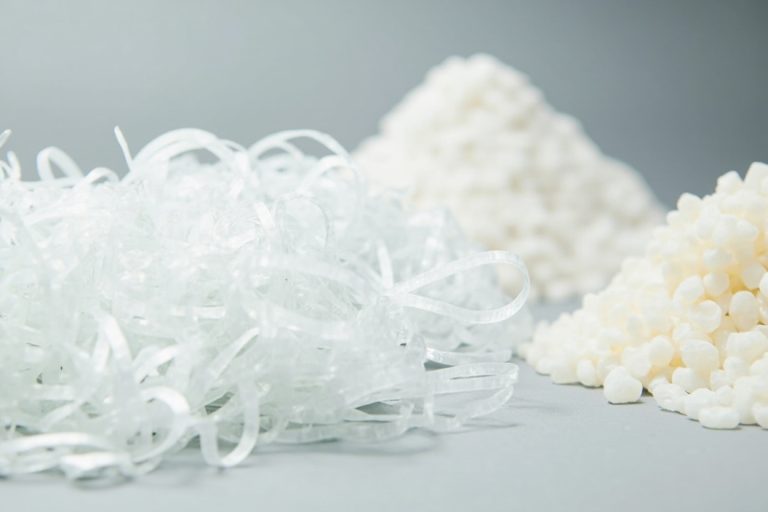
JINJIANG, China — Recycled polyester (rPET) feedstock has moved from a sustainability marketing claim to a mainstream sourcing consideration for mid-market apparel. As of mid-2026, the rPET market is balancing growing EU and US buyer demand against feedstock supply constraints and the entry of textile-to-textile recycling at limited scale. For garment exporters serving brands with recycled content commitments, the practical 2026 question is no longer whether to offer rPET options but how to manage the cost premium, supply reliability, and documentation requirements that come with recycled content claims. Market Size and Demand Global rPET demand for textile applications reached approximately 4.5 million tonnes in 2025, representing roughly 18 percent of total polyester fiber demand for apparel. The demand is concentrated in EU markets (driven by EPR schemes and recycled content mandates) and in US markets (driven by brand voluntary commitments). EU demand for rPET in apparel is expected to grow at 12-15 percent annually through 2028, driven by: The EU Single-Use Plastics Directive and connected recycled content targets Member-state EPR schemes that reward recycled content in apparel Brand voluntary commitments under the Sustainable Apparel Coalition and equivalent initiatives Consumer pressure on major brands to demonstrate recycled content progress US demand for rPET in apparel is also growing, but at a more modest pace (8-10 percent annually) and is more dependent on individual brand commitments. Feedstock Sources and Supply The rPET feedstock used in apparel comes primarily from two sources: Post-consumer bottle flake: PET bottles collected through municipal recycling programs, sorted, cleaned, and processed into flake or pellet. This is the dominant rPET feedstock for apparel today, accounting for roughly 75 percent of apparel-grade rPET. Post-industrial scrap: Pre-consumer waste from textile and packaging manufacturing, processed into fiber. This accounts for the remaining 25 percent. A third source — textile-to-textile recycling — is emerging but remains limited in scale. Several commercial-scale facilities opened in 2024–2025, but the combined output is still well under 5 percent of apparel-grade rPET demand. 2026 Pricing Outlook rPET prices have fluctuated significantly over the past 24 months. As of mid-2026, the price premium for apparel-grade rPET over virgin polyester is approximately 25-35 percent on a per-kilogram basis, depending on quality grade and certification level. The price premium has narrowed from the 50-80 percent premium of 2022-2023, as feedstock supply has expanded and certification infrastructure has matured. The premium is expected to continue narrowing through 2027 as more rPET production capacity comes online, but a meaningful premium will likely persist due to: Higher collection and sorting costs for post-consumer feedstock Stricter certification requirements (GRS, RCS) that add compliance costs Quality differences that affect downstream manufacturing efficiency Quality and Certification Not all rPET is suitable for all apparel applications. Apparel-grade rPET must meet specific quality criteria for: Viscosity and molecular weight: Critical for fiber spinning Contamination levels: Particularly important for white and light-colored yarns Color consistency: Some rPET feedstocks have inherent color variations that require blending FDA and EFSA food-contact compliance: Required for some technical applications The two main certification standards for apparel-grade rPET are: GRS (Global Recycled Standard): Covers recycled content verification, chain of custody, social and environmental practices, and chemical restrictions RCS (Recycled Content Standard): Covers recycled content verification and chain of custody only GRS certification is the dominant standard for EU and US brands. RCS is a lighter-weight alternative that some brands accept for lower-tier product lines. Practical Implications for Garment Exporters For a factory serving brands with recycled content commitments in 2026: Verify rPET source documentation. GRS or RCS certificates should accompany every rPET shipment, with the certificate matching the volume claimed. Plan for the 25-35 percent price premium. rPET orders typically run 25-35 percent above virgin polyester equivalent, with the premium varying by quality grade. Build supplier relationships with 2-3 GRS-certified rPET suppliers. Single-source rPET supply is risky given the market volatility. Track recycled content claims carefully. The EU and US markets have tightened recycled content claim requirements, with verification via third-party audits increasingly expected. Consider textile-to-textile options for premium ranges. Several brands are beginning to specify textile-to-textile rPET for premium product ranges, with a willingness to pay higher prices for the cleaner feedstock story. The Bottom Line rPET demand is growing at double-digit rates in EU markets and high single-digit rates in US markets, with a 25-35 percent price premium over virgin polyester expected to persist through 2027. The rPET market is no longer a niche sustainability play but a mainstream sourcing consideration. Garment exporters that build GRS-certified supply chains with multiple sources and robust documentation will be in the strongest position as recycled content commitments tighten through 2027 and 2028.