quality-control

Synthetic fleece fabric showing microfibers shedding under running water, environmental laboratory setting.
8 月 07, 2026

Microfiber Pollution Regulation: California AB 1628 and EU Microfiber Rules

JINJIANG, China \u2014 Microfiber pollution from synthetic textile washing is now subject to regulatory action in both California and the European Union, with material implications for garment exporters serving outdoor, activewear, and fast fashion categories where synthetic fiber content is highest. For mid-market apparel brands sourcing synthetic-rich product ranges, the 2026 regulatory landscape is no longer about voluntary commitments but about binding rules with enforcement teeth. California AB 1628: Microfiber Filtration California Assembly Bill 1628, signed in 2024, requires microfiber filtration on new washing machines sold in California starting January 1, 2027. While the bill targets washing machine manufacturers, the implication for apparel brands is that synthetic garments sold in California will increasingly be washed under filtration conditions that capture a portion of shed microfibers. For garment exporters, the direct impact of AB 1628 is modest in the short term. The bill does not impose microfiber testing or certification requirements on apparel products directly. However, brands may begin to request microfiber-shed data on synthetic products, particularly for activewear and outdoor categories where the issue has received significant consumer attention. EU Microfiber Pollution Initiatives The EU has taken a different regulatory approach, focusing on: EU Strategy for Textiles and the Circular Economy (2022): Identified microfiber pollution as a priority and called for industry action, voluntary commitments, and pre-competitive research. REACH restrictions on synthetic textile microfibers: Under review as of 2026, with a potential restriction proposal expected in 2027 or 2028. Eco-design for Sustainable Products Regulation (ESPR): Includes textile products in scope, with potential microfiber-related requirements under delegated acts. The EU approach is more comprehensive than California\u2019s, with potential requirements extending from product design to consumer information and end-of-life management. What Brands Are Doing Major outdoor and activewear brands have been active on microfiber pollution for several years. The most common responses include: Yarn selection: Use of longer filament yarns, texturized constructions, and tighter weaves that reduce shedding during washing. Fabric construction: Brushed and raised finishes tend to shed more than flat weaves; some brands are reformulating constructions to reduce shedding. Treatment chemistry: Durable water repellent (DWR) and other finishing treatments can either increase or decrease shedding depending on formulation. Consumer information: Care labeling that recommends cold water washing and lower spin speeds to reduce shedding. Take-back and recycling: Brand-operated take-back programs that capture garments at end of life, reducing the cumulative microfiber load. Testing and Documentation For garment exporters serving brands with microfiber commitments in 2026: Shed rate testing: Some brands now request microfiber shed rate testing per methodologies like AATCC TM212 or similar. Tests typically involve washing samples under standardized conditions and counting shed fibers. Construction documentation: Yarn specification, fabric construction, and finishing chemistry documentation are increasingly requested. Care labeling alignment: Care labels should be consistent with the brand\u2019s microfiber-reduction recommendations, particularly for cold wash and gentle cycle guidance. Practical Implications for Garment Exporters For a factory serving outdoor, activewear, or fast fashion brands with microfiber commitments in 2026: Document yarn and construction choices \u2014 brands increasingly want to understand the construction choices that affect microfiber shedding. Maintain care label accuracy \u2014 cold wash and gentle cycle recommendations should be standard for synthetic-rich products. Track microfiber-related regulatory developments \u2014 EU REACH restriction proposals and ESPR delegated acts will shape compliance requirements through 2027 and 2028. Engage with buyer microfiber requests \u2014 most major brands now have microfiber-related questionnaires or technical requirements. The Bottom Line Microfiber pollution is now subject to binding regulation in California and pending EU restrictions, with material implications for apparel brands sourcing synthetic-rich product ranges. For garment exporters, the 2026 priority is documenting construction choices, maintaining care label accuracy, and tracking regulatory developments as EU REACH and ESPR evolve through 2027 and 2028.
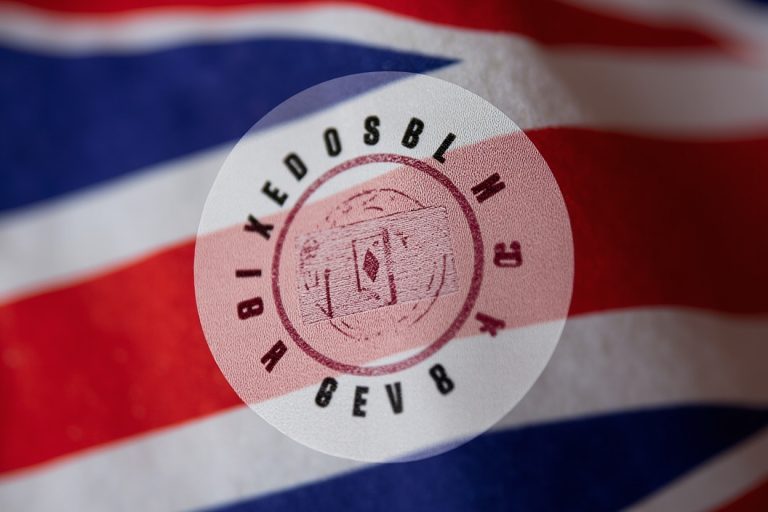

UKCA conformity marking stamp on a textile care label with UK flag colors in the background.
8 月 07, 2026

UKCA Marking for Textiles: Post-Brexit UK Compliance Requirements

JINJIANG, China \u2014 The UKCA (United Kingdom Conformity Assessed) marking is the post-Brexit UK equivalent of the EU CE marking. For garment exporters selling finished goods into the UK market, the practical 2026 question is whether UKCA applies to a given product category, and if so, what documentation is required. For most mainstream apparel \u2014 woven shirts, knit tops, trousers, dresses, sweaters, basic outerwear \u2014 UKCA does not apply. The UKCA marking regime covers products where third-party conformity assessment is required, and most consumer clothing falls outside this scope. UKCA applies in apparel primarily to specific product categories: personal protective equipment (PPE), some children\u2019s sleepwear, and certain technical or safety-related garments. What UKCA Covers (and What It Doesn\u2019t) The UKCA regime applies to product categories where conformity assessment was required under EU CE marking rules before Brexit. For apparel, the relevant categories are: Personal protective equipment (PPE): Workwear with protective functions (heat-resistant, chemical-resistant, cut-resistant, high-visibility) falls under PPE Regulation 2016/425 and requires UKCA marking for the UK market. Children\u2019s sleepwear with flammability requirements: Children\u2019s nightwear sold in the UK must comply with the Nightwear (Safety) Regulations 1985 (amended). UKCA marking is generally not required for compliance with the flammability regulations themselves, but technical documentation demonstrating compliance is required. Specific technical garments: Some technical garments with safety or regulatory functions (e.g., medical compression garments, certain sports safety equipment) may require UKCA. For mainstream apparel that does not fall into these categories, UKCA is not required. The garment can still be sold in the UK with appropriate labeling (fiber content, care instructions, country of origin) and compliance with general consumer protection regulations. UKCA vs CE for Northern Ireland Under the Windsor Framework, Northern Ireland continues to follow EU rules for goods, including the CE marking regime. Goods sold in Northern Ireland require CE marking (or UKCA + CE dual marking in some cases), while goods sold in Great Britain (England, Wales, Scotland) follow UKCA rules. For garment exporters, the practical implication is: UK-bound goods (England, Wales, Scotland): follow UKCA rules Northern Ireland-bound goods: follow EU CE rules EU-bound goods: follow EU CE rules Dual marking (both CE and UKCA) is permitted for goods that need to be sold in both markets. For mid-market apparel that does not require either marking, dual marking is not required. Documentation Requirements for UKCA-Marked Apparel For apparel that does require UKCA marking (PPE, certain children\u2019s sleepwear, some technical garments), the documentation requirements include: Technical file: Documentation demonstrating the product\u2019s conformity with relevant UK regulations, including design drawings, material specifications, and test reports. UK Declaration of Conformity (UK DoC): A document identifying the product, the manufacturer, the relevant UK regulations, and the standards used to demonstrate conformity. Test reports: From UK-accredited laboratories (UKAS accreditation) or laboratories recognized under the UK\u2019s mutual recognition agreements with other accreditation bodies. UKCA marking: The product must carry the UKCA marking in the form specified by UK regulations, with the marking visible on the product or its packaging. Practical Steps for Garment Exporters For a factory exporting apparel to the UK market in 2026: Determine whether UKCA applies. Most mainstream apparel does not require UKCA. Confirm with your UK buyer or compliance consultant if uncertain. For UKCA-marked apparel, maintain UK-specific technical files. UK technical file requirements differ from EU technical file requirements in some respects. Verify laboratory accreditation. For UKCA testing, use UKAS-accredited laboratories or laboratories recognized under UK mutual recognition agreements. Track labeling requirements. UK fiber content labeling, country of origin marking, and care labeling follow UK-specific regulations that may differ from EU rules. For Northern Ireland-bound goods, follow EU rules. CE marking continues to apply for Northern Ireland under the Windsor Framework. The Bottom Line UKCA marking applies to a narrow subset of apparel: PPE, some children\u2019s sleepwear, and certain technical garments. For mainstream apparel, UKCA is not required, though UK-specific labeling and compliance requirements still apply. Garment exporters that have correctly determined whether their product categories require UKCA, and that maintain UK-specific technical files where required, are in the strongest position for the UK market in 2026.

Textile laboratory inspection scene with technician examining fabric label and quality test apparatus.
8 月 07, 2026

Vietnam TBT Updates: New Textile Labeling and Testing Requirements for 2026

JINJIANG, China \u2014 Vietnam\u2019s National Technical Regulation on textiles \u2014 commonly referenced by its QCVN designation \u2014 received a substantive update in 2025 that affects all garment and textile exports into Vietnam for both domestic consumption and re-export to other markets. The update tightens requirements on fiber content labeling, restricted substances, and quality testing for textile imports, with phased entry into force through 2026\u20132027. For mid-market garment exporters using Vietnam as a manufacturing hub for EU and US brands, the practical impact of the updated QCVN is to align Vietnam\u2019s textile standards more closely with major destination-market requirements. Factories that already comply with EU REACH, US CPSC, and OEKO-TEX will see the changes as a documentation and labeling exercise rather than a chemical-substance reformulation exercise. What\u2019s New in the 2025 QCVN Update The 2025 QCVN update covers four main areas: Fiber content labeling: Updated tolerance thresholds for fiber composition claims, with stricter requirements for multi-fiber blends and recycled content claims. Restricted substance list: Aligned with the latest EU REACH restrictions, including expanded PFAS limits, additional phthalates, and tightened heavy-metal migration thresholds. Quality testing: New requirements for color fastness to washing, perspiration, and light on specific garment categories. Documentation: Strengthened requirements for technical files, including test reports from ISO 17025-accredited laboratories and supply chain traceability documentation. The practical effect for garment exporters is that Vietnam now requires compliance documentation \u2014 test reports, technical files, supply chain declarations \u2014 that is broadly aligned with what EU and US buyers already request. Implementation Timeline The 2025 QCVN update entered into force on January 1, 2026, with phased compliance timelines: January 1, 2026: New fiber content labeling requirements apply to all textile imports. July 1, 2026: Restricted substance list updates apply. January 1, 2027: Quality testing and documentation requirements apply. Textile products imported into Vietnam before each respective date can continue to be sold under the previous requirements until existing inventory is exhausted. New imports must meet the updated requirements from the effective date. Documentation Requirements For garment exporters shipping to Vietnam, the documentation requirements now include: Test reports from ISO 17025-accredited laboratories for restricted substances, color fastness, and fiber content verification Technical file including product specifications, fabric specifications, and production process documentation Supply chain traceability documentation for fiber origin, particularly for natural fibers and recycled content claims Care labeling in Vietnamese or with Vietnamese translation for products intended for the domestic Vietnamese market For garment exporters using Vietnam purely as a manufacturing hub (with finished goods re-exported to EU or US buyers), the documentation may not need to accompany every shipment, but should be maintained on file for customs and regulatory inspections. Compliance Costs and Practical Impact For garment exporters using Vietnam as a manufacturing hub, the practical compliance costs are modest: Test reports: Most EU and US-destined production already requires similar testing, so the marginal cost is documentation rather than retesting. Documentation: The technical file and supply chain documentation requirements align with buyer-specific documentation already requested by major EU and US brands. Labeling: For finished goods intended for re-export (not Vietnamese domestic sale), labeling changes are limited to internal documentation rather than physical label changes. For garment factories selling finished goods into the Vietnamese domestic market, the impact is more substantial. Domestic labeling in Vietnamese, additional testing for restricted substances, and stricter fiber content claims require active compliance work. Practical Steps for 2026 For garment exporters using Vietnam as a manufacturing hub: Update internal documentation templates to align with the new QCVN requirements. Most major brands\u2019 technical pack templates already cover the new requirements. Confirm test reports cover all the new restricted substance limits. If using existing test reports from 2024 or earlier, verify they include the updated substance panel. Verify laboratory accreditation \u2014 the QCVN requires ISO 17025 accreditation. Most major testing labs are accredited, but smaller or specialized labs may not be. Maintain supply chain documentation for fiber content claims, particularly for recycled and natural fiber claims. Train Vietnamese customs brokers and import partners on the new requirements to avoid clearance delays. The Bottom Line The 2025 QCVN update brings Vietnam\u2019s textile standards closer to EU and US requirements, with phased entry into force through 2026\u20132027. For garment exporters already aligned with EU REACH, US CPSC, and OEKO-TEX, the practical impact is documentation and labeling rather than reformulation. For factories selling into the Vietnamese domestic market, the impact is more substantial and warrants active compliance work.