Production

Textile quality control and laboratory testing

Quanzhou Northern Garment Adds 3D Digital Sampling to Pre-Production Workflow for Faster Buyer Iteration

08/31/2026

Quanzhou Northern Garment Co., Ltd. has completed integration of 3D digital sampling into its pre-production workflow, extending the factory's existing fabric lab and pattern-making capabilities into a fully digital iteration loop for overseas buyers. The new line sits between tech-pack intake and physical sample production. Designers and merchandising teams can now upload buyer specifications and receive photoreal 3D garment renders within 48 hours, including fabric drape simulation, seam behavior, and zipper / button placement checks. Buyers review the renders, request adjustments in writing, and receive a revised render before any fabric is cut. Once the digital sample is approved, the same data set drives marker nesting and cutting-file generation on the factory floor, eliminating the rework loop that traditionally sits between buyer comments, pattern adjustment, and physical sample re-sew. For short-run and development programs, the change is most visible at the timing level. A three-round development cycle that previously took 18 to 24 days from first tech pack to approved fit sample can now complete in 8 to 12 days, with each iteration reduced from 6 to 8 days of physical work to roughly 2 to 3 days of render revision. Capacity is preserved for buyers who need physical samples for fit sessions, retailer line reviews, or e-commerce photography 鈥?physical sampling remains available on request and is fully integrated with the digital output. For production programs, the bigger impact is on first-pass yield. Pattern data generated from the 3D sample flows directly into cutting, reducing the marker re-make rate that historically contributed to fabric waste at the start of each new style. The factory's QC team has incorporated 3D-vs-physical tolerance checks into its AQL 2.5 inspection routine for new developments, flagging any garment whose measured dimensions fall outside the digital sample specification. The investment reflects a broader industry shift toward digital product development as buyers tighten development calendars and demand faster response on trend-driven programs. The factory's R&D team will continue expanding the digital fabric library, with priority on performance outerwear, swimwear, and activewear substrates that currently require the most physical iteration. Buyers interested in trialing the digital sampling workflow on a development order can request a sample tech pack from the factory's merchandising team. Sources: factory capability statement, Quanzhou Northern Garment Co., Ltd.

Bangladesh garment factory operations amid energy supply disruptions

Bangladesh RMG Output Drops 30-40% as LNG Shortage Disrupts Peak Shipping Season

08/31/2026

Bangladesh's ready-made garment sector is heading into peak shipping season with both hands tied behind its back. Gas shortages triggered by a fire at one of the country's two floating LNG terminals in July have curtailed textile and apparel output across major industrial zones, with industry officials estimating production has dropped by 30 to 40 percent. The Bangladesh Garment Manufacturers and Exporters Association (BGMEA) is now asking international buyers to grant one- to two-week shipment extensions. The disruption goes deeper than idled sewing lines. Natural gas runs upstream through the entire textile chain, supplying captive power generation as well as the boilers and steam needed for dyeing, washing, drying, and finishing. A dyehouse shutdown can stop a sewing factory even when the lights stay on, which is why a "power restoration" headline does not translate into immediate order recovery. New research from the Centre for Policy Dialogue (CPD), drawing on data from 350 RMG factories, frames the crisis as a structural vulnerability rather than a one-off. The sector is locked into carbon-intensive production at the same time that domestic gas reserves are declining and imported LNG is becoming the marginal fuel source. CPD research director Khondaker Golam Moazzem warned that "relying solely on imported LNG will not be sustainable in the long run." The CPD study finds no silver-bullet technology. Washing and dyeing, though representing a small share of installed machines, are the most energy-intensive stage. Sewing accounts for over 85 percent of machine capacity but offers limited savings from substitution alone. Cutting, at just 5.5 percent of machine stock, holds 27.3 percent of the potential savings identified. Solar offset could trim average monthly energy costs by an estimated 15.7 percent at a 30 percent offset level, but the highest observed offset in the sample was only 10 percent. Rooftop solar can also reduce cost volatility for 96 percent of factories, yet it cannot replace the gas-fired boilers used for thermal finishing. Financing remains a binding constraint: the smallest factories in the sample showed a 57.3 percent energy-efficiency gap, versus 8.9 percent for the largest, mostly because of older machinery and limited access to capital. H&M is financing supplier projects through its Green Fashion Initiative, with five of 24 current projects in Bangladesh, and is pushing for corporate power purchase agreements to expand renewable access. CPD recommends blended finance, concessional lending, and standardized appraisal frameworks to widen that pipeline. For B2B buyers, the message is risk-management: expect slippage on Bangladesh-origin programs through the fall peak, and diversify across India, Pakistan, and Vietnam where renewable adoption is moving faster. Order placement should now factor in energy-driven delivery risk, not just price. Sources: https://wwd.com/sourcing-journal/industry-news/bangladesh-rmg-energy-crisis-1239129058/, https://wwd.com/sourcing-journal/sustainability/bangladesh-bidec-bgmea-fans-retrofit-energy-crisis-1239166465/

Bangladesh Factory Fan Retrofit Energy Efficiency

Bangladesh Garment Factories Slash Energy Costs 50% With Ceiling Fan Retrofit

08/30/2026

Bangladesh's ready-made garment industry is testing a low-tech, high-impact decarbonization play: retrofitting existing ceiling fans with brushless DC motors instead of replacing them. The Bangladesh Garment Manufacturers and Exporters Association (BGMEA) signed a memorandum of understanding last week with Bangladesh Industrial Development & Engineering Company (BIDEC) to roll the technology out to member factories.Bangladesh factories can run a thousand ceiling fans each, and the country's installed base of roughly one million units is largely old and inefficient. Founder Kazi Mohammad Ibrahim estimates that converting those fans to brushless DC drives could save the industry 217,440 megawatt-hours of electricity per year, avoid 271,452 tons of CO2-equivalent emissions, and cut annual electricity costs by more than $17 million. Trials at 42 factories have already shown efficiency gains of 47% to 65%.The economics are unusually friendly. A new fan costs around $50, a retrofit about $30, and Ibrahim pegs the payback period at roughly 2.4 years with an internal rate of return around 300%. For factory owners navigating Bangladesh's intensifying gas shortages and load-shedding, the upgrade also addresses a worker welfare problem: traditional fans run at 55-60°C on the sewing floor during peak summer, while the retrofitted units hold closer to 35-40°C — a meaningful reduction in indoor heat stress.For B2B buyers and sourcing teams, the story matters on three levels. First, supplier-side energy and carbon metrics are increasingly part of vendor scorecards under CSRD, CSDDD, and brand-level Scope 3 reporting, so factory-level efficiency improvements directly affect buyer reporting. Second, production stability in a key sourcing country improves when individual factories are insulated from grid volatility. Third, the model demonstrates a credible "micro-sustainability" template — small, repeatable retrofits with measurable ROI — that can be replicated by OEM/ODM partners in Vietnam, Cambodia, and elsewhere.BGMEA director Shah Rayeed Chowdhury framed energy efficiency as "no longer only an environmental issue; it is increasingly a business and competitiveness issue" — a useful lens for any sourcing conversation heading into 2027.Sources: Sourcing Journal — Bangladesh's Factory Fans Get Second Wind, Sourcing Journal — Bangladesh Gas Crisis Exposes RMG's Decarbonization Catch-22

US-Canada Outerwear Tariff 2026

US-Canada Trade War: What 50% Tariffs Mean for Outerwear Sourcing This Fall

08/30/2026

The U.S. administration's 50% tariff on Canadian goods, announced this weekend, will land hardest on one apparel category: outerwear. According to University of Delaware professor Dr. Sheng Lu, nearly 36% of "Made in Canada" garments in his recent product-level evaluation fell into the outerwear category — coats, jackets, and blazers carried by premium retailers including Neiman Marcus, Bloomingdale's, and Saks Fifth Avenue.For B2B buyers and sourcing teams, the immediate question is what happens to fall-season orders already on the books. Lu's assessment is that most will ship: these orders were placed months ago, often in 2025, and the short sell-through window of seasonal outerwear leaves little room to cancel. Premium Canadian brands such as Canada Goose, Kanuk, Moose Knuckles, and Quartz Co. also lack a quick switch to alternative sourcing bases because their product specifications — down fill weights, technical membranes, particular seam constructions — are tightly bound to Canadian manufacturing.Price elasticity is therefore expected to be low. Retailers are likely to absorb part of the cost increase, but a portion will reach consumers, especially on USMCA-non-compliant items. For Asian and other non-Canadian apparel OEM/ODM suppliers, the longer-term signal is more important: the U.S. has signalled that the formal six-year USMCA review will be replaced by an annual review process, which could persist until the agreement's 2036 expiry. That uncertainty complicates any sourcing decision that places Canada inside a multi-year supply chain plan.For outerwear buyers evaluating Q4 2026 and Spring 2027 programs, the practical read-through is to widen the sourcing base beyond a single country, lock in fabric and trim prices earlier in the cycle, and confirm USMCA status on every shipment. Suppliers able to certify origin, capacity, and lead time flexibility will be in a stronger position through the rest of this trade-dispute cycle.Sources: Sourcing Journal — Outerwear Sticker Shock Likely Amid US-Canada Trade War, Sourcing Journal — Canada Talks Crumble and 50% Tariffs Take Effect

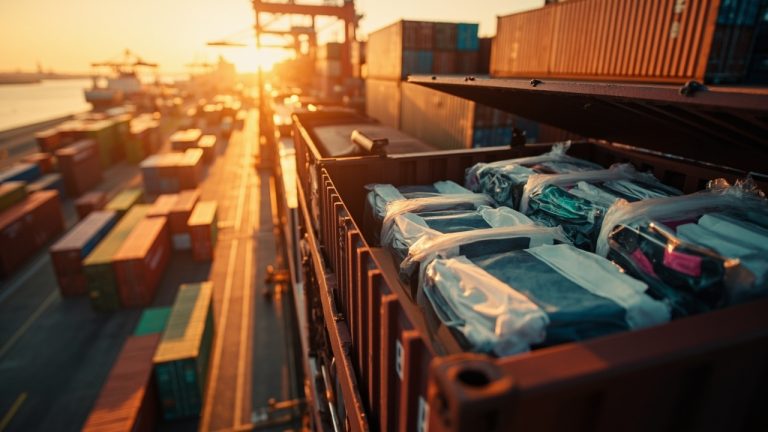
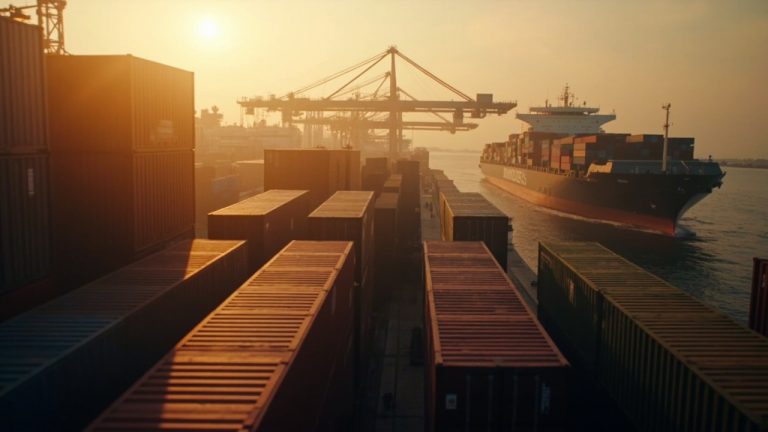
Stacked intermodal shipping containers at a port at golden hour, with one open container showing neatly folded garments in clear packaging ready for global dispatch.

State of Fashion 2026 Confirms Tariffs as the Single Largest Sourcing Variable for Apparel Brands

08/21/2026

The Business of Fashion and McKinsey State of Fashion 2026 report, published in late 2025 and re-validated through the first half of 2026, confirms what B2B sourcing teams have been operationalising for the past eighteen months: tariffs and trade disruption are now the single most important factor shaping apparel industry decisions. The report cites 76 percent of fashion executives as identifying responses to trade disruptions and tariffs as the leading priority for 2026, ahead of consumer demand shifts, technology adoption, and ESG compliance.The underlying tariff landscape has consolidated into a recognisable map. Effective duties on Chinese-origin apparel under the revised Section 301 framework now sit at roughly 12.5 percent plus the 10 percent base reciprocal rate, while apparel from Vietnam and Bangladesh carries meaningfully lower headline rates though with narrower margin floors. The European Union’s reciprocal tariff ceiling, set at 15 percent for finished garments, has been stable since mid-2026, and the EU’s separate Regulation 2026/1455 — adjusting duties on imports of certain goods originating in the United States — has added a further variable for North America–Europe cross-trade. The net effect is that landed-cost modelling has become a standing weekly exercise for any brand running multi-origin sourcing, not a one-off annual review.For OEM/ODM suppliers in Asia, the report’s findings translate into three operational shifts. First, dual-country routing is mainstream. Buyers in the AW27 and SS28 planning cycles are testing Vietnam, Bangladesh and Indonesia as parallel production options for tariff-sensitive categories, while keeping China for technical outerwear, complex sampling, and lower-volume specialty programmes. Second, origin documentation is now a sales tool. Buyers issuing new RFQs in the second half of 2026 are asking for country-of-fibre declarations, manufacturing facility identifiers, and forced-labour audit trails as part of the standard supplier package, not as a premium ask. Third, transparent cost build-ups are expected. A landed-cost calculation that does not break out fabric, trims, CMT, packaging, freight, and relevant duties is no longer accepted by procurement teams running matrix sourcing.For a Quanzhou-based apparel manufacturer, the response is to position the factory as a partner in the documentation and routing work, not just a production line. Northern Garment has supported buyers through AW27 planning with multi-origin material sourcing, mill-direct fabric chains with retained yarn-level records, and a sampling team that can ship counter-samples within seven working days. For buyers whose SS28 lines are still being scoped, the sourcing desk is open for an early planning conversation.Source: The Business of Fashion / McKinsey State of Fashion 2026; tariffstool.com 2026 country rate table, 2026-08.

Stacked intermodal shipping containers being loaded onto a container ship at an Asian port at golden hour

Revised US Section 301 Tariffs Reshape Asian Apparel Sourcing Through 2026

08/20/2026

Recent revisions to Section 301 of the US Tariff Act are reshaping apparel sourcing strategies across Asia, with effective duty rates on finished garments now sitting at noticeably different levels depending on country of origin. Industry reporting citing US Customs data puts effective duties on Chinese-origin apparel at roughly 35.6%, on Vietnamese apparel at around 28.1%, and on Bangladeshi apparel meaningfully lower, creating a structural tariff gap that is already influencing buyer matrix decisions. For US apparel brands, the result has been a measurable reallocation of order volume. EightX analysis of 2025 US Census import data shows cotton apparel continuing to gain US import share while China cedes share to Vietnam, Bangladesh, India and Cambodia. Dhaka-based trade reporting confirms that Bangladesh is capturing a near-term opportunity in cotton-heavy programs, supported by duty advantages and improved capacity in woven categories. For China-based OEM/ODM manufacturers such as Quanzhou Northern Garment, the new tariff environment does not close off the US market but does shift the types of programs that make commercial sense. High-volume, basic cotton knits face the steepest competitive pressure from lower-tariff origins, while specialty categories — performance outerwear, technical fleece, structured jackets, swimwear with complex construction, and lifestyle products with higher fabric content per unit — remain viable and often preferred when buyers value speed-to-market, lower MOQ flexibility, and tighter development cycles. The sourcing shift is also driving new conversations about origin diversification within Chinese supplier groups themselves. Buyers increasingly ask whether a supplier can offer matched production in Vietnam or Bangladesh for tariff-sensitive programs while keeping development, sampling and small-batch production in China. Suppliers that can credibly answer that question — through partner factories, owned offshore lines, or documented capacity alliances — are well placed for the next round of US sourcing decisions. Looking ahead through 2026, the Section 301 environment is expected to remain volatile, with buyers hedging across at least three origins for any program of meaningful size. Manufacturers that combine competitive landed-cost math with verifiable compliance documentation and reliable lead times will remain in the buyer matrix regardless of which way the next tariff revision swings.

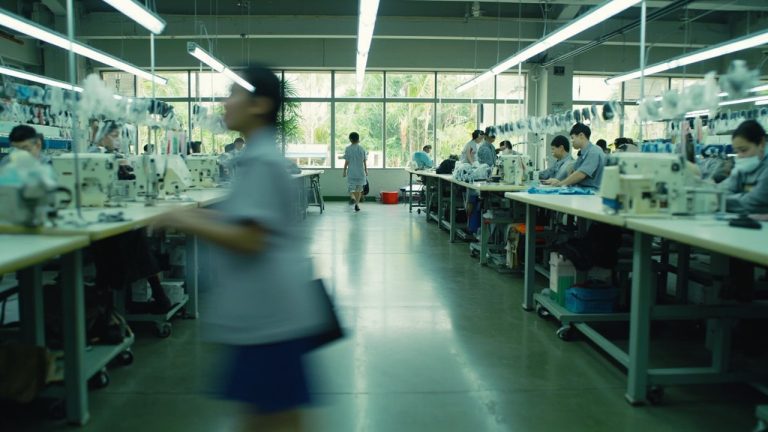
Industrial apparel production line with multiple workers operating sewing machines under fluorescent lights in a spacious facility.

Vietnam Apparel Manufacturing Capacity Continues to Expand Through 2026 Despite Tariff Volatility

08/19/2026

Vietnam's apparel export trajectory has continued upward through the first half of 2026, with industry data compiled by Fibre2Fashion and the Vietnam Textile and Apparel Association pointing to double-digit year-on-year growth in knitwear and outerwear segments despite repeated tariff adjustments under the new Section 301 framework. The combination of EVFTA duty-free access to the European Union, CPTPP preference into North America, and a maturing domestic fabric base has kept Vietnam at the top of the diversification queue for buyers rebalancing away from single-country China sourcing.For OEM/ODM buyers running multi-country sourcing strategies, the practical question in late 2026 is no longer whether Vietnam can absorb additional volume — the country's installed capacity has clearly answered that — but rather how to structure the buyer-factory relationship so that quality and lead-time discipline survive the rapid scale-up. The most consistent feedback from European buyers in 2026 is that factory selection criteria have shifted from price and MOQ toward documentation maturity, in-house sampling capacity, and demonstrated ESG audit cadence.For sourcing teams planning AW27 and SS28 capacity, three working principles are now shaping the conversation:Treat capacity as a relationship, not a transaction. Vietnam's largest mills and cut-make-trim operations are increasingly closing their booking calendars 8-10 months ahead of ship date. Buyers who establish multi-season planning conversations with their CMT partner — sharing forecast volume and category mix — are getting priority capacity slots and tighter cost discipline.Pressure-test fabric sourcing early. Vietnam's domestic mill base is strongest in knit and basic woven categories, and is steadily improving in technical outerwear. Buyers with heavy cotton or specialised fabric briefs should still treat fabric sourcing as a parallel conversation, often with China-based mill partners supporting the Vietnam cut-and-sew step.Build documentation into the PO, not after it. Buyers selling into the EU and North America should expect their Vietnam partners to provide country-of-origin declarations, fibre traceability, and audit trails as part of the standard PO package. This is no longer a premium ask — it is the procurement floor.The broader lesson for 2026 is that the apparel sourcing map is no longer a single country — it is a network, and Vietnam has earned a stable place at the centre of it. Buyers who organise their sourcing around documented, repeatable, multi-country workflows will be the ones who capture the upside of Vietnam's continued capacity build-out.Northern Garment supports buyers structuring China-Vietnam hybrid sourcing through a Quanzhou-based sampling team that can coordinate counter-samples, fabric sourcing, and production hand-off across both factory networks. If your AW27 line is being scoped for Vietnam execution, our sourcing desk is open for an early planning conversation.Source: Fibre2Fashion, 2026-08-08

Global shipping container port at dusk with cargo cranes and freight ship, representing 2026 US Section 301 apparel tariff impact on Asian sourcing

US Section 301 Tariffs Reshape Asian Apparel Sourcing for OEM/ODM Buyers

08/18/2026

The United States Trade Representative has finalised a new wave of Section 301 tariffs covering 60 apparel-producing economies, and the reaction across Asia this week is less about the headline rates and more about the second layer of measures quietly tucked inside them. According to Sourcing Journal's analysis of the USTR announcement, 42 countries now sit in a 12.5% tariff band — including China, Vietnam, Japan, Thailand, South Korea, the Philippines and Singapore — while 18 countries, among them Sri Lanka, Bangladesh, Malaysia, India, Indonesia, Pakistan and Cambodia, are placed in a lower 10% band.For OEM/ODM buyers running multi-country sourcing, the most consequential change is not the percentage but the new textile mechanism. Garments assembled with U.S.-origin inputs, including U.S. cotton, can now enter the United States free of Section 301 duties. The provision is expected to benefit Bangladesh, Cambodia, Indonesia and Malaysia most directly, and is initially set to run for three years. Industry voices in India have already warned that tariff parity will mean little if competitors receive exemptions that India does not.For Quanzhou-based manufacturers, the message is straightforward: headline tariff rates are no longer the only variable. Three practical implications for OEM/ODM partners sourcing out of China in late 2026:Material origin is now a margin lever. Garments using U.S. cotton or other U.S.-origin textile inputs can be re-engineered to qualify for the new textile mechanism. Buyers asking for origin documentation will become the norm, not the exception.Dual-country routing will accelerate. Expect more buyers to test Vietnam or Bangladesh for next-season capacity while keeping China for technical outerwear and complex sampling. The factory that can speak to both setups wins the long-term relationship.Compliance documentation is now a sales tool. Traceability records, country-of-origin declarations, and forced-labour audit trails have moved from "nice to have" to table stakes for new RFQs.Vietnam's foreign ministry has already stated it will continue negotiations with Washington, and Bangladesh's commerce minister framed the new structure as a replacement of existing duties rather than an additional burden. Either way, U.S. demand is expected to soften as costs pass through, which makes supplier flexibility and short lead-time sampling more valuable than ever.For buyers building SS27 and AW27 lines, the right question is no longer "where is the cheapest country" but "which supplier can document origin, pivot between countries, and hold quality across both?" Northern Garment supports buyers through this transition with multi-origin material sourcing, full traceability documentation, and a sampling team in Quanzhou that can ship counter-samples within seven working days.Source: Sourcing Journal, 2026-08-15

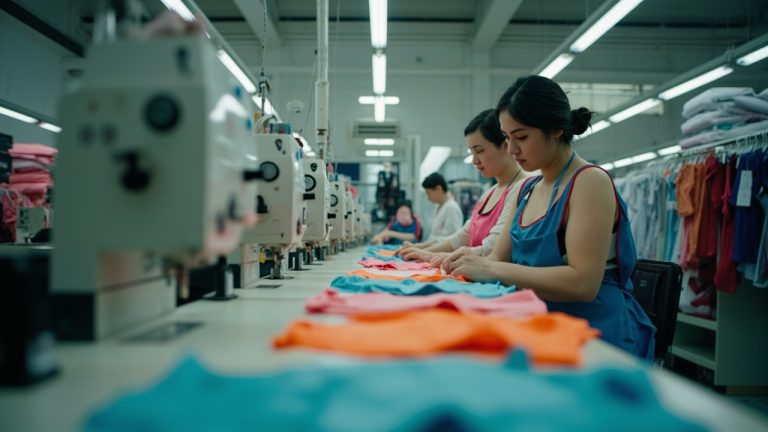
Garment workers sewing colorful swimwear on industrial sewing machines inside a clean Chinese apparel factory workshop

Inside Our Swimwear Manufacturing Process: From Fabric to Container Loading

08/17/2026

Behind every women’s swimwear order that lands on a retailer’s shelves sits a chain of decisions: which fabric to source, how to grade a pattern across six sizes, when to inline-inspect a seam, and how to load a 40HQ so it arrives at its destination without claim. At Quanzhou Northern Garment Co., Ltd. — a Jinjiang-based apparel manufacturer serving B2B buyers across Europe, North America, Australia and the Middle East for more than 12 years — that chain is broken into eight controlled stages. This article walks through each one, so sourcing teams and private-label brands can see exactly what happens between an approved tech-pack and a container sailing out of Xiamen. Step 1 — Fabric Sourcing & Lab Testing Every swimwear build begins with the fabric. We work with a curated list of Chinese mills (and selected Italian/Indonesian suppliers on request) that ship the four families our buyers ask for most: 80% Nylon / 20% Spandex — the mainstream choice for one-piece swimsuits and bikini briefs, soft hand-feel, matte finish.82% Polyester / 18% Spandex — preferred for sublimation prints, chlorine-resistant variants available.Recycled Nylon (REPREVE® / ECONYL®) — for buyers building a sustainability story into the collection.Lining fabrics — power mesh for tummy-control panels, lightweight nylon lining for cupping. Every fabric lot is logged with a batch code and sent to our in-house lab for the four tests that matter most for swimwear: color fastness to chlorinated water, color fastness to sea water, UV protection (UPF 50+ where required), and AZO-free / REACH compliance. OEKO-TEX Standard 100 certification — currently in its eighth year of annual renewal — covers the full fabric library our production lines draw from, and reports can be attached to every shipment on request. Step 2 — Pattern Making & Sample Development Once the buyer’s tech-pack lands, our pattern makers translate it into graded CAD files across the buyer’s size run (typically XS–XXL, or 6 sizes for European wholesale). Two physical fit samples are produced before bulk: a pre-production sample (PPS) shipped by express courier for buyer approval, and an inline fit sample pulled from the first cut batch for in-line verification. Standard lead time from tech-pack receipt to PPS dispatch is 7–10 working days, including one round of pattern revision at no charge. Buyers working on their first private-label swimwear capsule typically start at 300–500 pieces per style per color to validate the fit before scaling. Step 3 — Spreading & Cutting Cut planning starts with a marker that minimizes fabric waste, typically 87–92% material utilization depending on style complexity. Fabric is spread on long cutting tables in layers of 30–80 plies (depending on fabric weight and stretch), then cut using computer-controlled straight knives and band knives for curved panels. Each cut bundle is bar-coded with the style, color, size and lay number so it can be traced back to the exact fabric lot through every downstream station. Step 4 — Printing, Sublimation & Solid Dye For printed swimwear (the majority of our orders), heat-transfer sublimation printing is the default. Artwork files from the buyer are color-separated in-house, printed on transfer paper, and pressed onto polyester-blend fabric at 200 °C. For solid colors, we work with reactive-dye mills for color accuracy across production lots. All printed panels are inspected under D65 light booths against the buyer-approved lab-dip before they move to sewing. Step 5 — Sewing: The Heart of the Garment Sewing is where most swimwear quality issues are won or lost. Our swimwear lines run four-thread overlock machines for main seams (which deliver stretch plus durability), coverstitch machines for hems, and dedicated elastic-application stations for waistbands, leg openings and under-bust bands. Hardware — metal rings, sliders, hook-and-eye closures, plastic adjusters — is sourced from approved suppliers and applied in a separate sub-line to keep the main assembly flow clean. An average bikini set involves 18–22 sewing operations; a one-piece with tummy-control lining can run to 35. Line balancing — assigning the right number of operators to each operation so the bundle flows without bottlenecks — is what keeps our standard swimwear line at a daily output of 1,800–2,400 finished pieces per line without compromising on the four-point inline checks performed at every station. Step 6 — Inline & Final Quality Control QC happens in two layers. Inline QC is performed by station-checkers walking the line: seam type and SPI (stitches per inch), elastic stretch recovery, print registration, hardware attachment. Final QC takes place on a dedicated inspection table under D65 lighting, with each piece checked against an AQL 2.5 sampling plan (General Inspection Level II) for defects such as skipped stitches, broken needles (recorded via the needle-control log every shift), fabric flaws, and measurement drift outside the spec sheet tolerance of ±1 cm. Buyers ordering for the EU market can request metal-needle detection on the final line at no additional charge — a small step that has saved more than one shipment from a costly recall. Step 7 — Folding, Polybag & Carton Packing Approved pieces are folded to a standard presentation, individually sealed in OPP polybags (custom-printed polybags and hangtags available on request for orders above 1,000 pieces per style), and packed into export cartons sized for either a 20ft or 40ft HQ container. Standard inner-pack is 6 pieces per polybag inner, 4 inners per carton = 24 pieces per master carton, but we adjust to the buyer’s retail-floor planogram where required. Step 8 — Container Loading & Shipment Cartons are palletized, stretch-wrapped, and loaded into containers by our logistics team at the Jinjiang factory gate, with photographic loading reports sent to the buyer at completion. A typical 40HQ holds roughly 28,000–32,000 bikini sets depending on packaging density, and a typical 20ft holds about half that. We ship FOB Xiamen as standard, with EXW factory and CIF/DDP quotes available on request. Lead time from deposit to ex-factory is typically 35–45 days for orders in the 2,000–10,000 piece range. What This Means for Buyers Sourcing From Us If you are a private-label brand, a buying office, or a wholesaler evaluating swimwear suppliers, the workflow above is what you can expect on every order — from the first sample courier to the last carton loaded at our gate. We support OEM (build to buyer’s tech-pack) and ODM (develop from your brief into tech-pack and samples) for women’s, men’s and children’s swimwear, with an MOQ starting at 300 pieces per style per color for development runs and tiered pricing down to FOB prices that compete with larger Vietnamese and Indonesian mills on mid-volume orders. Send your tech-pack, reference images, or a quick brief to our sourcing team for a same-week response with a sample plan and indicative pricing. Quanzhou Northern Garment Co., Ltd. — OEM/ODM swimwear, outerwear and activewear manufacturer based in Jinjiang, Fujian, China. Annual capacity 2,000,000+ garments. OEKO-TEX Standard 100 (year 8). Serving buyers in 20+ countries since 2013.

Designer reviewing jacket tech pack and CAD pattern drawings

Custom Jacket Manufacturing Workflow: How Production Travels from Tech Pack to Russia

08/14/2026

A custom jacket for a Russian buyer is not just a piece of outerwear. It is a cold-climate system: a heavy-duty shell, a measured amount of insulation, a tailored fit over layered garments, and a packaging plan that has to clear GOST-R paperwork at the destination port. Below is the complete workflow that takes one such jacket from the first design conversation to a fully delivered order in Moscow, and it ends where every production story should — with a buyer who has come back for a second season. 1. Design Brief and Tech Pack Development Every Russian-market jacket program starts with a written brief. For winter parkas and down jackets, that brief typically specifies a fill power target (550 to 800), a temperature rating (often minus 25 to minus 35 °C), a length preference (mid-thigh to below-knee), and the inclusion or exclusion of a real or faux fur hood trim. The tech pack that follows translates these decisions into measurable inputs: shell composition, lining weight, zipper brand and size, snap spacing, stitch length, and a full size chart in EUR and RUS gradations. Skipping this step is the single most common reason a sample round costs extra weeks. 2. Pattern Making and Grading From the approved tech pack, the pattern maker drafts a paper block in the base size, then runs it through grading software to produce the full size run — typically EU 46 through EU 60 for the Russian market, with RUS 50 through RUS 64 marked alongside. The marker is then optimized for the chosen shell width, usually 150 cm, to balance fabric yield against cut-piece handling speed. A well-built marker can save 4 to 7 percent of fabric across an 8,000-piece order. 3. Material Sourcing and Lab Testing Material sourcing — every BOM line item, from shell and insulation to zippers and snaps, is verified before it enters production. For a Russian winter jacket, the BOM typically runs to 30 to 40 line items: shell fabric, lining, insulation, hood trim, main zipper, secondary zippers, snaps, elastic tapes, drawcord, toggles, woven labels, care labels, hangtags, and polybags. Each lot is checked against OEKO-TEX Standard 100 before it enters the cutting room, and the shell goes through water-resistance, colorfastness to rubbing and perspiration, and seam-slippage tests. Insulation lots are checked for fill power and down-to-feather ratio; synthetic lots are checked for loft recovery after compression. 4. Sample Development Most Russian buyers run two to three sample rounds before signing off on bulk production. The first round, usually called a proto, verifies the silhouette and the basic construction. The second round, the fit sample, confirms grading across the size run and locks down fabric behavior. The third round, the pre-production sample, uses the actual bulk fabric and trims and serves as the contractual reference. Each round is documented with photographs and a written fit report so changes are tracked, not improvised. 5. Pre-Production Planning Once the sample is approved, the merchandising and production teams hold a pre-production meeting. The output of that meeting is a confirmed production calendar, a fabric and trim delivery plan against that calendar, and a critical-path list of the items most likely to delay shipment — usually zippers, snaps, and fur trim sourced through long-lead suppliers. Locking these early is what separates an on-time Vladivostok departure from a missed sailing. 6. Cutting Cutting — the marker is laid on layered fabric and traced before the cut is executed. Bulk fabric is laid on the cutting table in layers, typically 60 to 120 layers depending on fabric thickness. The marker is placed on top and traced, and the cut is executed either by a straight-knife machine for standard shells or by a computer-controlled cutting machine for high-precision panels such as yokes, sleeve tops, and hood pieces. Each bundle — one bundle per size and per cut panel — is barcoded and routed to the correct sewing line. 7. Embroidery and Print Application Embroidery — brand logos and back graphics are digitized, hooped, and stitched before the panels go to sewing. If the buyer's logo or back graphic is part of the design, embroidery files are digitized to match the chosen thread color and fabric weight. Logo placement is usually the left chest, the right sleeve, or the back yoke. Print applications — typically TPU film or screen print — are heat-pressed after sewing, not before, so the print covers the seam and the final shape rather than the flat panel. 8. Sewing Assembly Sewing line — a winter jacket runs through 25 to 35 sequential operations, each with its own QC check. A single winter jacket can run through 25 to 35 sequential operations on the sewing line. The order matters: shell panels are joined first, insulation is set and stitched into chambers, the lining is attached, the zipper is inserted, and the hood, pockets, cuffs, and hem are closed in the final stages. Each operation has its own QC check — seam alignment, stitch density, no missed stitches, no fabric distortion — and most lines run a QC auditor at the end of every 30 to 50 pieces. 9. Insulation Filling For down jackets, filling is done by weight per size, with grams calibrated to the fill-power target and the design temperature rating. Filling machines weigh each jacket as the down is blown into chambers, and the operator verifies that the chambers are evenly distributed. Synthetic insulation is cut into panels of the correct gram weight and stitched into the lining. 10. Finishing Finishing covers buttonhole cutting, snap attachment, steam pressing, thread trimming, and loose-end removal. Pressing is the operation that gives a jacket its final shape, especially on the lapels, hem, and sleeve crown. A poorly pressed jacket reads as cheap regardless of how well it was sewn. 11. Final Quality Inspection Inspection happens twice. A 100 percent inspection is run on every jacket for visual and functional defects — broken stitches, fabric flaws, misaligned pockets, loose snaps, zipper function. A second inspection is run as an AQL audit on a statistical sample drawn from the packed shipment, with measurements checked against the original tech pack tolerances. Anything that fails either round is either repaired on the spot or marked for rework and re-inspected before packing. 12. Packing and Labeling Approved jackets are folded to spec, polybagged with silica desiccant, and packed into individual boxes or master cartons depending on the buyer's retail channel. Russian-market cartons require care labels in Russian (or bilingual), country-of-origin labeling that meets EAC rules, and a barcode format compatible with the buyer's warehouse system. Master cartons are weighed and labeled with the same data plus the gross weight for the freight forwarder. 13. Shipping to Russia Shipping — export cartons palletized, labeled, and routed through sea freight to Vladivostok or rail through the China-Europe corridor. For a full 40-foot HQ container of around 8,000 to 12,000 mid-weight jackets, the standard route is sea freight from Shanghai or Ningbo to Vladivostok (about 7 to 10 days port-to-port) followed by rail or truck transit into central Russia. Total transit time is typically 25 to 35 days from factory gate to Moscow warehouse, with 35 to 45 days for Saint Petersburg. Documentation is the slow point: commercial invoice, packing list, certificate of origin, and the EAC conformity paperwork that Russian customs require before release. Documentation errors is the most common cause of clearance delays. 14. Customer Reception and Repeat Order For a Russian buyer working on a winter delivery window, on-time arrival in Moscow is the first half of satisfaction. The second half is that the production matches the approved pre-production sample within the agreed tolerance, that the size run holds, and that the cartons open with the right mix. When both halves are met, the same buyer returns for the next season's program with the same tech pack and a small set of refinements — exactly what happened on the program this article is based on. A repeat order from a Russian winter buyer, after a clean first delivery, is the most reliable signal that a factory has earned a place in their supply chain. Closing Notes on the Russian Winter Jacket Program A full production cycle from design brief to Moscow delivery typically runs 75 to 110 days, with about 60 to 75 of those days inside the factory and the remaining 15 to 35 in transit and customs. The bottlenecks are almost always upstream: a late fur-trim shipment, a delayed zipper draw, or a fabric mill that misses a window. Factories that win repeat Russian business are the ones that lock those upstream lines early, run a disciplined sample-and-approval cycle, and treat documentation for EAC clearance as part of the production timeline rather than an afterthought at the end.