Production

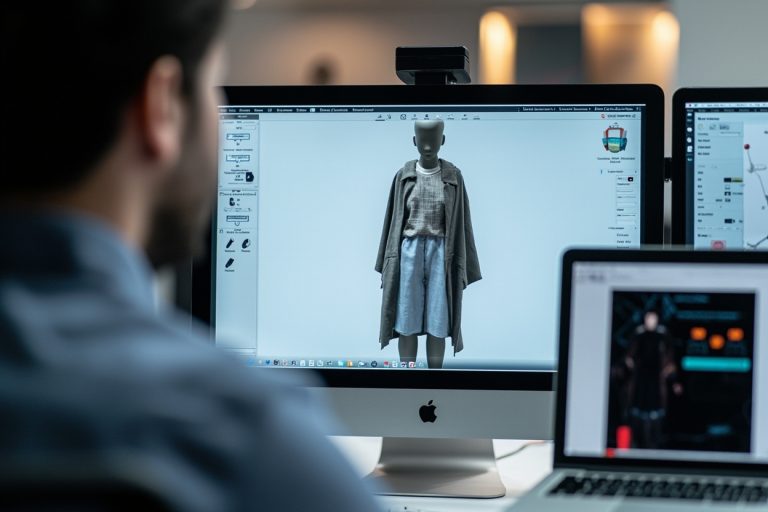
3D garment design software interface on a modern computer screen, showing virtual clothing.

3D Digital Sampling Adoption: How to Evaluate OEM Vendors Before Committing

08/07/2026

JINJIANG, China — 3D digital sampling — the use of 3D garment design software to create virtual samples before producing physical prototypes — has moved from a niche capability to a mainstream expectation in mid-market apparel sourcing over the past three years. For 2026, the question is no longer whether to adopt 3D sampling but how to evaluate OEM vendors on their 3D capability and how to integrate 3D samples into existing development workflows. The current state of 3D sampling in apparel is fragmented. Some vendors use 3D for early concept visualization only. Others use it for fit approval on complex garments. A smaller subset uses 3D for full development including pattern validation, marker planning, and bulk-production fit verification. The cost and time savings — and the level of buyer expectation — vary significantly across these use cases. What 3D Sampling Actually Does For a typical mid-market woven shirt or knit top, 3D sampling can replace the first physical sample (the proto sample) with a virtual sample rendered from the factory’s pattern files. The virtual sample can be reviewed for silhouette, proportion, and rough fabric behavior; physical samples are still required for final fit approval and material hand-feel evaluation. For more complex garments — outerwear, technical knits, multi-component constructions — 3D sampling can also be used for construction validation, component layout, and material yield analysis. The benefit increases with garment complexity, but the implementation cost and skill requirement also increase. Time and Cost Savings For a vendor running 3D sampling effectively, the typical time savings on first-round sample development is 7–10 calendar days per style. The cost savings are typically 30–50 percent on first-round sample production, primarily because the number of physical proto samples is reduced from 2–3 per style to 1 per style. For a mid-market brand running 50–100 styles per season, the aggregated savings are substantial — both in direct sample cost and in compressed development timelines that allow later fabric commitments and faster replenishment cycles. How to Evaluate OEM Vendors on 3D Capability For a sourcing team evaluating 3D capability at potential OEM partners, the practical evaluation framework includes: Software platform. Which 3D software is the vendor using? Leading platforms include CLO3D, Browzwear, Optitex, and Style3D. Ask about licensing, version, and number of licensed users. Pattern digitization workflow. Can the vendor digitize a 2D pattern from PDF or DXF into the 3D platform accurately? What is the typical pattern digitization time per style? Fabric library. How many fabric references are pre-loaded in the vendor’s 3D library? Are physical fabric swatches linked to digital fabric definitions for accurate drape simulation? Sample turnaround. Can the vendor deliver a 3D garment render within 3–5 working days of receiving a 2D pattern and fabric specification? Integration with bulk production. Does the vendor use the 3D pattern for marker planning? Can the 3D pattern be exported as a production-ready 2D marker? Practical 2026 Implementation For sourcing teams rolling out 3D sampling across their vendor base: Pilot with 2–3 vendors on a contained program. Select 5–10 styles for 3D sampling as a pilot, with both 3D and physical samples produced in parallel. Standardize the 3D deliverable. Specify what the vendor delivers for each 3D sample: rendered images, fit notes, fabric behavior annotations, and pattern validation. Build a 3D fabric library with your fabric mills. The most expensive part of 3D setup is the fabric library. Coordinate with your fabric mills to obtain digital fabric definitions for your top 20–30 fabric references. Train your internal team on 3D review. Internal fit and design teams need to be able to evaluate 3D samples confidently. Plan for 2–3 months of training before making 3D the primary sample format. Use 3D for fit approval on simple programs. 3D is most useful for relatively simple garment constructions where fit verification is the primary objective. For complex outerwear and technical knits, physical samples remain essential. The Bottom Line 3D digital sampling is now a baseline expectation in mid-market apparel sourcing. The vendors that have invested in 3D capability, fabric libraries, and internal training are delivering 7–10 day time savings on first-round samples and 30–50 percent cost savings on sample production. For sourcing teams that have not yet integrated 3D sampling into their development workflow, 2026 is the year to begin.

Cargo ship at a European port with stacked containers, autumn lighting.

EU CBAM Phase 2 Implementation: What Garment Exporters Must Prepare by Q4 2026

08/07/2026

BRUSSELS — The European Union’s Carbon Border Adjustment Mechanism entered its definitive phase on January 1, 2026, requiring importers of cement, steel, aluminum, fertilizers, electricity, and hydrogen to surrender CBAM certificates corresponding to the embedded carbon in each shipment. While finished garments are not formally within CBAM scope today, garment exporters are nonetheless entering a critical preparation window: the EU is widely expected to widen CBAM to additional product categories in the 2027–2030 review cycle, and large EU buyers are already pushing carbon-disclosure requirements upstream into their supplier base. For OEM and ODM factories serving European brands, the practical question is no longer whether carbon reporting will arrive — it already has, via the Corporate Sustainability Reporting Directive (CSRD) and individual buyer Scope 3 requests — but whether the factory will be ready with verifiable product- and facility-level carbon data when those requirements tighten in 2027. What CBAM Actually Covers Today The first six product categories — cement, steel, aluminum, fertilizers, electricity, and hydrogen — are the only goods currently subject to the carbon border levy. For most apparel supply chains, the direct exposure is narrow. Steel used in zippers, metal buttons, snap fasteners, and eyelets is in scope. Aluminum used in eyelets, grommets, and trim hardware is in scope. Fertilizers used in cotton cultivation have been a longer-running question and may enter scope in a later review phase. Textile fibers and finished garments are not in the current regulation, but several EU member states and industry groups have called for scope expansion in the 2027 review. The European Apparel and Textile Confederation (Euratex) has published position papers noting that indirect emissions embedded in textile imports could be addressed via adjacent instruments — particularly the Carbon Border Adjustment Mechanism itself, the EU Emissions Trading System (ETS), or a future product-specific carbon levy. Why Apparel Exporters Should Prepare Anyway The carbon border tax is only one of several converging instruments pushing carbon data into supplier relationships. EU brands under CSRD obligations are required to report Scope 3 emissions — the indirect emissions from their value chain — starting in the 2024–2027 reporting cycle depending on company size. The standard practice for Scope 3 Category 1 (purchased goods and services) requires primary data from material suppliers and manufacturers, not just spend-based estimates. Major EU retailers and brands have already begun requesting facility-level energy data, renewable-energy share, and product carbon footprints (CFPs) from their garment factories and fabric mills. The data quality requirements escalate each year: from estimated, to facility-level measured, to product-level cradle-to-gate assessments. By 2027, garment exporters that cannot supply verifiable facility- and product-level carbon data are likely to find themselves deprioritized by EU buyers during sourcing reviews. What Buyers Are Asking For in 2026 Based on conversations with export-facing factories and intermediary agents, the most common 2026 buyer requests fall into three tiers: Tier 1 — Facility-level data: Total annual electricity consumption (kWh), grid-mix share vs. captive renewable share, on-site solar capacity, thermal energy for steam and pressing, and refrigerant inventory. This is the floor of buyer requests and is usually collected via the Higg Facility Environmental Module (Higg FEM) or a buyer-specific questionnaire. Tier 2 — Product carbon footprint: Cradle-to-gate carbon footprint per SKU, calculated per ISO 14067 or the GHG Protocol Product Standard. This typically requires mill-level energy data for each fabric in the bill of materials, plus processing energy at the cut-and-sew stage. Tier 3 — Verified third-party assurance: External verification of facility or product carbon data per ISO 14064-3, with an audit report on file. This is becoming standard for brands selling into the EU and the UK, and is also a precondition for several private-label programs. Practical Steps for Q4 2026 For factories that have not yet begun carbon data collection, the following sequence covers the practical baseline by the end of 2026: Complete a Higg FEM self-assessment for at least one production facility. The FEM covers electricity, water, waste, and chemicals in a structured format that most EU buyers will accept as a starting point. Establish a 12-month electricity baseline with monthly meter readings, broken out by facility area where possible. Most EU buyers want at least one full year of monthly data before granting carbon-data acceptance. Document grid-mix and renewable share using the local utility’s published grid factor and any on-site renewable installations. China’s provincial grid factors vary widely — from under 0.4 tCO\u2082/MWh in hydroelectric-heavy provinces to over 0.8 tCO\u2082/MWh in coal-heavy regions. Collect fabric-level energy data from your top five fabric and trim suppliers. A simple mill self-declaration is a starting point; a third-party verified mill-level CFP is becoming the differentiator. Calculate a baseline cradle-to-gate CFP for your top three styles using publicly available emission factor databases (e.g., Ecoinvent, Quantis, or the China Life Cycle Database CLCD). What Changes if CBAM Expands to Textiles Should CBAM scope expand to include textile fibers or finished garments in the 2027 review, the immediate compliance impact would fall on EU importers first, then cascade to suppliers. For an apparel exporter, the likely operational consequences include: Mandatory reporting of fiber origin, processing energy, and fabric supplier carbon data on every shipment entering the EU Buyer requests for carbon footprint verification per ISO 14067 or equivalent standard Increased emphasis on lower-carbon fiber choices (recycled polyester, organic cotton, regenerative cotton, lower-impact cellulose fibers) in buyer product specifications Carbon-adjusted pricing on certain product categories — with the carbon cost passed through the importer to the supplier via cost-down negotiations or premium-bearing sustainable ranges The Bottom Line for Q4 2026 CBAM in its current form does not directly levy a carbon cost on finished garments, but the supporting ecosystem — Scope 3 reporting, product carbon footprint requirements, third-party verification — is already landing on garment suppliers. The factories that establish verifiable facility- and product-level carbon data by the end of 2026 will be in the strongest position when EU scope expansion is announced and when individual buyers formalize their 2027 sourcing criteria. For factories that have not yet started, the first concrete step is the Higg FEM self-assessment, which can typically be completed in two to four weeks with existing utility data. The second is a 12-month electricity and energy baseline, which becomes the foundation for any subsequent product carbon footprint calculation or third-party verification.

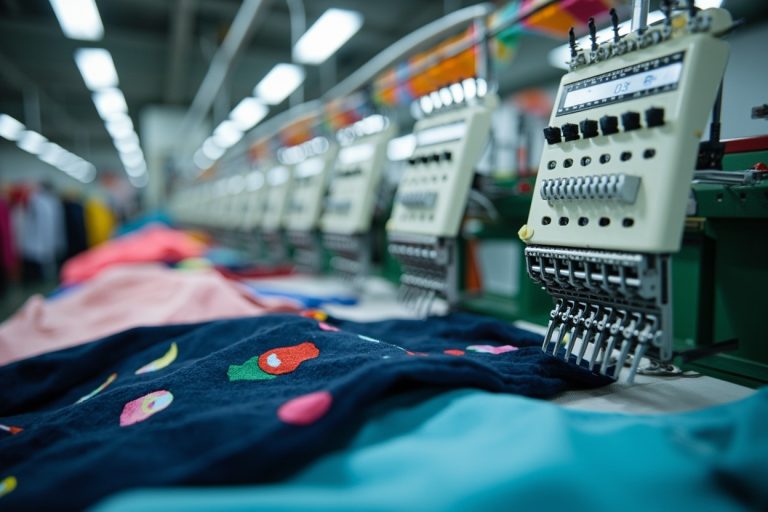
embroidery test

Quanzhou Northern Garment Adds 80-Stitch Computerized Embroidery Line, Expanding Customization Capacity for Mid-Market Brands

08/22/2025

JINJIANG, China — Quanzhou Northern Garment Co., Ltd. has commissioned a new 80-stitch computerized embroidery line at its Jinjiang production facility, expanding the factory’s in-house customization capacity for mid-market children’s apparel brands, outdoor labels, and lifestyle private-label programs. The line went into commercial production in August 2025 and is now booking orders for Autumn/Winter 2026 and Spring/Summer 2027 collections. The new line consists of six multi-head computerized embroidery machines configured for production runs of chest logos, sleeve crests, back yokes, appliqué patches, and full-back graphics on finished garments and cut panels. The line is supported by an in-house digitizing team that prepares embroidery files directly from buyer-provided artwork, samples, or technical packs. “For our buyer profile, embroidery is often the detail that justifies the price point,” said the factory’s production director. “Whether it’s a tonal chest logo on a basic fleece hoodie or a heritage crest on a wool-blend peacoat, the embroidery has to be flat, the registration has to be tight, and the turnaround has to be fast. We’re building the line that delivers all three.” What the New Line Enables The line was specified to address three capacity gaps that the factory identified in its 2024 customer survey: Tonal and low-contrast embroidery. Buyers increasingly request embroidery that sits flush with the garment color and reads through texture rather than contrast. The new machines are configured with flat-bed table heights, programmable thread tension, and bobbin-thread detection systems calibrated for fine-gauge embroidery on lightweight fleece, interlock, and piqué knits. Faster design-to-production turnaround. In-house digitizing reduces file-preparation time from an average of 5–7 days (when outsourced) to 24–48 hours for most logos, crests, and appliqué designs. For repeat orders, file turnaround is typically under 4 hours. Tighter quality control. The line is staffed by a dedicated QA lead and four embroidery operators with an average of 6 years of embroidery-specific experience. Production samples are inspected at machine start, mid-run, and end-of-run, with stitch-count verification on every design. Production Specifications The new line supports the following production parameters: Stitch counts up to 80,000 stitches per design (suitable for detailed crests, branded graphics, and large-format back-yoke embroidery) Fabric thickness range from 0.5mm (single-jersey tee) to 6mm (heavy wool-blend peacoat with backing) Thread count from single-needle fine detail to 12-needle wide satin stitch Color palettes up to 12 thread colors per design Backing options including tear-away, cut-away, and heat-dissolvable film for performance garments Common applications include chest and sleeve logos, back-yoke graphics, appliqué patches, monogram crests, and decorative border stitching. The factory can also produce embroidered care labels as a sustainable alternative to woven or printed labels on performance fleece and activewear. Pricing and MOQ Embroidery decoration is available as a value-add service on any OEM or ODM order. Pricing is based on stitch count, design complexity, and order quantity. Minimum order quantities for custom embroidery on existing factory styles start at 200 pieces per design per colorway, with development samples available in 7–10 days. For buyers commissioning full custom developments (including pattern, fabric, and embroidery), MOQs follow the factory’s standard 500-piece floor with development timelines of 30–45 days from approved sample. About Quanzhou Northern Garment Co., Ltd. Quanzhou Northern Garment Co., Ltd. is a Jinjiang-based apparel manufacturer specializing in children’s outerwear, swimwear, activewear, and lifestyle hooded fleece. The factory operates from a 12,000 m² production facility in Jinjiang, Quanzhou, Fujian, and has served international apparel brands, importers, and private-label retailers for more than a decade. The company is committed to transparent sourcing, consistent quality, and long-term partnerships with brand customers across Europe, North America, Asia-Pacific, and the Middle East. For embroidery sample requests, capacity inquiries, or development quotations, please contact: Quanzhou Northern Garment Co., Ltd. Production Office Email: sales@99northern.com Web: www.99northern.com