Sampling

Textile quality control and laboratory testing

Quanzhou Northern Garment Adds 3D Digital Sampling to Pre-Production Workflow for Faster Buyer Iteration

08/31/2026

Quanzhou Northern Garment Co., Ltd. has completed integration of 3D digital sampling into its pre-production workflow, extending the factory's existing fabric lab and pattern-making capabilities into a fully digital iteration loop for overseas buyers. The new line sits between tech-pack intake and physical sample production. Designers and merchandising teams can now upload buyer specifications and receive photoreal 3D garment renders within 48 hours, including fabric drape simulation, seam behavior, and zipper / button placement checks. Buyers review the renders, request adjustments in writing, and receive a revised render before any fabric is cut. Once the digital sample is approved, the same data set drives marker nesting and cutting-file generation on the factory floor, eliminating the rework loop that traditionally sits between buyer comments, pattern adjustment, and physical sample re-sew. For short-run and development programs, the change is most visible at the timing level. A three-round development cycle that previously took 18 to 24 days from first tech pack to approved fit sample can now complete in 8 to 12 days, with each iteration reduced from 6 to 8 days of physical work to roughly 2 to 3 days of render revision. Capacity is preserved for buyers who need physical samples for fit sessions, retailer line reviews, or e-commerce photography 鈥?physical sampling remains available on request and is fully integrated with the digital output. For production programs, the bigger impact is on first-pass yield. Pattern data generated from the 3D sample flows directly into cutting, reducing the marker re-make rate that historically contributed to fabric waste at the start of each new style. The factory's QC team has incorporated 3D-vs-physical tolerance checks into its AQL 2.5 inspection routine for new developments, flagging any garment whose measured dimensions fall outside the digital sample specification. The investment reflects a broader industry shift toward digital product development as buyers tighten development calendars and demand faster response on trend-driven programs. The factory's R&D team will continue expanding the digital fabric library, with priority on performance outerwear, swimwear, and activewear substrates that currently require the most physical iteration. Buyers interested in trialing the digital sampling workflow on a development order can request a sample tech pack from the factory's merchandising team. Sources: factory capability statement, Quanzhou Northern Garment Co., Ltd.

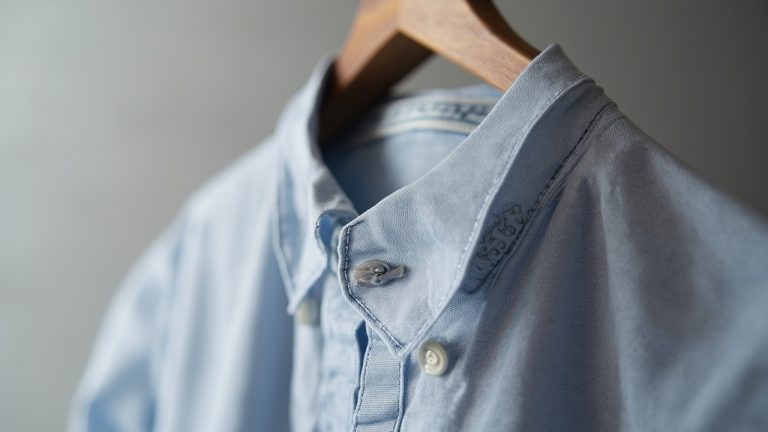
Close-up of a custom-made light blue shirt collar showing precise stitching and embroidered monogram detail on a wooden hanger

Custom Apparel Details: 12 Things Buyers Should Look At Before Approving a Bulk Order

08/17/2026

The difference between a custom apparel order that ships on time and one that ends up in a claims folder usually traces back to a handful of details a buyer either specified clearly — or didn’t. At Quanzhou Northern Garment Co., Ltd., we work with private-label brands and buying offices on OEM (build to buyer’s tech-pack) and ODM (build to a brief) production for swimwear, outerwear, activewear and hoodies. After twelve years and tens of millions of garments, the same twelve details keep showing up on every well-run order, and their absence keeps showing up on every problematic one. This is the checklist we walk every new buyer through before a tech-pack is finalized. The details that define custom apparel: precise topstitching along the collar band, clean buttonhole, embroidered monogram, structured collar roll — every one of these is a checklist line item on a well-run custom order. 1. Fabric Specification: More Than a Composition Line “80% nylon / 20% spandex” is not a fabric spec — it’s a starting point. A buyer-ready fabric spec includes fiber composition, weight (GSM or oz/yd²), width (cuttable), stretch percentage and recovery, finished hand-feel (soft, firm, brushed, slick), color fastness ratings to the relevant agents (chlorine, sea water, light, perspiration), pilling grade, and any required certifications (OEKO-TEX Standard 100, GOTS, REACH compliance, recycled-content documentation). The clearer the spec, the fewer surprises when the lab-dip arrives. 2. Tech-Pack Completeness A tech-pack should function as a contract. The four sections that most often go wrong are: measurement spec (with tolerance, e.g. ±1 cm), construction notes (seam type, SPI, topstitch position), BOM (bill of materials — every trim, label, hardware item), and artwork files (vector for prints, separated by color). If any of these are vague, expect at least one round of revisions and added lead time. We have a one-page tech-pack template we share with buyers who are sourcing their first capsule. 3. Sample Rounds: PPS, Fit Sample, and Pre-Production Sample Buyers sometimes compress the sample stage to save time and end up costing a week downstream. The standard cadence for our lines is: a pre-production sample (PPS) made from bulk fabric and trims, couriered for buyer approval; a fit sample pulled from the first cut bundle to confirm the line is sewing to spec; and a final bulk-shipment reference sample retained in our archive for any future re-order. Each round has a defined approval window (typically 3 working days) — holding any of them up pushes the bulk date back by the same amount. 4. Stitch Quality and Seam Construction Stitch quality is the easiest thing to check and the most common reason a finished garment gets rejected. Look at the stitches per inch (SPI) — 10–12 SPI is typical for main seams, 8–10 for topstitch on woven outerwear, 14+ for elastic application on swimwear. Confirm seam type (4-thread overlock for stretch, 5-thread safety stitch for high-stress seams, lockstitch for crisp topstitch). Inspect buttonholes, bartacks at pocket corners, and the symmetry of collar points. These are the QC checks our line-walkers run on every bundle. 5. Trims and Hardware Buttons, zippers, snaps, hooks, sliders, drawstring tips, toggles, metal rings — every hardware item on the BOM should be sourced from an approved supplier with a documented specification (size, finish, tensile strength, color match against a Pantone or physical sample). Custom hardware usually adds 7–10 days to lead time and a tooling charge, so specify up-front. For swimwear, the choice between stainless steel and Zamac alloy rings matters for salt-water durability — a detail often missed in tech-packs. 6. Color Management Always reference a Pantone TPX / TCX number (or a physical swatch from the buyer) when specifying color. We dye or print to a lab-dip against that reference, send a swatch for approval, and only proceed to bulk once the buyer signs off. The acceptable ΔE (delta-E) tolerance should be agreed in writing — typically ≤ 1.0 for solid colors and ≤ 2.0 for printed grounds. Without that number, color approval becomes subjective and disputes become hard to settle. 7. Size Run and Grading Confirm the size run (e.g. XS–XXL, or 6 sizes for EU wholesale) and the grading rules — the increments between sizes, especially at the hip, waist, sleeve length and inseam. A common pitfall is grading proportionally off an arbitrary size block; the better approach is to anchor on a fit-approved sample (a “fit block”) and grade away from it. For private-label capsules targeting a specific demographic (e.g. women’s swimwear, ages 25–40), we recommend using a fit-tested block from a previous successful order rather than re-deriving one each season. 8. Print and Embroidery Artwork For sublimation prints, the artwork file should be vector or 300 DPI raster, supplied in CMYK with named spot colors and a clearly marked repeat size. For embroidery, the file should include stitch type (satin / fill / running), stitch direction, thread color references, and the finished embroidery size on the garment (often 5–8 cm for a chest logo). We send a sew-out / print-proof on bulk fabric for approval before production begins — this is the cheapest place to catch a registration or color-shift problem. 9. Packaging Details Packaging is part of the product, especially for retail-ready shipments. Specify: polybag type (clear OPP, individual vs. multi-pack), folding method (some buyers require a specific fold for shelf-ready presentation), hangtag position, size-strip on the polybag, and the master carton configuration (pieces per inner, inners per carton, carton dimensions, gross weight). Custom-printed polybags and hangtags typically carry a tooling fee and a 2-week lead time — order ahead of bulk. 10. Compliance and Labeling Every market has its own labeling rules. For the EU, fiber composition and country-of-origin must appear on the garment; for the US, the FTC Care Labeling Rule dictates care symbol content and placement; for swimwear sold into California, Prop 65 warnings may be required on certain hardware finishes. Confirm with your factory which care symbols standard they work to (ISO 3758 / ASTM / Ginetex) and which side of the garment they’ll be sewn on. 11. Shipping Terms and Lead Time Be explicit about the Incoterm — FOB Xiamen is our standard for export, EXW factory for buyers with their own logistics, CIF / DDP available on request. Lead time from deposit to ex-factory is typically 35–45 days for orders in the 2,000–10,000 piece range, but add 7–10 days for custom hardware or printed polybags. For urgent orders, sample-line capacity can be reserved up to four weeks in advance. 12. Communication Cadence The single biggest predictor of a smooth custom order is the communication cadence: who approves what, by when, and through which channel. We send weekly progress photos during production, an inline QC report at the 30% and 70% marks, and a final photo-loading report once the container is sealed. Buyers who respond within 24 hours on sample approvals and lab-dip sign-offs routinely take 5–7 days off their total lead time. Closing Note If you are evaluating a custom apparel partner for the first time, walking through these twelve points before signing a PO will save you the most common round of disputes on tech-pack gaps, color drift, packaging mismatches and lead-time slips. Send your tech-pack or a brief to our sourcing team for a same-week response, sample plan, and indicative pricing. Quanzhou Northern Garment Co., Ltd. — OEM/ODM custom apparel manufacturer based in Jinjiang, Fujian, China. Custom hardware, custom packaging, full private-label service. OEKO-TEX Standard 100 (year 8). Serving buyers in 20+ countries since 2013.

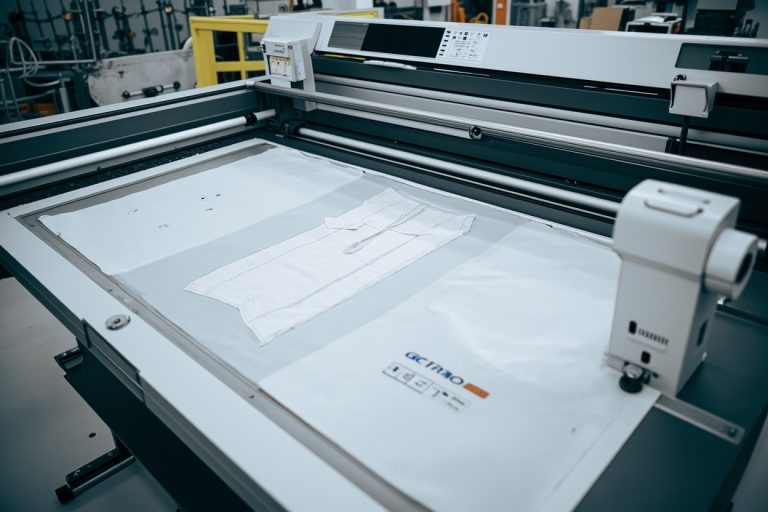
Automated fabric cutting machinery in a modern garment factory, computer-controlled cutting system.

AI in Pattern Making and Marker Planning: Practical Applications for OEM Garment Factories

08/07/2026

JINJIANG, China — Artificial intelligence is replacing some of the most labor-intensive planning work in garment manufacturing — pattern grading, marker nesting, and fabric utilization optimization — with measurable cost and time savings for OEM factories that have adopted the technology. For 2026, AI-assisted pattern making and marker planning have moved from pilot to mainstream in mid-market apparel production. The current state of AI in pattern making is best understood as a set of three distinct capabilities that have matured to scale in the past three years: Pattern recognition and digitization: AI can convert 2D pattern images (PDF, photograph, or DXF) into digital pattern files with minimal manual correction. The state-of-the-art accuracy is 90–95 percent for well-defined pattern pieces, with the remaining 5–10 percent requiring manual adjustment. Marker generation and optimization: AI can generate markers (fabric layouts for cutting) that match or exceed the fabric utilization of human markers. The state-of-the-art AI markers achieve 2–4 percent better fabric utilization than average human markers on standard garment categories. Pattern grading: AI can grade patterns across a size range with minimal manual correction. The state-of-the-art AI grading handles 70–80 percent of common pattern adjustments automatically, with the remaining 20–30 percent requiring manual review. Practical Time Savings For a typical mid-market factory running 30–50 styles per season, the time savings from AI-assisted pattern work are substantial: Pattern digitization: 30–50 percent time reduction per style, with the largest savings on simpler garment pieces Marker generation: 40–60 percent time reduction per style, with the most significant gains on complex layouts Pattern grading: 50–70 percent time reduction per size range, with the largest savings on simple size progressions For a factory running 50 styles per season, the aggregated time savings translate to 1–2 full-time pattern maker equivalents of capacity, which can be redeployed to higher-value work like development sampling or fit optimization. Practical Cost Savings The cost savings from AI-assisted pattern work are real but more modest than the time savings: Direct labor savings: 1–2 percent of total garment cost on pattern-making and cutting labor, depending on factory size and product complexity Fabric savings: 2–4 percent fabric utilization improvement on the cutting stage, which is the largest cost lever in garment manufacturing Development cycle savings: 7–14 days reduction on new style development, which allows later fabric commitments and faster replenishment cycles For a mid-market garment factory, the total cost savings from AI-assisted pattern work are typically 3–5 percent of total garment cost across the production portfolio. How to Evaluate AI Pattern Tools For a factory evaluating AI pattern tools in 2026: Pattern recognition accuracy. Test the tool on a sample of 10–20 patterns with varying complexity. Evaluate the accuracy on common pattern pieces (front/back body, sleeve, collar) and on more complex pieces (facings, plackets, cuffs). Marker utilization performance. Run the AI marker tool against your best human markers on 10–20 styles. The AI tool should match or exceed human performance on standard layouts. Grading consistency. Test the AI grading on a size range with simple and complex grading rules. The grading output should be consistent across the size range. Integration with existing CAD systems. Does the AI tool integrate with your existing pattern CAD (Gerber, Lectra, Assyst, Optitex)? Integration with existing systems is critical for adoption. Vendor support and training. What kind of training and support does the vendor provide? Adoption typically requires 2–3 months of dedicated training and integration work. The Bottom Line AI-assisted pattern making and marker planning have moved from pilot to mainstream in 2026. Mid-market OEM factories that have adopted the technology are saving 30–50 percent on pattern digitization time, 40–60 percent on marker generation time, and 3–5 percent on total garment cost. For factories that have not yet adopted AI pattern tools, 2026 is the year to evaluate — the time savings and fabric utilization improvements are now mature enough to deliver measurable ROI on adoption.

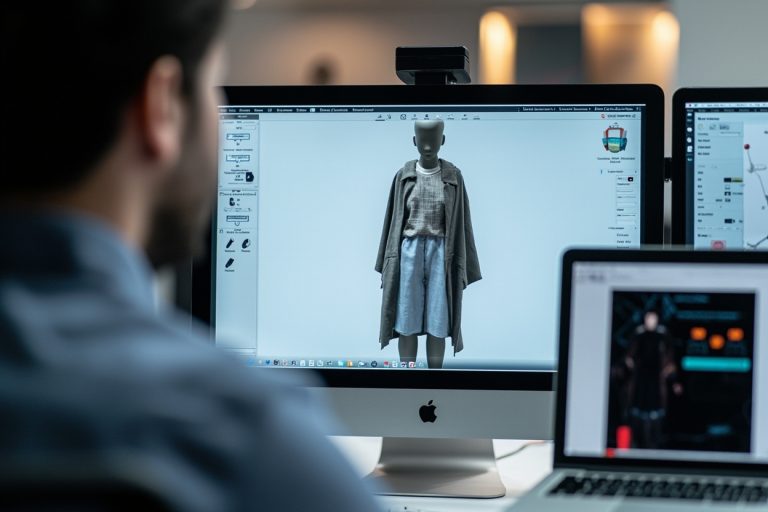
3D garment design software interface on a modern computer screen, showing virtual clothing.

3D Digital Sampling Adoption: How to Evaluate OEM Vendors Before Committing

08/07/2026

JINJIANG, China — 3D digital sampling — the use of 3D garment design software to create virtual samples before producing physical prototypes — has moved from a niche capability to a mainstream expectation in mid-market apparel sourcing over the past three years. For 2026, the question is no longer whether to adopt 3D sampling but how to evaluate OEM vendors on their 3D capability and how to integrate 3D samples into existing development workflows. The current state of 3D sampling in apparel is fragmented. Some vendors use 3D for early concept visualization only. Others use it for fit approval on complex garments. A smaller subset uses 3D for full development including pattern validation, marker planning, and bulk-production fit verification. The cost and time savings — and the level of buyer expectation — vary significantly across these use cases. What 3D Sampling Actually Does For a typical mid-market woven shirt or knit top, 3D sampling can replace the first physical sample (the proto sample) with a virtual sample rendered from the factory’s pattern files. The virtual sample can be reviewed for silhouette, proportion, and rough fabric behavior; physical samples are still required for final fit approval and material hand-feel evaluation. For more complex garments — outerwear, technical knits, multi-component constructions — 3D sampling can also be used for construction validation, component layout, and material yield analysis. The benefit increases with garment complexity, but the implementation cost and skill requirement also increase. Time and Cost Savings For a vendor running 3D sampling effectively, the typical time savings on first-round sample development is 7–10 calendar days per style. The cost savings are typically 30–50 percent on first-round sample production, primarily because the number of physical proto samples is reduced from 2–3 per style to 1 per style. For a mid-market brand running 50–100 styles per season, the aggregated savings are substantial — both in direct sample cost and in compressed development timelines that allow later fabric commitments and faster replenishment cycles. How to Evaluate OEM Vendors on 3D Capability For a sourcing team evaluating 3D capability at potential OEM partners, the practical evaluation framework includes: Software platform. Which 3D software is the vendor using? Leading platforms include CLO3D, Browzwear, Optitex, and Style3D. Ask about licensing, version, and number of licensed users. Pattern digitization workflow. Can the vendor digitize a 2D pattern from PDF or DXF into the 3D platform accurately? What is the typical pattern digitization time per style? Fabric library. How many fabric references are pre-loaded in the vendor’s 3D library? Are physical fabric swatches linked to digital fabric definitions for accurate drape simulation? Sample turnaround. Can the vendor deliver a 3D garment render within 3–5 working days of receiving a 2D pattern and fabric specification? Integration with bulk production. Does the vendor use the 3D pattern for marker planning? Can the 3D pattern be exported as a production-ready 2D marker? Practical 2026 Implementation For sourcing teams rolling out 3D sampling across their vendor base: Pilot with 2–3 vendors on a contained program. Select 5–10 styles for 3D sampling as a pilot, with both 3D and physical samples produced in parallel. Standardize the 3D deliverable. Specify what the vendor delivers for each 3D sample: rendered images, fit notes, fabric behavior annotations, and pattern validation. Build a 3D fabric library with your fabric mills. The most expensive part of 3D setup is the fabric library. Coordinate with your fabric mills to obtain digital fabric definitions for your top 20–30 fabric references. Train your internal team on 3D review. Internal fit and design teams need to be able to evaluate 3D samples confidently. Plan for 2–3 months of training before making 3D the primary sample format. Use 3D for fit approval on simple programs. 3D is most useful for relatively simple garment constructions where fit verification is the primary objective. For complex outerwear and technical knits, physical samples remain essential. The Bottom Line 3D digital sampling is now a baseline expectation in mid-market apparel sourcing. The vendors that have invested in 3D capability, fabric libraries, and internal training are delivering 7–10 day time savings on first-round samples and 30–50 percent cost savings on sample production. For sourcing teams that have not yet integrated 3D sampling into their development workflow, 2026 is the year to begin.

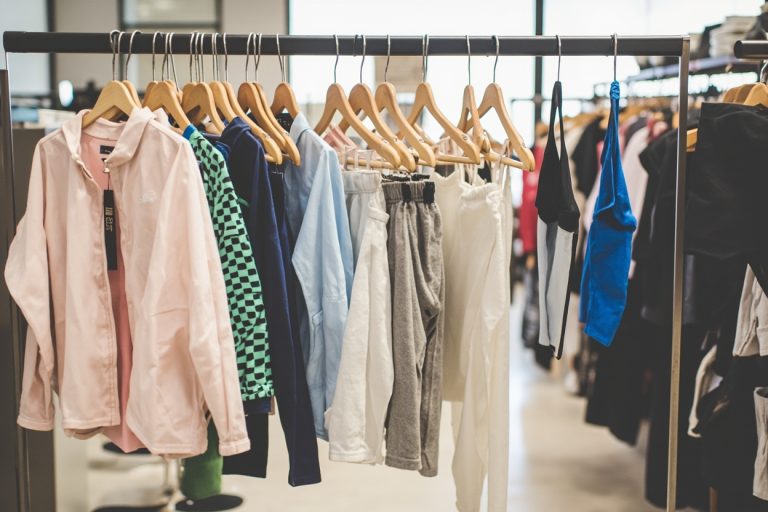
Children’s apparel samples on display rack: light jackets, swim shorts, rash guards, performance leggings

Quanzhou Northern Garment Opens SS27 Pre-Production Bookings Across Children’s Outerwear, Swimwear, and Activewear

08/07/2026

JINJIANG, China — Quanzhou Northern Garment Co., Ltd. has opened pre-production bookings for its Spring/Summer 2027 collections across all three of its core product lines: children’s outerwear, swimwear, and activewear. The factory is accepting development inquiries and capacity reservations through October 2026, with first bulk shipments scheduled to begin in late January 2027. The SS27 program covers approximately 180 styles across the three product lines. The outerwear range includes lightweight transitional jackets, hooded windbreakers, and packable rain shells; the swimwear line covers boys’ and girls’ swim shorts, one-piece suits, and rash guards; and the activewear range includes performance leggings, training shorts, and lightweight knit sets for the 4–14 age bracket. “SS27 planning starts earlier than ever because our buyers have moved the buying calendar forward by six to eight weeks over the past three seasons,” said the company’s merchandising director. “We want our development partners to have fabric strike-offs, color palettes, and lab dips in hand by mid-October so that the bulk production window is fully protected.” What’s New in SS27 The 2027 spring/summer development cycle introduces three notable expansions to the factory’s program: Extended color palette. Buyers can select from an expanded SS27 palette of 62 stock colors across shell fabrics, linings, and trim components, up from 48 in SS26. The expansion covers both core neutrals (a wider tonal range in stone, oat, and sand) and seasonal accents (eight new mid-saturation brights for swimwear and activewear). Faster lab dip turnaround. Standard lab dip turnaround is now 5 working days from fabric arrival (down from 7), with a 48-hour rush option available on the six core shell fabrics for buyers working to tight development windows. Broader swimwear size run. The SS27 swimwear range now extends from 80cm through 158cm (up from 176cm ceiling previously), with a dedicated 80–110cm “little swimmer” capsule designed for early-learning and swim-school channels. Capacity and Lead Times The factory has reserved production capacity for SS27 across its 14 production lines. Standard MOQs remain at 500 pieces per style per colorway, with development samples available in 7–10 days from approved artwork and bulk production timelines of 30–45 days from approved sample, depending on fabric lead times and trim complexity. For buyers placing full-package commitments (covering fabric sourcing, trim, and production) before November 30, 2026, the factory is offering protected production slots on its January and February 2027 lines. Buyers placing later commitments will be accommodated subject to remaining line capacity. The factory’s in-house compliance program remains current across all relevant certifications, including OEKO-TEX Standard 100 (Class I and Class II), BSCI, GRS, and CPSIA conformity. Compliance documentation is provided as part of every bulk shipment. How to Book Buyers interested in the SS27 program can request the development pack, color palette, and pricing by emailing sales@99northern.com or by submitting an inquiry through 99northern.com/contact. The merchandising team responds to all inquiries within one working day. The factory is also booking factory tour appointments for buyers visiting Jinjiang between September 2026 and February 2027. Tour slots are limited and should be reserved at least three weeks in advance. For buyers attending the 140th Canton Fair in October 2026, the factory will host SS27 walk-throughs at its booth. Specific booth and zone details will be confirmed closer to the fair opening. About Quanzhou Northern Garment Co., Ltd. Quanzhou Northern Garment Co., Ltd. is a Jinjiang-based apparel manufacturer specializing in children’s outerwear, swimwear, activewear, and lifestyle hooded fleece. The factory operates from a 12,000 mu00b2 production facility in Jinjiang, Quanzhou, Fujian, and has served international apparel brands, importers, and private-label retailers for more than a decade. The company is committed to transparent sourcing, consistent quality, and long-term partnerships with brand customers across Europe, North America, Asia-Pacific, and the Middle East. For SS27 booking inquiries or sample requests, please contact: Quanzhou Northern Garment Co., Ltd. Export Sales Office Email: sales@99northern.com Web: www.99northern.com