AI in Pattern Making and Marker Planning: Practical Applications for OEM Garment Factories
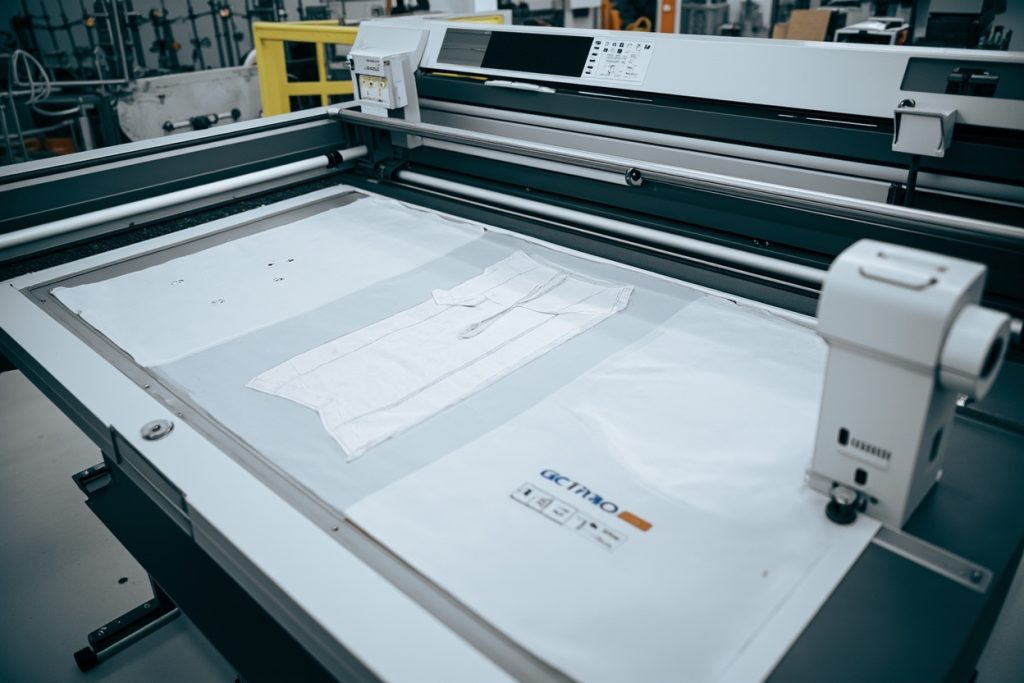
JINJIANG, China — Artificial intelligence is replacing some of the most labor-intensive planning work in garment manufacturing — pattern grading, marker nesting, and fabric utilization optimization — with measurable cost and time savings for OEM factories that have adopted the technology. For 2026, AI-assisted pattern making and marker planning have moved from pilot to mainstream in mid-market apparel production.
The current state of AI in pattern making is best understood as a set of three distinct capabilities that have matured to scale in the past three years:
- Pattern recognition and digitization: AI can convert 2D pattern images (PDF, photograph, or DXF) into digital pattern files with minimal manual correction. The state-of-the-art accuracy is 90–95 percent for well-defined pattern pieces, with the remaining 5–10 percent requiring manual adjustment.
- Marker generation and optimization: AI can generate markers (fabric layouts for cutting) that match or exceed the fabric utilization of human markers. The state-of-the-art AI markers achieve 2–4 percent better fabric utilization than average human markers on standard garment categories.
- Pattern grading: AI can grade patterns across a size range with minimal manual correction. The state-of-the-art AI grading handles 70–80 percent of common pattern adjustments automatically, with the remaining 20–30 percent requiring manual review.
Practical Time Savings
For a typical mid-market factory running 30–50 styles per season, the time savings from AI-assisted pattern work are substantial:
- Pattern digitization: 30–50 percent time reduction per style, with the largest savings on simpler garment pieces
- Marker generation: 40–60 percent time reduction per style, with the most significant gains on complex layouts
- Pattern grading: 50–70 percent time reduction per size range, with the largest savings on simple size progressions
For a factory running 50 styles per season, the aggregated time savings translate to 1–2 full-time pattern maker equivalents of capacity, which can be redeployed to higher-value work like development sampling or fit optimization.
Practical Cost Savings
The cost savings from AI-assisted pattern work are real but more modest than the time savings:
- Direct labor savings: 1–2 percent of total garment cost on pattern-making and cutting labor, depending on factory size and product complexity
- Fabric savings: 2–4 percent fabric utilization improvement on the cutting stage, which is the largest cost lever in garment manufacturing
- Development cycle savings: 7–14 days reduction on new style development, which allows later fabric commitments and faster replenishment cycles
For a mid-market garment factory, the total cost savings from AI-assisted pattern work are typically 3–5 percent of total garment cost across the production portfolio.
How to Evaluate AI Pattern Tools
For a factory evaluating AI pattern tools in 2026:
- Pattern recognition accuracy. Test the tool on a sample of 10–20 patterns with varying complexity. Evaluate the accuracy on common pattern pieces (front/back body, sleeve, collar) and on more complex pieces (facings, plackets, cuffs).
- Marker utilization performance. Run the AI marker tool against your best human markers on 10–20 styles. The AI tool should match or exceed human performance on standard layouts.
- Grading consistency. Test the AI grading on a size range with simple and complex grading rules. The grading output should be consistent across the size range.
- Integration with existing CAD systems. Does the AI tool integrate with your existing pattern CAD (Gerber, Lectra, Assyst, Optitex)? Integration with existing systems is critical for adoption.
- Vendor support and training. What kind of training and support does the vendor provide? Adoption typically requires 2–3 months of dedicated training and integration work.
The Bottom Line
AI-assisted pattern making and marker planning have moved from pilot to mainstream in 2026. Mid-market OEM factories that have adopted the technology are saving 30–50 percent on pattern digitization time, 40–60 percent on marker generation time, and 3–5 percent on total garment cost. For factories that have not yet adopted AI pattern tools, 2026 is the year to evaluate — the time savings and fabric utilization improvements are now mature enough to deliver measurable ROI on adoption.