Factory Update

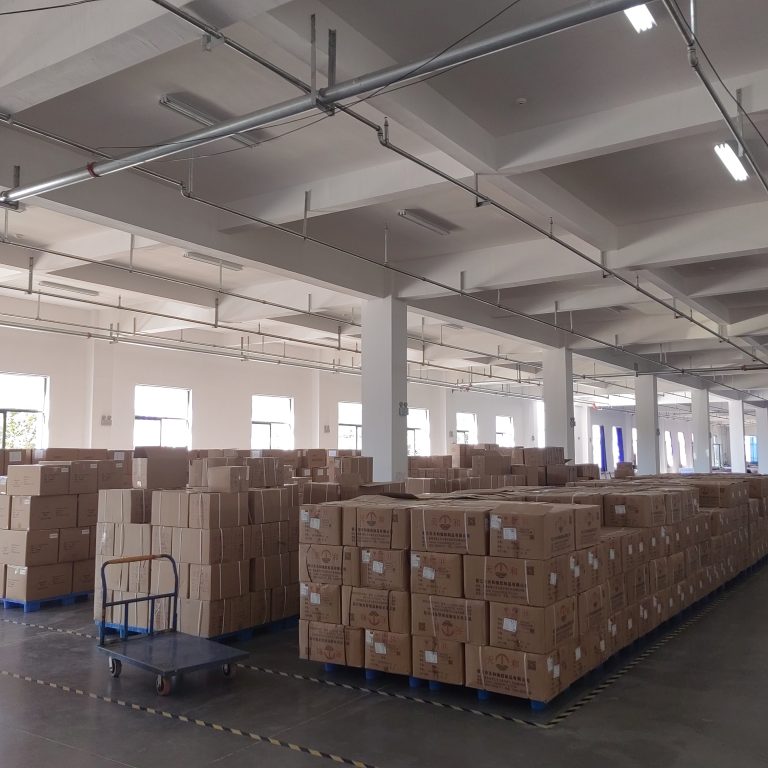
Cartons of auxiliary materials palletized and ready for outbound dispatch at Quanzhou Northern Garment

Quanzhou Northern Garment Stages Auxiliary Materials for 60,000-Piece Outerwear Run to the Netherlands

08/31/2026

Most conversations about apparel sourcing focus on fabric, fit, and finishing. Equally important — and less visible to the buyer sitting at the other end of an email thread — is what happens with the small components that hold a garment together: zippers, buttons, snaps, labels, interlinings, elastics, threads, and packaging. At Quanzhou Northern Garment, those components are managed in a dedicated auxiliary materials zone that operates as its own internal supply chain. The auxiliary warehouse is organized around a heavy-duty racking system that runs the length of the floor. Trims, fastenings, packaging, and small-batch consumables are sorted by category, with each SKU traced from receipt to issue. Palletized cartons are staged in clearly marked lanes, color-coded floor tape separates walkways from storage zones, and a flatbed trolley stays on standby at the end of each row so that pickers can move a batch from rack to staging without waiting on forklifts. Staging follows the same logic as a finished-goods dispatch. When a production order is released, the merchandising team issues a trim card that lists every auxiliary item required — by type, color, size, and quantity — for the style run. Warehouse staff pull the cartons, verify lot numbers against the trim card, and group them onto pallets sized for either LCL or FCL outbound. Each pallet is photographed, weighed, and labeled before it moves from staging to the loading bay. This is also where 5S discipline shows up most clearly. Walkways are kept clear, the floor is graded for slip resistance, lighting is upgraded to LED for accurate color matching on trims, and all racking is inspected on a quarterly cycle. The discipline is operational, not cosmetic: a missing button lot or a mismatched zipper pull can stall an entire cutting line, and the staging process is designed to catch those errors before they reach the sewing floor. That staging discipline is currently being put to work on a 60,000-piece outerwear run for a Netherlands-based buyer. Trims, labels, and packaging for the full program are pre-staged against released specifications, with cartons grouped by style and size run so that the production line can pull what it needs without breaking flow. The shipment is scheduled to clear via FOB Xiamen, and the auxiliary warehouse is the last checkpoint before pallets move from the staging zone onto the loading bay. For OEM and ODM buyers, the practical impact is shorter reaction time on style changes. Because trims and packaging are pre-staged against released tech-packs, last-minute spec updates from buyers — a button color swap, a logo revision on a woven label, a packaging change for a specific retail channel — can usually be absorbed without re-opening the sourcing window. The auxiliary warehouse functions as a buffer that lets production keep moving while buyer decisions are still being finalized. Across 12+ years of OEM/ODM production, the factory has refined its outbound logistics around FOB Xiamen, with regular LCL consolidations for smaller development runs and dedicated FCL capacity for full production programs like the Netherlands run currently in staging. Auxiliary staging sits one step upstream of that logistics flow and is the reason a typical production order can move from a confirmed tech-pack to a loaded container on a tight calendar. Buyers who want to see the staging process in person are welcome to schedule a factory visit; the auxiliary zone is part of the standard tour route alongside the cutting, sewing, and finishing lines. Sources: factory capability statement, Quanzhou Northern Garment Co., Ltd.

Textile quality control and laboratory testing

Quanzhou Northern Garment Adds 3D Digital Sampling to Pre-Production Workflow for Faster Buyer Iteration

08/31/2026

Quanzhou Northern Garment Co., Ltd. has completed integration of 3D digital sampling into its pre-production workflow, extending the factory's existing fabric lab and pattern-making capabilities into a fully digital iteration loop for overseas buyers. The new line sits between tech-pack intake and physical sample production. Designers and merchandising teams can now upload buyer specifications and receive photoreal 3D garment renders within 48 hours, including fabric drape simulation, seam behavior, and zipper / button placement checks. Buyers review the renders, request adjustments in writing, and receive a revised render before any fabric is cut. Once the digital sample is approved, the same data set drives marker nesting and cutting-file generation on the factory floor, eliminating the rework loop that traditionally sits between buyer comments, pattern adjustment, and physical sample re-sew. For short-run and development programs, the change is most visible at the timing level. A three-round development cycle that previously took 18 to 24 days from first tech pack to approved fit sample can now complete in 8 to 12 days, with each iteration reduced from 6 to 8 days of physical work to roughly 2 to 3 days of render revision. Capacity is preserved for buyers who need physical samples for fit sessions, retailer line reviews, or e-commerce photography 鈥?physical sampling remains available on request and is fully integrated with the digital output. For production programs, the bigger impact is on first-pass yield. Pattern data generated from the 3D sample flows directly into cutting, reducing the marker re-make rate that historically contributed to fabric waste at the start of each new style. The factory's QC team has incorporated 3D-vs-physical tolerance checks into its AQL 2.5 inspection routine for new developments, flagging any garment whose measured dimensions fall outside the digital sample specification. The investment reflects a broader industry shift toward digital product development as buyers tighten development calendars and demand faster response on trend-driven programs. The factory's R&D team will continue expanding the digital fabric library, with priority on performance outerwear, swimwear, and activewear substrates that currently require the most physical iteration. Buyers interested in trialing the digital sampling workflow on a development order can request a sample tech pack from the factory's merchandising team. Sources: factory capability statement, Quanzhou Northern Garment Co., Ltd.

Bangladesh Factory Fan Retrofit Energy Efficiency

Bangladesh Garment Factories Slash Energy Costs 50% With Ceiling Fan Retrofit

08/30/2026

Bangladesh's ready-made garment industry is testing a low-tech, high-impact decarbonization play: retrofitting existing ceiling fans with brushless DC motors instead of replacing them. The Bangladesh Garment Manufacturers and Exporters Association (BGMEA) signed a memorandum of understanding last week with Bangladesh Industrial Development & Engineering Company (BIDEC) to roll the technology out to member factories.Bangladesh factories can run a thousand ceiling fans each, and the country's installed base of roughly one million units is largely old and inefficient. Founder Kazi Mohammad Ibrahim estimates that converting those fans to brushless DC drives could save the industry 217,440 megawatt-hours of electricity per year, avoid 271,452 tons of CO2-equivalent emissions, and cut annual electricity costs by more than $17 million. Trials at 42 factories have already shown efficiency gains of 47% to 65%.The economics are unusually friendly. A new fan costs around $50, a retrofit about $30, and Ibrahim pegs the payback period at roughly 2.4 years with an internal rate of return around 300%. For factory owners navigating Bangladesh's intensifying gas shortages and load-shedding, the upgrade also addresses a worker welfare problem: traditional fans run at 55-60°C on the sewing floor during peak summer, while the retrofitted units hold closer to 35-40°C — a meaningful reduction in indoor heat stress.For B2B buyers and sourcing teams, the story matters on three levels. First, supplier-side energy and carbon metrics are increasingly part of vendor scorecards under CSRD, CSDDD, and brand-level Scope 3 reporting, so factory-level efficiency improvements directly affect buyer reporting. Second, production stability in a key sourcing country improves when individual factories are insulated from grid volatility. Third, the model demonstrates a credible "micro-sustainability" template — small, repeatable retrofits with measurable ROI — that can be replicated by OEM/ODM partners in Vietnam, Cambodia, and elsewhere.BGMEA director Shah Rayeed Chowdhury framed energy efficiency as "no longer only an environmental issue; it is increasingly a business and competitiveness issue" — a useful lens for any sourcing conversation heading into 2027.Sources: Sourcing Journal — Bangladesh's Factory Fans Get Second Wind, Sourcing Journal — Bangladesh Gas Crisis Exposes RMG's Decarbonization Catch-22

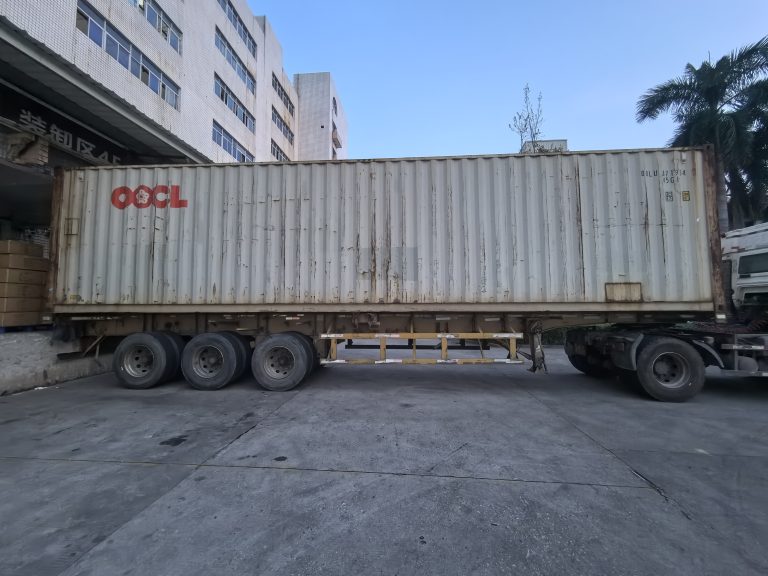
Standard shipping container staged at Quanzhou Northern Garment's warehouse in Jinjiang, ready to be loaded with finished bulk apparel cartons for overseas delivery.

Bulk Apparel Production Completed and Ready for Overseas Shipment

08/20/2026

Another bulk apparel order has completed final inspection and container loading at our production facility in Jinjiang, China. Once the trailer was positioned at the loading bay, our warehouse team worked from a pre-planned loading sequence so each finished carton stays traceable from packaging back to its purchase order. HOWO cargo truck positioned at the loading bay at our Jinjiang facility. The order moved through the same end-to-end process our team uses for every shipment: material preparation, production planning, in-line and final inspection, packing, and finally loading coordination with our freight partner. The men's puffer jackets in this batch went through needle detection, fabric weight and hand-feel checks, plus a final AQL-based inspection prior to packing ? covering both product quality and the packing list. Finished cartons stacked and stacked for sealing before the container doors close. Before shipment, finished cartons are checked against packing requirements and loading plans to support accurate quantities, organized container loading and reliable delivery. Each carton is verified by code so the loading plan and the actual container layout can be reconciled before the doors are sealed, helping to keep transit times and inventory receiving smooth on the buyer's side. Northern supports global apparel brands with OEM and ODM manufacturing across outerwear, swimwear, activewear and hoodies, combining product development, sourcing, production, quality assurance and shipment coordination in one integrated supply chain.

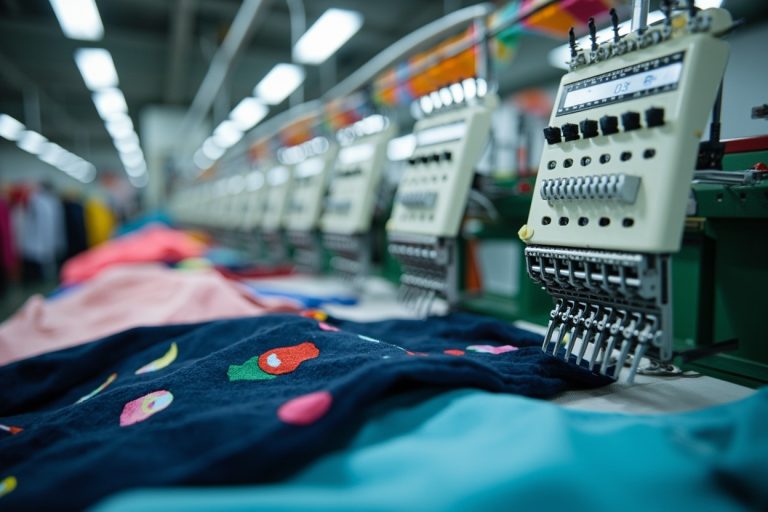
embroidery test

Quanzhou Northern Garment Adds 80-Stitch Computerized Embroidery Line, Expanding Customization Capacity for Mid-Market Brands

08/22/2025

JINJIANG, China — Quanzhou Northern Garment Co., Ltd. has commissioned a new 80-stitch computerized embroidery line at its Jinjiang production facility, expanding the factory’s in-house customization capacity for mid-market children’s apparel brands, outdoor labels, and lifestyle private-label programs. The line went into commercial production in August 2025 and is now booking orders for Autumn/Winter 2026 and Spring/Summer 2027 collections. The new line consists of six multi-head computerized embroidery machines configured for production runs of chest logos, sleeve crests, back yokes, appliqué patches, and full-back graphics on finished garments and cut panels. The line is supported by an in-house digitizing team that prepares embroidery files directly from buyer-provided artwork, samples, or technical packs. “For our buyer profile, embroidery is often the detail that justifies the price point,” said the factory’s production director. “Whether it’s a tonal chest logo on a basic fleece hoodie or a heritage crest on a wool-blend peacoat, the embroidery has to be flat, the registration has to be tight, and the turnaround has to be fast. We’re building the line that delivers all three.” What the New Line Enables The line was specified to address three capacity gaps that the factory identified in its 2024 customer survey: Tonal and low-contrast embroidery. Buyers increasingly request embroidery that sits flush with the garment color and reads through texture rather than contrast. The new machines are configured with flat-bed table heights, programmable thread tension, and bobbin-thread detection systems calibrated for fine-gauge embroidery on lightweight fleece, interlock, and piqué knits. Faster design-to-production turnaround. In-house digitizing reduces file-preparation time from an average of 5–7 days (when outsourced) to 24–48 hours for most logos, crests, and appliqué designs. For repeat orders, file turnaround is typically under 4 hours. Tighter quality control. The line is staffed by a dedicated QA lead and four embroidery operators with an average of 6 years of embroidery-specific experience. Production samples are inspected at machine start, mid-run, and end-of-run, with stitch-count verification on every design. Production Specifications The new line supports the following production parameters: Stitch counts up to 80,000 stitches per design (suitable for detailed crests, branded graphics, and large-format back-yoke embroidery) Fabric thickness range from 0.5mm (single-jersey tee) to 6mm (heavy wool-blend peacoat with backing) Thread count from single-needle fine detail to 12-needle wide satin stitch Color palettes up to 12 thread colors per design Backing options including tear-away, cut-away, and heat-dissolvable film for performance garments Common applications include chest and sleeve logos, back-yoke graphics, appliqué patches, monogram crests, and decorative border stitching. The factory can also produce embroidered care labels as a sustainable alternative to woven or printed labels on performance fleece and activewear. Pricing and MOQ Embroidery decoration is available as a value-add service on any OEM or ODM order. Pricing is based on stitch count, design complexity, and order quantity. Minimum order quantities for custom embroidery on existing factory styles start at 200 pieces per design per colorway, with development samples available in 7–10 days. For buyers commissioning full custom developments (including pattern, fabric, and embroidery), MOQs follow the factory’s standard 500-piece floor with development timelines of 30–45 days from approved sample. About Quanzhou Northern Garment Co., Ltd. Quanzhou Northern Garment Co., Ltd. is a Jinjiang-based apparel manufacturer specializing in children’s outerwear, swimwear, activewear, and lifestyle hooded fleece. The factory operates from a 12,000 m² production facility in Jinjiang, Quanzhou, Fujian, and has served international apparel brands, importers, and private-label retailers for more than a decade. The company is committed to transparent sourcing, consistent quality, and long-term partnerships with brand customers across Europe, North America, Asia-Pacific, and the Middle East. For embroidery sample requests, capacity inquiries, or development quotations, please contact: Quanzhou Northern Garment Co., Ltd. Production Office Email: sales@99northern.com Web: www.99northern.com

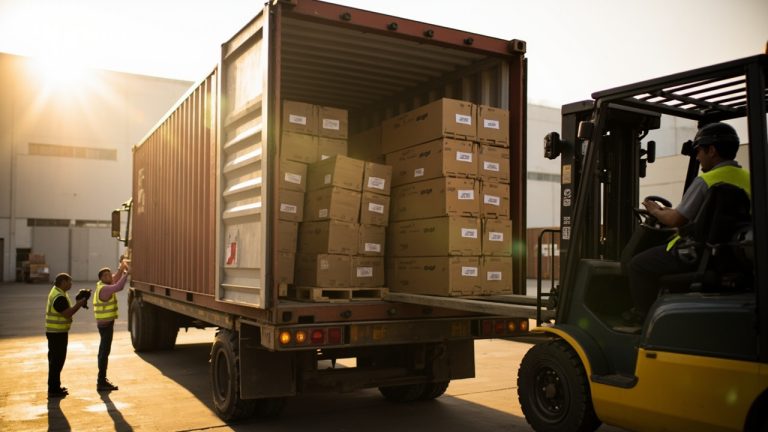
Photo of a forklift loading cardboard boxes into an open shipping container, with two workers in high-visibility vests checking inventory under warm sunlight.

Container Loaded: Quanzhou Northern Garment Completes Children’s Spring Outerwear Order for European Buyer

05/08/2016

Container Loaded: Quanzhou Northern Garment Completes Children's Spring Outerwear Order for European Buyer A 40-foot high-cube container was loaded and sealed this week at Quanzhou Northern Garment's production facility in Jinjiang, marking the completion of a children's spring outerwear order for one of our European brand partners. The container departed the facility under buyer seal and is now in transit to the port of Xiamen for vessel loading, with an estimated time of arrival at the destination port in early June. The shipment covers approximately 6,500 pieces across lightweight jackets, hooded vests, and matching pants, packed into 380 master cartons and tailored to the buyer's specific packaging and labeling requirements. The order was confirmed in late January and moved through the standard Northern production cycle over the following weeks. Pattern development and graded sizing were completed in the first two weeks, covering six size points from 92cm through 158cm to match the buyer's size chart for the European retail channel. Fabric and trim sourcing followed immediately, drawing from our established supplier network in Quanzhou and the wider Fujian textile hub. Main production for jackets and vests began in early March on the factory's automated cutting lines, with sewing split across multiple lines to keep daily output stable and to maintain the AQL 2.5 standard our buyer specifies in the technical pack. Throughout the run, our inline QC team performed daily checks on stitching, seam strength, snap placement, and zipper function; the buyer was sent weekly progress reports with photos and small sample swatches so that any fit or color decision could be made without slowing the line. By the final week of production the daily output had settled into a steady cadence, with the sewing floor reporting consistently against the target rate and no major style deviations flagged during the final fitting review. This shipment sits inside Northern's broader production program for the European market, where we now run three to four container shipments per month for brands focused on children's outerwear and lightweight lifestyle apparel. Across our 30,000 square meter facility in Jinjiang, more than 600 production staff work alongside eight automated hanging production lines and five automated cutting machines, supported by a sourcing network that stretches across the Fujian textile hub and into the wider Yangtze River Delta. Our buyer portfolio leans heavily on partners who prioritize traceability and compliance: we maintain active BSCI and SA8000 social audits, hold OEKO-TEX Standard 100 certification across the majority of our kid-focused fabric library, and have begun rolling out GRS-certified recycled polyester lines for buyers with explicit recycled-content targets. None of these credentials are bolt-ons — they shape how we plan production runs from the moment a buyer's tech pack arrives, because the same fabric and trim decisions made in week one determine whether a container can clear destination customs six weeks later. For this particular shipment, the chosen shell fabric carried an OEKO-TEX Standard 100 class I certificate, which the buyer's import team had specifically requested for the European retail channel. Pre-shipment inspection took place over the final ten days before container loading. Our QC lead coordinated with two of the buyer's nominated inspectors to walk through one hundred percent of the finished cartons, with random sample pulls against the AQL 2.5 sampling plan for both major and minor defects. The inspection covered not only garment construction but also packaging integrity: polybag sealing, fold alignment, master carton weight, and barcode readability were all verified against the buyer's packaging manual. After a brief round of touch-up packing — including a small number of polybag re-seals and replacement of two cartons that had been dented during stacking — the inspector signed off on the full quantity. Final packing lists, carton-level weight tickets, and the buyer's required carton summary sheet were prepared and cross-checked against the purchase order line items before any carton was sealed for export. A short photo report was compiled alongside the inspection record, capturing carton labels, polybag sealing, and a representative garment laid flat for the buyer's reference archive. Container loading took place on the morning of the shipment date under clear skies. The 40HC container arrived from the shipping line's depot the previous afternoon and was inspected by our logistics coordinator for any pre-existing damage, odor, or moisture before being positioned at the loading bay. Inside the warehouse, finished cartons had been staged in the order they would be loaded, with heavier pieces at the bottom and lighter cartons on top, and each layer braced with paper slip sheets to prevent shifting during transit. Our loading crew — three warehouse staff and one supervisor — worked with a forklift operator to build the load pallet by pallet across the morning, pausing briefly between layers to verify carton placement against the pre-planned load map. Once the container was filled, the doors were closed, the buyer's numbered seal was applied under the supervisor's direct watch, and a photograph of the sealed container with its seal number visible was sent to the buyer for their records. The container is moving under FOB Xiamen terms, with the shipping line and vessel details confirmed by our logistics partner earlier in the week. The booking reference and the Bill of Lading draft have already been shared with the buyer's import team, along with the commercial invoice, packing list, and certificate of origin issued through our local chamber of commerce. For each of our orders we also share the container number and seal number in advance so that the buyer can plan receiving at the destination port and pre-clear the shipment through their customs broker. The estimated time of arrival at the destination port is early June, depending on the vessel schedule and any port congestion along the way. Our logistics partner will continue to track the shipment and provide updated ETAs to the buyer as the vessel approaches the destination, with the aim of giving the receiving warehouse at least one full week of notice before arrival. Communication with the buyer has run continuously from confirmation through loading. Beyond the standard weekly progress reports, we sent two updates during production that the buyer's team specifically asked for: a fabric hand-feel video so that they could confirm the chosen material still met the original brief after sourcing, and a pre-shipment photo set showing the folded garments inside representative cartons so they could verify the folding standard before sealing. With the container now sealed, the buyer has received the loading photograph, the seal number, and a draft commercial invoice for their import team's review. They have flagged that they would like a brief post-shipment follow-up once the container clears customs at the destination port, and our logistics partner is already set up to share that update directly with the buyer's import coordinator on the day of clearance. The communication cadence we keep for this buyer reflects how we work with most of our longer-term partners. From PO confirmation onward, we send a structured weekly report covering the prior seven days — production output by line, inline QC pass rates against the AQL 2.5 sampling plan, any open issues that need buyer input, and a forecast for the next week. Reports are sent on Monday mornings local time so the buyer's team in Europe has them before their working day starts. Outside of weekly reports, we send issue-specific updates the moment something materially changes: a fabric lead-time slip, a color lab dip result, a packaging deviation, a photo set from the floor. That cadence is what allowed this shipment to move from late-January PO confirmation to early-May container loading without any significant delay or rework, even as the European retail calendar compressed the buyer's own receiving window. This shipment reflects the production cadence Northern has built for European and North American buyers across kids' outerwear, activewear, swimwear, and lifestyle apparel. With more than a decade of apparel manufacturing behind us, multiple automated cutting and hanging lines, and a sourcing network that reaches across the Fujian textile hub, we are set up to handle orders at the scale this buyer requires without losing the small-run attention to fit and finish that makes the difference on a children's line. Above all, this shipment is a reminder that reliable export manufacturing is built on hundreds of small daily decisions, not a single big one. From the morning a tech pack lands on our merchandising manager's desk to the moment a buyer's seal is pressed onto a container door in our yard, every step is documented, photographed when it adds value, and traceable to a person. If you are a brand planning a children's outerwear program for the next season, or a buying team looking to shift a portion of your current production to a more reliable manufacturing partner in mainland China, we welcome the opportunity to discuss your program. Send us a brief through the Contact page and we will respond within one business day with a tailored sourcing plan. For programs that need to start sampling in the next four to six weeks, we can also share indicative capacity windows across our hanging and cutting lines so that production timing can be planned before a final PO is signed.