Quanzhou Northern Garment Stages Auxiliary Materials for 60,000-Piece Outerwear Run to the Netherlands
Most conversations about apparel sourcing focus on fabric, fit, and finishing. Equally important — and less visible to the buyer sitting at the other end of an email thread — is what happens with the small components that hold a garment together: zippers, buttons, snaps, labels, interlinings, elastics, threads, and packaging. At Quanzhou Northern Garment, those components are managed in a dedicated auxiliary materials zone that operates as its own internal supply chain.
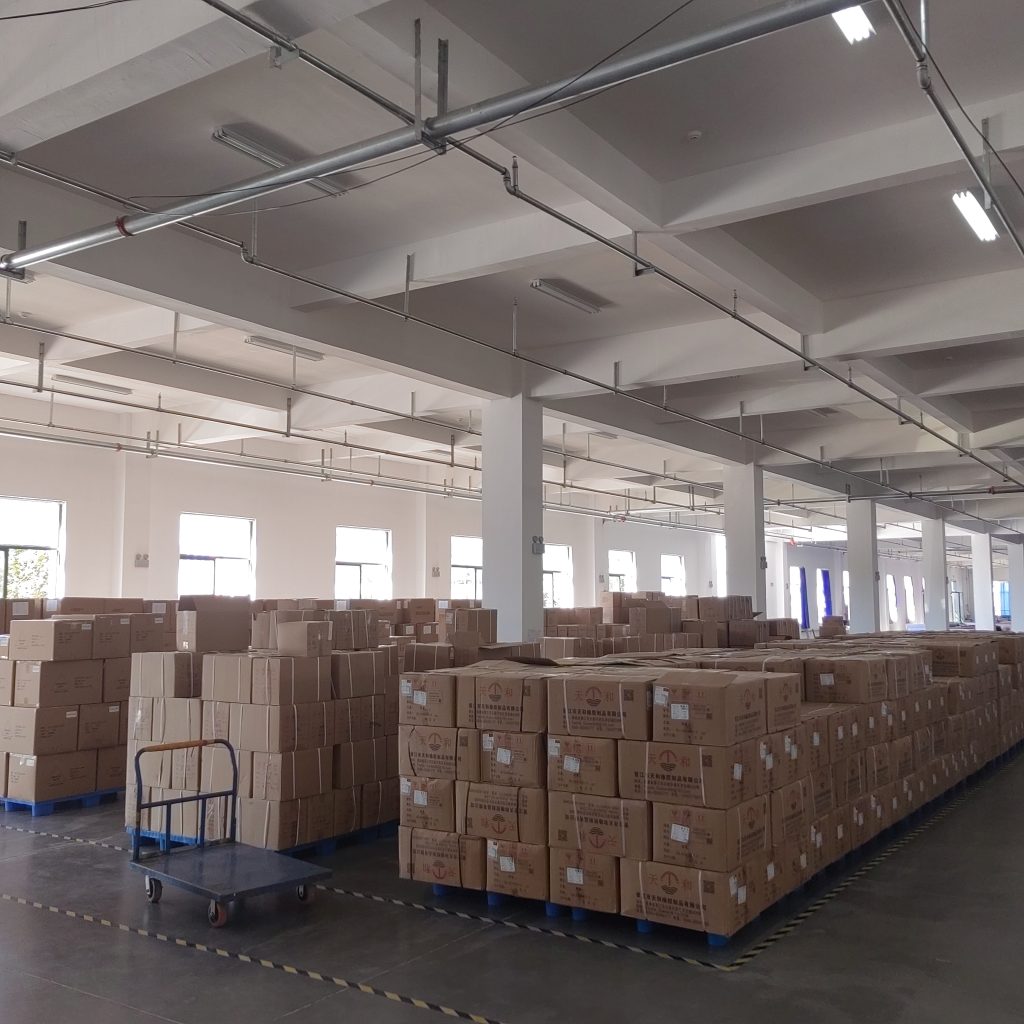
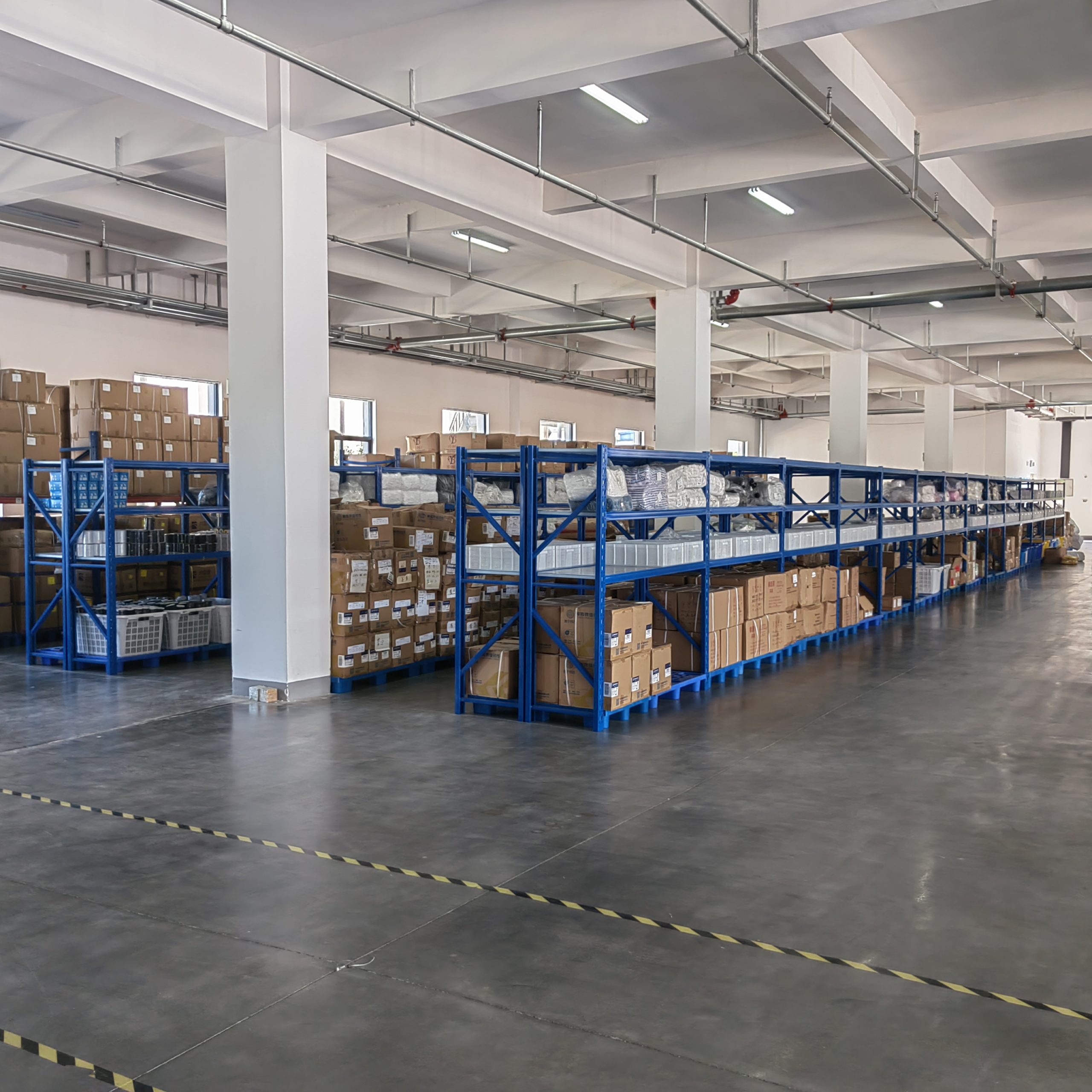
The auxiliary warehouse is organized around a heavy-duty racking system that runs the length of the floor. Trims, fastenings, packaging, and small-batch consumables are sorted by category, with each SKU traced from receipt to issue. Palletized cartons are staged in clearly marked lanes, color-coded floor tape separates walkways from storage zones, and a flatbed trolley stays on standby at the end of each row so that pickers can move a batch from rack to staging without waiting on forklifts.
Staging follows the same logic as a finished-goods dispatch. When a production order is released, the merchandising team issues a trim card that lists every auxiliary item required — by type, color, size, and quantity — for the style run. Warehouse staff pull the cartons, verify lot numbers against the trim card, and group them onto pallets sized for either LCL or FCL outbound. Each pallet is photographed, weighed, and labeled before it moves from staging to the loading bay.
This is also where 5S discipline shows up most clearly. Walkways are kept clear, the floor is graded for slip resistance, lighting is upgraded to LED for accurate color matching on trims, and all racking is inspected on a quarterly cycle. The discipline is operational, not cosmetic: a missing button lot or a mismatched zipper pull can stall an entire cutting line, and the staging process is designed to catch those errors before they reach the sewing floor.
That staging discipline is currently being put to work on a 60,000-piece outerwear run for a Netherlands-based buyer. Trims, labels, and packaging for the full program are pre-staged against released specifications, with cartons grouped by style and size run so that the production line can pull what it needs without breaking flow. The shipment is scheduled to clear via FOB Xiamen, and the auxiliary warehouse is the last checkpoint before pallets move from the staging zone onto the loading bay.
For OEM and ODM buyers, the practical impact is shorter reaction time on style changes. Because trims and packaging are pre-staged against released tech-packs, last-minute spec updates from buyers — a button color swap, a logo revision on a woven label, a packaging change for a specific retail channel — can usually be absorbed without re-opening the sourcing window. The auxiliary warehouse functions as a buffer that lets production keep moving while buyer decisions are still being finalized.
Across 12+ years of OEM/ODM production, the factory has refined its outbound logistics around FOB Xiamen, with regular LCL consolidations for smaller development runs and dedicated FCL capacity for full production programs like the Netherlands run currently in staging. Auxiliary staging sits one step upstream of that logistics flow and is the reason a typical production order can move from a confirmed tech-pack to a loaded container on a tight calendar.
Buyers who want to see the staging process in person are welcome to schedule a factory visit; the auxiliary zone is part of the standard tour route alongside the cutting, sewing, and finishing lines.
Sources: factory capability statement, Quanzhou Northern Garment Co., Ltd.