Shipment

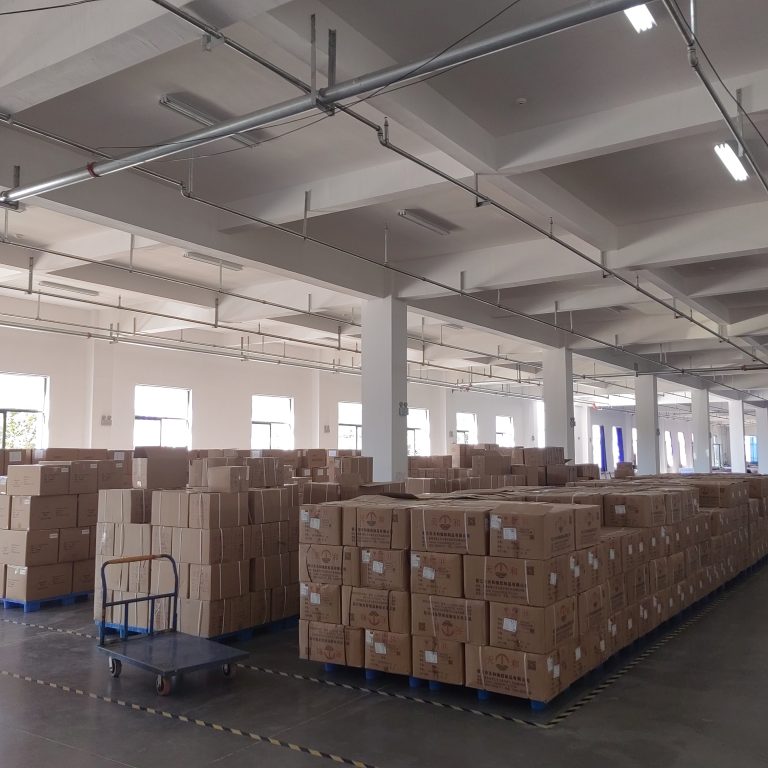
Cartons of auxiliary materials palletized and ready for outbound dispatch at Quanzhou Northern Garment

Quanzhou Northern Garment Stages Auxiliary Materials for 60,000-Piece Outerwear Run to the Netherlands

08/31/2026

Most conversations about apparel sourcing focus on fabric, fit, and finishing. Equally important — and less visible to the buyer sitting at the other end of an email thread — is what happens with the small components that hold a garment together: zippers, buttons, snaps, labels, interlinings, elastics, threads, and packaging. At Quanzhou Northern Garment, those components are managed in a dedicated auxiliary materials zone that operates as its own internal supply chain. The auxiliary warehouse is organized around a heavy-duty racking system that runs the length of the floor. Trims, fastenings, packaging, and small-batch consumables are sorted by category, with each SKU traced from receipt to issue. Palletized cartons are staged in clearly marked lanes, color-coded floor tape separates walkways from storage zones, and a flatbed trolley stays on standby at the end of each row so that pickers can move a batch from rack to staging without waiting on forklifts. Staging follows the same logic as a finished-goods dispatch. When a production order is released, the merchandising team issues a trim card that lists every auxiliary item required — by type, color, size, and quantity — for the style run. Warehouse staff pull the cartons, verify lot numbers against the trim card, and group them onto pallets sized for either LCL or FCL outbound. Each pallet is photographed, weighed, and labeled before it moves from staging to the loading bay. This is also where 5S discipline shows up most clearly. Walkways are kept clear, the floor is graded for slip resistance, lighting is upgraded to LED for accurate color matching on trims, and all racking is inspected on a quarterly cycle. The discipline is operational, not cosmetic: a missing button lot or a mismatched zipper pull can stall an entire cutting line, and the staging process is designed to catch those errors before they reach the sewing floor. That staging discipline is currently being put to work on a 60,000-piece outerwear run for a Netherlands-based buyer. Trims, labels, and packaging for the full program are pre-staged against released specifications, with cartons grouped by style and size run so that the production line can pull what it needs without breaking flow. The shipment is scheduled to clear via FOB Xiamen, and the auxiliary warehouse is the last checkpoint before pallets move from the staging zone onto the loading bay. For OEM and ODM buyers, the practical impact is shorter reaction time on style changes. Because trims and packaging are pre-staged against released tech-packs, last-minute spec updates from buyers — a button color swap, a logo revision on a woven label, a packaging change for a specific retail channel — can usually be absorbed without re-opening the sourcing window. The auxiliary warehouse functions as a buffer that lets production keep moving while buyer decisions are still being finalized. Across 12+ years of OEM/ODM production, the factory has refined its outbound logistics around FOB Xiamen, with regular LCL consolidations for smaller development runs and dedicated FCL capacity for full production programs like the Netherlands run currently in staging. Auxiliary staging sits one step upstream of that logistics flow and is the reason a typical production order can move from a confirmed tech-pack to a loaded container on a tight calendar. Buyers who want to see the staging process in person are welcome to schedule a factory visit; the auxiliary zone is part of the standard tour route alongside the cutting, sewing, and finishing lines. Sources: factory capability statement, Quanzhou Northern Garment Co., Ltd.

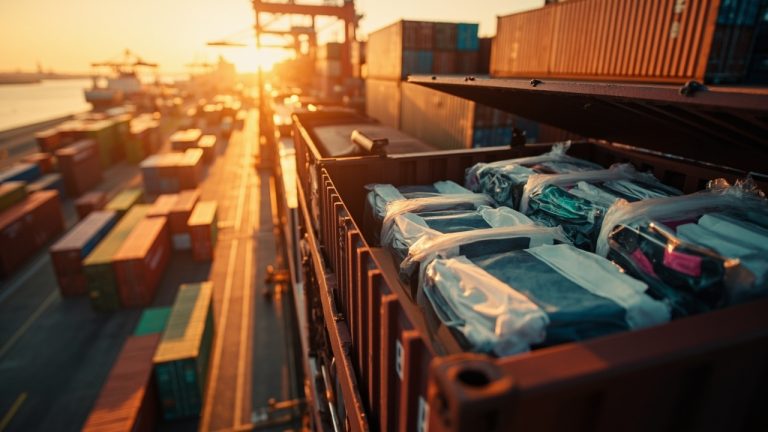
Stacked intermodal shipping containers at a port at golden hour, with one open container showing neatly folded garments in clear packaging ready for global dispatch.

State of Fashion 2026 Confirms Tariffs as the Single Largest Sourcing Variable for Apparel Brands

08/21/2026

The Business of Fashion and McKinsey State of Fashion 2026 report, published in late 2025 and re-validated through the first half of 2026, confirms what B2B sourcing teams have been operationalising for the past eighteen months: tariffs and trade disruption are now the single most important factor shaping apparel industry decisions. The report cites 76 percent of fashion executives as identifying responses to trade disruptions and tariffs as the leading priority for 2026, ahead of consumer demand shifts, technology adoption, and ESG compliance.The underlying tariff landscape has consolidated into a recognisable map. Effective duties on Chinese-origin apparel under the revised Section 301 framework now sit at roughly 12.5 percent plus the 10 percent base reciprocal rate, while apparel from Vietnam and Bangladesh carries meaningfully lower headline rates though with narrower margin floors. The European Union’s reciprocal tariff ceiling, set at 15 percent for finished garments, has been stable since mid-2026, and the EU’s separate Regulation 2026/1455 — adjusting duties on imports of certain goods originating in the United States — has added a further variable for North America–Europe cross-trade. The net effect is that landed-cost modelling has become a standing weekly exercise for any brand running multi-origin sourcing, not a one-off annual review.For OEM/ODM suppliers in Asia, the report’s findings translate into three operational shifts. First, dual-country routing is mainstream. Buyers in the AW27 and SS28 planning cycles are testing Vietnam, Bangladesh and Indonesia as parallel production options for tariff-sensitive categories, while keeping China for technical outerwear, complex sampling, and lower-volume specialty programmes. Second, origin documentation is now a sales tool. Buyers issuing new RFQs in the second half of 2026 are asking for country-of-fibre declarations, manufacturing facility identifiers, and forced-labour audit trails as part of the standard supplier package, not as a premium ask. Third, transparent cost build-ups are expected. A landed-cost calculation that does not break out fabric, trims, CMT, packaging, freight, and relevant duties is no longer accepted by procurement teams running matrix sourcing.For a Quanzhou-based apparel manufacturer, the response is to position the factory as a partner in the documentation and routing work, not just a production line. Northern Garment has supported buyers through AW27 planning with multi-origin material sourcing, mill-direct fabric chains with retained yarn-level records, and a sampling team that can ship counter-samples within seven working days. For buyers whose SS28 lines are still being scoped, the sourcing desk is open for an early planning conversation.Source: The Business of Fashion / McKinsey State of Fashion 2026; tariffstool.com 2026 country rate table, 2026-08.

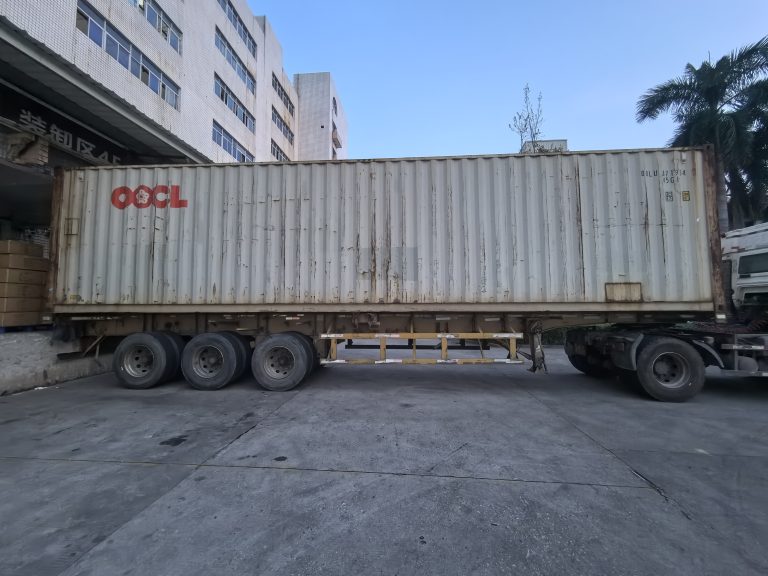
Standard shipping container staged at Quanzhou Northern Garment's warehouse in Jinjiang, ready to be loaded with finished bulk apparel cartons for overseas delivery.

Bulk Apparel Production Completed and Ready for Overseas Shipment

08/20/2026

Another bulk apparel order has completed final inspection and container loading at our production facility in Jinjiang, China. Once the trailer was positioned at the loading bay, our warehouse team worked from a pre-planned loading sequence so each finished carton stays traceable from packaging back to its purchase order. HOWO cargo truck positioned at the loading bay at our Jinjiang facility. The order moved through the same end-to-end process our team uses for every shipment: material preparation, production planning, in-line and final inspection, packing, and finally loading coordination with our freight partner. The men's puffer jackets in this batch went through needle detection, fabric weight and hand-feel checks, plus a final AQL-based inspection prior to packing ? covering both product quality and the packing list. Finished cartons stacked and stacked for sealing before the container doors close. Before shipment, finished cartons are checked against packing requirements and loading plans to support accurate quantities, organized container loading and reliable delivery. Each carton is verified by code so the loading plan and the actual container layout can be reconciled before the doors are sealed, helping to keep transit times and inventory receiving smooth on the buyer's side. Northern supports global apparel brands with OEM and ODM manufacturing across outerwear, swimwear, activewear and hoodies, combining product development, sourcing, production, quality assurance and shipment coordination in one integrated supply chain.

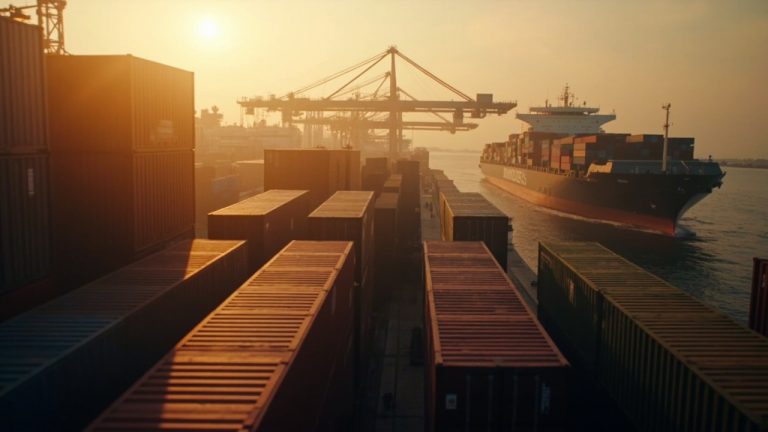
Stacked intermodal shipping containers being loaded onto a container ship at an Asian port at golden hour

Revised US Section 301 Tariffs Reshape Asian Apparel Sourcing Through 2026

08/20/2026

Recent revisions to Section 301 of the US Tariff Act are reshaping apparel sourcing strategies across Asia, with effective duty rates on finished garments now sitting at noticeably different levels depending on country of origin. Industry reporting citing US Customs data puts effective duties on Chinese-origin apparel at roughly 35.6%, on Vietnamese apparel at around 28.1%, and on Bangladeshi apparel meaningfully lower, creating a structural tariff gap that is already influencing buyer matrix decisions. For US apparel brands, the result has been a measurable reallocation of order volume. EightX analysis of 2025 US Census import data shows cotton apparel continuing to gain US import share while China cedes share to Vietnam, Bangladesh, India and Cambodia. Dhaka-based trade reporting confirms that Bangladesh is capturing a near-term opportunity in cotton-heavy programs, supported by duty advantages and improved capacity in woven categories. For China-based OEM/ODM manufacturers such as Quanzhou Northern Garment, the new tariff environment does not close off the US market but does shift the types of programs that make commercial sense. High-volume, basic cotton knits face the steepest competitive pressure from lower-tariff origins, while specialty categories — performance outerwear, technical fleece, structured jackets, swimwear with complex construction, and lifestyle products with higher fabric content per unit — remain viable and often preferred when buyers value speed-to-market, lower MOQ flexibility, and tighter development cycles. The sourcing shift is also driving new conversations about origin diversification within Chinese supplier groups themselves. Buyers increasingly ask whether a supplier can offer matched production in Vietnam or Bangladesh for tariff-sensitive programs while keeping development, sampling and small-batch production in China. Suppliers that can credibly answer that question — through partner factories, owned offshore lines, or documented capacity alliances — are well placed for the next round of US sourcing decisions. Looking ahead through 2026, the Section 301 environment is expected to remain volatile, with buyers hedging across at least three origins for any program of meaningful size. Manufacturers that combine competitive landed-cost math with verifiable compliance documentation and reliable lead times will remain in the buyer matrix regardless of which way the next tariff revision swings.

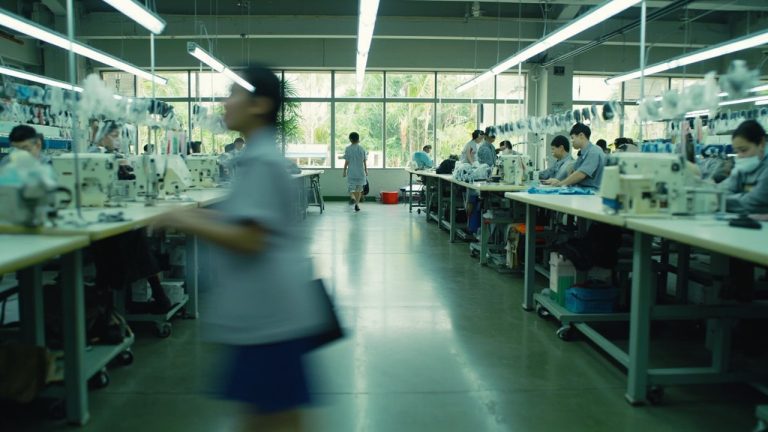
Industrial apparel production line with multiple workers operating sewing machines under fluorescent lights in a spacious facility.

Vietnam Apparel Manufacturing Capacity Continues to Expand Through 2026 Despite Tariff Volatility

08/19/2026

Vietnam's apparel export trajectory has continued upward through the first half of 2026, with industry data compiled by Fibre2Fashion and the Vietnam Textile and Apparel Association pointing to double-digit year-on-year growth in knitwear and outerwear segments despite repeated tariff adjustments under the new Section 301 framework. The combination of EVFTA duty-free access to the European Union, CPTPP preference into North America, and a maturing domestic fabric base has kept Vietnam at the top of the diversification queue for buyers rebalancing away from single-country China sourcing.For OEM/ODM buyers running multi-country sourcing strategies, the practical question in late 2026 is no longer whether Vietnam can absorb additional volume — the country's installed capacity has clearly answered that — but rather how to structure the buyer-factory relationship so that quality and lead-time discipline survive the rapid scale-up. The most consistent feedback from European buyers in 2026 is that factory selection criteria have shifted from price and MOQ toward documentation maturity, in-house sampling capacity, and demonstrated ESG audit cadence.For sourcing teams planning AW27 and SS28 capacity, three working principles are now shaping the conversation:Treat capacity as a relationship, not a transaction. Vietnam's largest mills and cut-make-trim operations are increasingly closing their booking calendars 8-10 months ahead of ship date. Buyers who establish multi-season planning conversations with their CMT partner — sharing forecast volume and category mix — are getting priority capacity slots and tighter cost discipline.Pressure-test fabric sourcing early. Vietnam's domestic mill base is strongest in knit and basic woven categories, and is steadily improving in technical outerwear. Buyers with heavy cotton or specialised fabric briefs should still treat fabric sourcing as a parallel conversation, often with China-based mill partners supporting the Vietnam cut-and-sew step.Build documentation into the PO, not after it. Buyers selling into the EU and North America should expect their Vietnam partners to provide country-of-origin declarations, fibre traceability, and audit trails as part of the standard PO package. This is no longer a premium ask — it is the procurement floor.The broader lesson for 2026 is that the apparel sourcing map is no longer a single country — it is a network, and Vietnam has earned a stable place at the centre of it. Buyers who organise their sourcing around documented, repeatable, multi-country workflows will be the ones who capture the upside of Vietnam's continued capacity build-out.Northern Garment supports buyers structuring China-Vietnam hybrid sourcing through a Quanzhou-based sampling team that can coordinate counter-samples, fabric sourcing, and production hand-off across both factory networks. If your AW27 line is being scoped for Vietnam execution, our sourcing desk is open for an early planning conversation.Source: Fibre2Fashion, 2026-08-08

Global shipping container port at dusk with cargo cranes and freight ship, representing 2026 US Section 301 apparel tariff impact on Asian sourcing

US Section 301 Tariffs Reshape Asian Apparel Sourcing for OEM/ODM Buyers

08/18/2026

The United States Trade Representative has finalised a new wave of Section 301 tariffs covering 60 apparel-producing economies, and the reaction across Asia this week is less about the headline rates and more about the second layer of measures quietly tucked inside them. According to Sourcing Journal's analysis of the USTR announcement, 42 countries now sit in a 12.5% tariff band — including China, Vietnam, Japan, Thailand, South Korea, the Philippines and Singapore — while 18 countries, among them Sri Lanka, Bangladesh, Malaysia, India, Indonesia, Pakistan and Cambodia, are placed in a lower 10% band.For OEM/ODM buyers running multi-country sourcing, the most consequential change is not the percentage but the new textile mechanism. Garments assembled with U.S.-origin inputs, including U.S. cotton, can now enter the United States free of Section 301 duties. The provision is expected to benefit Bangladesh, Cambodia, Indonesia and Malaysia most directly, and is initially set to run for three years. Industry voices in India have already warned that tariff parity will mean little if competitors receive exemptions that India does not.For Quanzhou-based manufacturers, the message is straightforward: headline tariff rates are no longer the only variable. Three practical implications for OEM/ODM partners sourcing out of China in late 2026:Material origin is now a margin lever. Garments using U.S. cotton or other U.S.-origin textile inputs can be re-engineered to qualify for the new textile mechanism. Buyers asking for origin documentation will become the norm, not the exception.Dual-country routing will accelerate. Expect more buyers to test Vietnam or Bangladesh for next-season capacity while keeping China for technical outerwear and complex sampling. The factory that can speak to both setups wins the long-term relationship.Compliance documentation is now a sales tool. Traceability records, country-of-origin declarations, and forced-labour audit trails have moved from "nice to have" to table stakes for new RFQs.Vietnam's foreign ministry has already stated it will continue negotiations with Washington, and Bangladesh's commerce minister framed the new structure as a replacement of existing duties rather than an additional burden. Either way, U.S. demand is expected to soften as costs pass through, which makes supplier flexibility and short lead-time sampling more valuable than ever.For buyers building SS27 and AW27 lines, the right question is no longer "where is the cheapest country" but "which supplier can document origin, pivot between countries, and hold quality across both?" Northern Garment supports buyers through this transition with multi-origin material sourcing, full traceability documentation, and a sampling team in Quanzhou that can ship counter-samples within seven working days.Source: Sourcing Journal, 2026-08-15

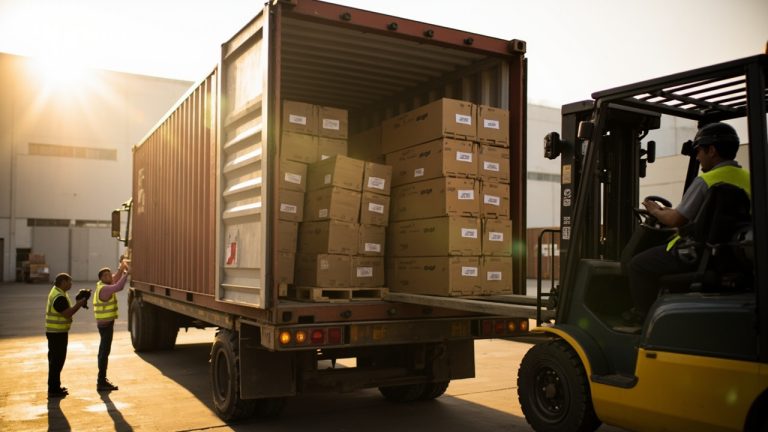
Photo of a forklift loading cardboard boxes into an open shipping container, with two workers in high-visibility vests checking inventory under warm sunlight.

Container Loaded: Quanzhou Northern Garment Completes Children’s Spring Outerwear Order for European Buyer

05/08/2016

Container Loaded: Quanzhou Northern Garment Completes Children's Spring Outerwear Order for European Buyer A 40-foot high-cube container was loaded and sealed this week at Quanzhou Northern Garment's production facility in Jinjiang, marking the completion of a children's spring outerwear order for one of our European brand partners. The container departed the facility under buyer seal and is now in transit to the port of Xiamen for vessel loading, with an estimated time of arrival at the destination port in early June. The shipment covers approximately 6,500 pieces across lightweight jackets, hooded vests, and matching pants, packed into 380 master cartons and tailored to the buyer's specific packaging and labeling requirements. The order was confirmed in late January and moved through the standard Northern production cycle over the following weeks. Pattern development and graded sizing were completed in the first two weeks, covering six size points from 92cm through 158cm to match the buyer's size chart for the European retail channel. Fabric and trim sourcing followed immediately, drawing from our established supplier network in Quanzhou and the wider Fujian textile hub. Main production for jackets and vests began in early March on the factory's automated cutting lines, with sewing split across multiple lines to keep daily output stable and to maintain the AQL 2.5 standard our buyer specifies in the technical pack. Throughout the run, our inline QC team performed daily checks on stitching, seam strength, snap placement, and zipper function; the buyer was sent weekly progress reports with photos and small sample swatches so that any fit or color decision could be made without slowing the line. By the final week of production the daily output had settled into a steady cadence, with the sewing floor reporting consistently against the target rate and no major style deviations flagged during the final fitting review. This shipment sits inside Northern's broader production program for the European market, where we now run three to four container shipments per month for brands focused on children's outerwear and lightweight lifestyle apparel. Across our 30,000 square meter facility in Jinjiang, more than 600 production staff work alongside eight automated hanging production lines and five automated cutting machines, supported by a sourcing network that stretches across the Fujian textile hub and into the wider Yangtze River Delta. Our buyer portfolio leans heavily on partners who prioritize traceability and compliance: we maintain active BSCI and SA8000 social audits, hold OEKO-TEX Standard 100 certification across the majority of our kid-focused fabric library, and have begun rolling out GRS-certified recycled polyester lines for buyers with explicit recycled-content targets. None of these credentials are bolt-ons — they shape how we plan production runs from the moment a buyer's tech pack arrives, because the same fabric and trim decisions made in week one determine whether a container can clear destination customs six weeks later. For this particular shipment, the chosen shell fabric carried an OEKO-TEX Standard 100 class I certificate, which the buyer's import team had specifically requested for the European retail channel. Pre-shipment inspection took place over the final ten days before container loading. Our QC lead coordinated with two of the buyer's nominated inspectors to walk through one hundred percent of the finished cartons, with random sample pulls against the AQL 2.5 sampling plan for both major and minor defects. The inspection covered not only garment construction but also packaging integrity: polybag sealing, fold alignment, master carton weight, and barcode readability were all verified against the buyer's packaging manual. After a brief round of touch-up packing — including a small number of polybag re-seals and replacement of two cartons that had been dented during stacking — the inspector signed off on the full quantity. Final packing lists, carton-level weight tickets, and the buyer's required carton summary sheet were prepared and cross-checked against the purchase order line items before any carton was sealed for export. A short photo report was compiled alongside the inspection record, capturing carton labels, polybag sealing, and a representative garment laid flat for the buyer's reference archive. Container loading took place on the morning of the shipment date under clear skies. The 40HC container arrived from the shipping line's depot the previous afternoon and was inspected by our logistics coordinator for any pre-existing damage, odor, or moisture before being positioned at the loading bay. Inside the warehouse, finished cartons had been staged in the order they would be loaded, with heavier pieces at the bottom and lighter cartons on top, and each layer braced with paper slip sheets to prevent shifting during transit. Our loading crew — three warehouse staff and one supervisor — worked with a forklift operator to build the load pallet by pallet across the morning, pausing briefly between layers to verify carton placement against the pre-planned load map. Once the container was filled, the doors were closed, the buyer's numbered seal was applied under the supervisor's direct watch, and a photograph of the sealed container with its seal number visible was sent to the buyer for their records. The container is moving under FOB Xiamen terms, with the shipping line and vessel details confirmed by our logistics partner earlier in the week. The booking reference and the Bill of Lading draft have already been shared with the buyer's import team, along with the commercial invoice, packing list, and certificate of origin issued through our local chamber of commerce. For each of our orders we also share the container number and seal number in advance so that the buyer can plan receiving at the destination port and pre-clear the shipment through their customs broker. The estimated time of arrival at the destination port is early June, depending on the vessel schedule and any port congestion along the way. Our logistics partner will continue to track the shipment and provide updated ETAs to the buyer as the vessel approaches the destination, with the aim of giving the receiving warehouse at least one full week of notice before arrival. Communication with the buyer has run continuously from confirmation through loading. Beyond the standard weekly progress reports, we sent two updates during production that the buyer's team specifically asked for: a fabric hand-feel video so that they could confirm the chosen material still met the original brief after sourcing, and a pre-shipment photo set showing the folded garments inside representative cartons so they could verify the folding standard before sealing. With the container now sealed, the buyer has received the loading photograph, the seal number, and a draft commercial invoice for their import team's review. They have flagged that they would like a brief post-shipment follow-up once the container clears customs at the destination port, and our logistics partner is already set up to share that update directly with the buyer's import coordinator on the day of clearance. The communication cadence we keep for this buyer reflects how we work with most of our longer-term partners. From PO confirmation onward, we send a structured weekly report covering the prior seven days — production output by line, inline QC pass rates against the AQL 2.5 sampling plan, any open issues that need buyer input, and a forecast for the next week. Reports are sent on Monday mornings local time so the buyer's team in Europe has them before their working day starts. Outside of weekly reports, we send issue-specific updates the moment something materially changes: a fabric lead-time slip, a color lab dip result, a packaging deviation, a photo set from the floor. That cadence is what allowed this shipment to move from late-January PO confirmation to early-May container loading without any significant delay or rework, even as the European retail calendar compressed the buyer's own receiving window. This shipment reflects the production cadence Northern has built for European and North American buyers across kids' outerwear, activewear, swimwear, and lifestyle apparel. With more than a decade of apparel manufacturing behind us, multiple automated cutting and hanging lines, and a sourcing network that reaches across the Fujian textile hub, we are set up to handle orders at the scale this buyer requires without losing the small-run attention to fit and finish that makes the difference on a children's line. Above all, this shipment is a reminder that reliable export manufacturing is built on hundreds of small daily decisions, not a single big one. From the morning a tech pack lands on our merchandising manager's desk to the moment a buyer's seal is pressed onto a container door in our yard, every step is documented, photographed when it adds value, and traceable to a person. If you are a brand planning a children's outerwear program for the next season, or a buying team looking to shift a portion of your current production to a more reliable manufacturing partner in mainland China, we welcome the opportunity to discuss your program. Send us a brief through the Contact page and we will respond within one business day with a tailored sourcing plan. For programs that need to start sampling in the next four to six weeks, we can also share indicative capacity windows across our hanging and cutting lines so that production timing can be planned before a final PO is signed.