News

Latest news from Quanzhou Northern Garment: OEM/ODM apparel manufacturing updates, factory capabilities, OEKO-TEX certifications, and industry insights for global B2B buyers.

Bangladesh garment factory operations amid energy supply disruptions

Bangladesh RMG Output Drops 30-40% as LNG Shortage Disrupts Peak Shipping Season

08/31/2026

Bangladesh's ready-made garment sector is heading into peak shipping season with both hands tied behind its back. Gas shortages triggered by a fire at one of the country's two floating LNG terminals in July have curtailed textile and apparel output across major industrial zones, with industry officials estimating production has dropped by 30 to 40 percent. The Bangladesh Garment Manufacturers and Exporters Association (BGMEA) is now asking international buyers to grant one- to two-week shipment extensions. The disruption goes deeper than idled sewing lines. Natural gas runs upstream through the entire textile chain, supplying captive power generation as well as the boilers and steam needed for dyeing, washing, drying, and finishing. A dyehouse shutdown can stop a sewing factory even when the lights stay on, which is why a "power restoration" headline does not translate into immediate order recovery. New research from the Centre for Policy Dialogue (CPD), drawing on data from 350 RMG factories, frames the crisis as a structural vulnerability rather than a one-off. The sector is locked into carbon-intensive production at the same time that domestic gas reserves are declining and imported LNG is becoming the marginal fuel source. CPD research director Khondaker Golam Moazzem warned that "relying solely on imported LNG will not be sustainable in the long run." The CPD study finds no silver-bullet technology. Washing and dyeing, though representing a small share of installed machines, are the most energy-intensive stage. Sewing accounts for over 85 percent of machine capacity but offers limited savings from substitution alone. Cutting, at just 5.5 percent of machine stock, holds 27.3 percent of the potential savings identified. Solar offset could trim average monthly energy costs by an estimated 15.7 percent at a 30 percent offset level, but the highest observed offset in the sample was only 10 percent. Rooftop solar can also reduce cost volatility for 96 percent of factories, yet it cannot replace the gas-fired boilers used for thermal finishing. Financing remains a binding constraint: the smallest factories in the sample showed a 57.3 percent energy-efficiency gap, versus 8.9 percent for the largest, mostly because of older machinery and limited access to capital. H&M is financing supplier projects through its Green Fashion Initiative, with five of 24 current projects in Bangladesh, and is pushing for corporate power purchase agreements to expand renewable access. CPD recommends blended finance, concessional lending, and standardized appraisal frameworks to widen that pipeline. For B2B buyers, the message is risk-management: expect slippage on Bangladesh-origin programs through the fall peak, and diversify across India, Pakistan, and Vietnam where renewable adoption is moving faster. Order placement should now factor in energy-driven delivery risk, not just price. Sources: https://wwd.com/sourcing-journal/industry-news/bangladesh-rmg-energy-crisis-1239129058/, https://wwd.com/sourcing-journal/sustainability/bangladesh-bidec-bgmea-fans-retrofit-energy-crisis-1239166465/

Apparel industry adapts to new US-Canada trade tariffs

US 50% Tariff on Canadian Outerwear Reshapes Fall Sourcing Strategies for US Retailers

08/31/2026

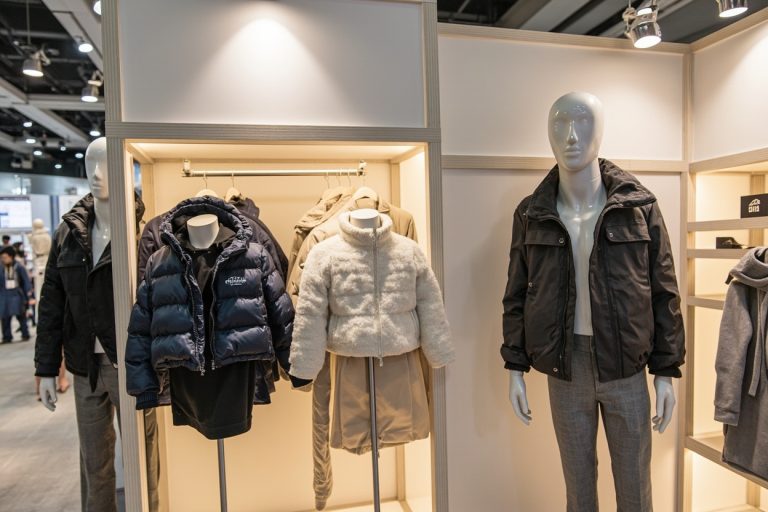
With 50 percent US tariffs on Canadian goods now in force, outerwear is taking one of the heaviest hits of any apparel category this fall. According to University of Delaware professor of fashion and apparel studies Dr. Sheng Lu, roughly 36 percent of garments labeled "Made in Canada" in recent product-level evaluations fall into the outerwear category, covering coats, jackets, and blazers. For US retailers carrying premium Canadian outerwear, that means a structural cost increase that cannot easily be worked around. The affected products reach US shelves primarily through premium department stores such as Neiman Marcus, Bloomingdale's, and Saks Fifth Avenue. Specialty and off-price channels are less exposed. For brands like Canada Goose, Kanuk, Moose Knuckles, and Quartz Co., the constraint is even tighter: outerwear has a short sell-through window, and order books were locked in months ago. Dr. Lu notes that brands and retailers are unlikely to cancel existing orders at this stage, given that flexibility on premium outerwear is far more limited than on basic items like T-shirts. Where does that leave pricing? Dr. Lu expects a "mix of measures." Some tariff cost will be absorbed by brands and retailers because there is no immediate alternative manufacturing base for these specialized products. Price elasticity is low. But the 50 percent rate is substantial enough that some share of the increase will inevitably reach the consumer, particularly on higher-priced coats and jackets. The longer-term signal is more concerning than the fall sticker shock. The USMCA formal six-year review in July did not produce unanimous support for renewal. Instead, the current US administration has signaled an annual review process, adding new procedural steps from federal register announcements to public comment and hearings. If that process drags on without resolution until USMCA expires in 2036, there is little incentive for companies on either side of the border to commit to new sourcing investments. For B2B apparel buyers, the practical read is straightforward: Canadian-made outerwear is now a higher-cost, higher-risk category. Sourcing teams that previously diversified between Canada and Asia should reassess their country mix for fall-winter programs. Asian OEM/ODM partners with proven down jacket, wool coat, and technical outerwear capabilities can absorb category demand that Canada can no longer serve at competitive landed cost. Order timing, label origin documentation, and USMCA-compliant material sourcing will all need fresh review for any program that historically leaned on Canadian production. Sources: https://wwd.com/sourcing-journal/trade/outerwear-us-canada-trade-war-tariffs-retail-prices-1239173169/, https://wwd.com/sourcing-journal/industry-news/50-percent-tariffs-section-338-canada-trade-deal-usmca-ustr-1239146745/

Bangladesh Factory Fan Retrofit Energy Efficiency

Bangladesh Garment Factories Slash Energy Costs 50% With Ceiling Fan Retrofit

08/30/2026

Bangladesh's ready-made garment industry is testing a low-tech, high-impact decarbonization play: retrofitting existing ceiling fans with brushless DC motors instead of replacing them. The Bangladesh Garment Manufacturers and Exporters Association (BGMEA) signed a memorandum of understanding last week with Bangladesh Industrial Development & Engineering Company (BIDEC) to roll the technology out to member factories.Bangladesh factories can run a thousand ceiling fans each, and the country's installed base of roughly one million units is largely old and inefficient. Founder Kazi Mohammad Ibrahim estimates that converting those fans to brushless DC drives could save the industry 217,440 megawatt-hours of electricity per year, avoid 271,452 tons of CO2-equivalent emissions, and cut annual electricity costs by more than $17 million. Trials at 42 factories have already shown efficiency gains of 47% to 65%.The economics are unusually friendly. A new fan costs around $50, a retrofit about $30, and Ibrahim pegs the payback period at roughly 2.4 years with an internal rate of return around 300%. For factory owners navigating Bangladesh's intensifying gas shortages and load-shedding, the upgrade also addresses a worker welfare problem: traditional fans run at 55-60°C on the sewing floor during peak summer, while the retrofitted units hold closer to 35-40°C — a meaningful reduction in indoor heat stress.For B2B buyers and sourcing teams, the story matters on three levels. First, supplier-side energy and carbon metrics are increasingly part of vendor scorecards under CSRD, CSDDD, and brand-level Scope 3 reporting, so factory-level efficiency improvements directly affect buyer reporting. Second, production stability in a key sourcing country improves when individual factories are insulated from grid volatility. Third, the model demonstrates a credible "micro-sustainability" template — small, repeatable retrofits with measurable ROI — that can be replicated by OEM/ODM partners in Vietnam, Cambodia, and elsewhere.BGMEA director Shah Rayeed Chowdhury framed energy efficiency as "no longer only an environmental issue; it is increasingly a business and competitiveness issue" — a useful lens for any sourcing conversation heading into 2027.Sources: Sourcing Journal — Bangladesh's Factory Fans Get Second Wind, Sourcing Journal — Bangladesh Gas Crisis Exposes RMG's Decarbonization Catch-22

US-Canada Outerwear Tariff 2026

US-Canada Trade War: What 50% Tariffs Mean for Outerwear Sourcing This Fall

08/30/2026

The U.S. administration's 50% tariff on Canadian goods, announced this weekend, will land hardest on one apparel category: outerwear. According to University of Delaware professor Dr. Sheng Lu, nearly 36% of "Made in Canada" garments in his recent product-level evaluation fell into the outerwear category — coats, jackets, and blazers carried by premium retailers including Neiman Marcus, Bloomingdale's, and Saks Fifth Avenue.For B2B buyers and sourcing teams, the immediate question is what happens to fall-season orders already on the books. Lu's assessment is that most will ship: these orders were placed months ago, often in 2025, and the short sell-through window of seasonal outerwear leaves little room to cancel. Premium Canadian brands such as Canada Goose, Kanuk, Moose Knuckles, and Quartz Co. also lack a quick switch to alternative sourcing bases because their product specifications — down fill weights, technical membranes, particular seam constructions — are tightly bound to Canadian manufacturing.Price elasticity is therefore expected to be low. Retailers are likely to absorb part of the cost increase, but a portion will reach consumers, especially on USMCA-non-compliant items. For Asian and other non-Canadian apparel OEM/ODM suppliers, the longer-term signal is more important: the U.S. has signalled that the formal six-year USMCA review will be replaced by an annual review process, which could persist until the agreement's 2036 expiry. That uncertainty complicates any sourcing decision that places Canada inside a multi-year supply chain plan.For outerwear buyers evaluating Q4 2026 and Spring 2027 programs, the practical read-through is to widen the sourcing base beyond a single country, lock in fabric and trim prices earlier in the cycle, and confirm USMCA status on every shipment. Suppliers able to certify origin, capacity, and lead time flexibility will be in a stronger position through the rest of this trade-dispute cycle.Sources: Sourcing Journal — Outerwear Sticker Shock Likely Amid US-Canada Trade War, Sourcing Journal — Canada Talks Crumble and 50% Tariffs Take Effect

Stacked fabric swatches showing recycled polyester and spandex textile samples on neutral background

New Polyester Recycling Process Preserves Spandex for Stretch Apparel

08/27/2026

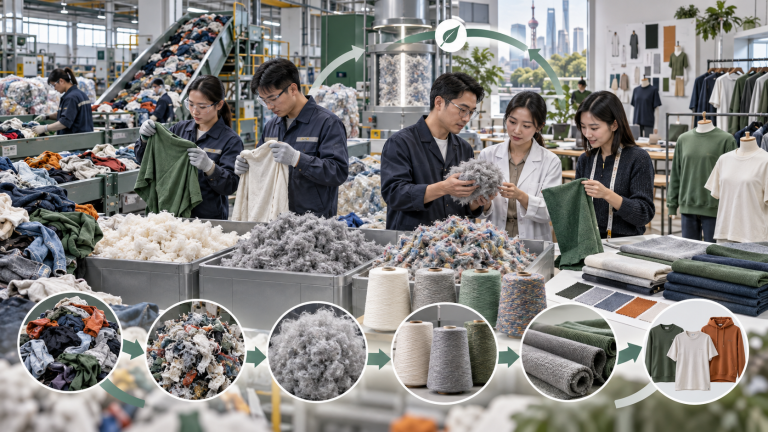
A research team led by Donghua University has published a low-temperature chemical recycling process that breaks down polyester while keeping more than 96 percent of the cotton and spandex in blended fabrics intact. Reported in the August 1 issue of the Journal of Hazardous Materials, the method tackles one of the most stubborn barriers to recycling stretch apparel: elastane fibers usually degrade or dissolve alongside polyester, leaving textile recyclers with a useless sludge. For sustainability and sourcing teams, the result is a potential step toward truly circular polyester-cotton-spandex blends. The solvent-based process completely depolymerizes polyethylene terephthalate (PET) at 80 degrees Celsius in 80 minutes and recovers its primary building block, terephthalic acid at roughly 99 percent purity and 99 percent monomer recovery. Researchers combined ethylene glycol and potassium hydroxide with sulfolane, a polar aprotic solvent already used in industrial chemistry. They found that sulfolane alters the hydrogen-bonding environment around ethylene glycol while swelling the PET matrix, letting reactive species attack polyester’s ester bonds while leaving the polyurethane-based spandex largely untouched. Previous attempts achieved high polyester recovery but completely depolymerized the spandex at 120 degrees Celsius. The team tested the process on waste PET fabric, PET/cotton and PET/spandex fabrics supplied by textile manufacturer Yuyue Home Textile. They reported that more than 96 percent of the cotton and spandex companions survived with structural integrity, while dyes migrated into the solvent phase. The study is honest about limits: it does not include a commercial-scale demonstration, nor does it prove that recovered fibers retain mechanical performance sufficient for re-spinning into new garments. For OEM and ODM suppliers, the implication is to expect buyer questions about recycled-polyester roadmaps earlier than headlines suggest. EU brands preparing for the Digital Product Passport and brand-level recycled-content targets will want to know what share of a garment’s polyester can be chemically recycled and what percentage of spandex survives. Mills that already run GRS-certified recycled lines, OEKO-TEX Standard 100 testing and detailed fiber-blend ledgers will be better positioned to answer those questionnaires. Fashion buyers should treat the result as a research milestone, not a commercial process. Real post-consumer garments rarely arrive as clean PET/cotton/spandex; they often contain nylon, coatings, printing inks and water-repellent finishes. Scaling the sulfolane process will require solvent-recovery systems that meet the latest guidance on reproductive toxicity. Until then, mechanical recycling and PET-bottle-to-fiber remain the workhorses for recycled polyester. Northern Garment works with GRS-traceable recycled-polyester mills and maintains fiber-composition documentation at the fabric and garment level to help buyers answer Digital Product Passport and brand-level recycled-content questions. Sources: [Sourcing Journal: Can Polyester Be Recycled Without Destroying the Spandex?]

Stack of compliance paperwork and EU regulatory documents on wooden desk

US Pushes for EU CSDDD Carveout: What Apparel Buyers Must Watch

08/27/2026

The United States has formally asked the European Union to scale back the Corporate Sustainability Due Diligence Directive (CSDDD) and the Corporate Sustainability Reporting Directive (CSRD) for American firms and their overseas suppliers. A five-page submission from the U.S. Mission to the EU warns that the bloc’s recently narrowed sustainability rules still create unreasonable burdens on U.S. commerce. For apparel brands and retailers sourcing from Asia, the dispute could redraw the map of supplier audits and traceability obligations that define EU-bound production today. Washington asked the European Commission to designate the United States a "negligible risk" jurisdiction under CSDDD, to presume compliance for companies operating under U.S. corporate-governance rules, and to exclude non-EU companies from the directive’s direct scope wherever possible. It also wants due diligence and enforcement confined to a company’s EU subsidiaries or European business partners, and to goods produced in, or services supplied from, the EU. The most consequential demand for fashion concerns the second tier and beyond. Washington has asked that producers and farmers that do not directly supply a CSDDD-covered company not face audits or information requests. Critics including advocacy group SOMO told Sourcing Journal that this would exclude the cotton growers, spinners, tanneries and mills where many of the industry’s most serious forced-labor, wage and environmental risks are concentrated. "Over 90 percent of human rights and labor abuses happen deep in supply chains, beyond the first tier," said SOMO’s Joseph Wilde-Ramsing. The dispute plays out against an already-shrunken CSDDD. The EU’s Omnibus I simplification package lifted the directive’s threshold to more than 5,000 employees and €1.5 billion in net worldwide turnover, removed the climate-transition-plan requirement and eliminated the harmonized civil-liability regime. Companies are expected to begin complying with the revised due-diligence requirements in July 2029. CSRD was similarly narrowed, with mandatory data points cut by more than 60 percent. For OEM and ODM factories in China, Bangladesh, Vietnam and other hubs, the practical message is to expect more buyer requests, not fewer. EU brands will keep asking for evidence beyond the cut-and-sew floor: mill-level chemical inventories, fiber origin documentation, tier-two wage records and cotton provenance. Smart factories should maintain updated mill-to-garment traceability files, OEKO-TEX Standard 100 and GOTS certificates, and ZDHC-aligned wastewater reports, so they can answer buyer questionnaires in days rather than weeks. As an OEKO-TEX Standard 100-certified OEM/ODM factory with more than 12 years serving EU and U.S. buyers, Northern Garment supports clients navigating overlapping CSDDD, CSRD and UFLPA documentation requirements through maintained fabric-traceability records, certified mill lists and English-language compliance documentation. Sources: [Sourcing Journal: US Seeks EU Due Diligence Carveout for American Firms]

Sustainable cotton field at harvest with mature cotton bolls and a smallholder farmer in light clothing at the edge of the field, photographed at golden hour

CmiA Verified Cotton Farmers Surge in 2025: What Apparel OEMs Need to Know

08/25/2026

The Aid by Trade Foundation, operator of the Cotton made in Africa (CmiA) initiative, reported a sharp increase in verified sustainable cotton farmers in its 2025 program update. For apparel brands and retailers with sustainability commitments, this is a meaningful signal: the verified-cotton supply base is expanding faster than demand, which changes the negotiating position of OEM factories serving EU and US buyers with cotton-heavy programs.CmiA is one of the most widely recognized sustainability standards for cotton outside the organic and recycled-cotton niche. Its verification covers water management, pesticide use, child-labor protections, and smallholder farmer income. Major apparel brands have used CmiA-labelled cotton in mass-market basics and innerwear programs for years — and they are now under public pressure to scale the volume.For Asian OEM and ODM partners, the trend lands in three concrete ways:1. Certificate-led sampling — EU buyers are asking factories to confirm that their cotton suppliers hold CmiA, GOTS, GRS, or Better Cotton certification at the fiber stage, not just at the finished-goods stage. A fabric mill invoice with a CmiA claim on the cotton bale is becoming a routine sample-room request.2. Chain-of-custody documentation — Mass-balance and physical-segregation claims need to be backed by documentation that survives a third-party audit. OEM partners without a documented chain-of-custody flow risk having their CmiA-labelled orders downgraded or rejected by the buyer's compliance team.3. Pricing dynamics — With verified cotton supply growing faster than retail demand, the historical "premium" for verified cotton has narrowed. OEM partners who can absorb the lower premium into their costing will be more competitive on EU RFQs in 2026.Practical steps for cotton-heavy OEM programs:Ask fabric suppliers for current CmiA / Better Cotton / GOTS certificates before sampling, not after the PO is confirmed.Build a one-page chain-of-custody flow showing bale → yarn → fabric → finished garment, with the verifying body noted at each step.Track the buyer's sustainability reporting calendar — many EU brands align their verified-cotton targets with their annual CSRD disclosures, which means RFQ timing is moving earlier in the year.Quanzhou Northern Garment works with CmiA-, GOTS-, and Better Cotton-sourced cotton for selected knitwear, hoodie, and children's wear programs. We maintain fabric-mill traceability files per project and can share the documentation at the sampling stage to shorten EU buyers' CSDDD-aligned onboarding workflow.The Aid by Trade Foundation's growth numbers are not just a feel-good sustainability headline — they are an early indicator of where the next round of EU sourcing questions will land. OEMs that prepare documentation now will move through those questionnaires with less friction than competitors scrambling in Q3 and Q4.

Garment factory compliance folder on a desk showing an OEKO-TEX Standard 100 certificate, supplier map, social audit report, chain-of-custody one-pager, and cotton fabric swatches

EU CSDDD Supply Chain Due Diligence: What Apparel OEMs Need to Know in 2026

08/25/2026

The European Union's Corporate Sustainability Due Diligence Directive (CSDDD) is moving from policy text to a hard procurement filter for apparel brands and retailers. In recent trade talks, the United States has asked Brussels to carve out American companies from key obligations — but apparel importers selling into the EU market will still face the full weight of the new rules, regardless of where their parent company is headquartered.For OEM and ODM factories in Asia, this is not an abstract compliance debate. EU buyers are already rewriting their sourcing questionnaires to ask suppliers about traceability, raw-material origin, subcontractor disclosure, and grievance-mechanism documentation. A factory that cannot produce an OEKO-TEX certificate, a valid Social Audit (Sedex/BSCI/SA8000), and a basic supplier code of conduct is being quietly deprioritized on EU shortlists.Three things are worth watching:1. Risk-based due diligence — EU buyers must map their supply chains and identify human-rights and environmental risks at every tier. Tier 1 (cutting/sewing) is no longer enough; tier 2 (fabric mills) and tier 3 (yarn spinners) data will be requested.2. Climate disclosure alignment — CSDDD ties into CSRD climate reporting. Expect EU brands to ask factories for Scope 1/2/3 estimates and energy-mix information, especially for fabric-intensive categories like knitwear and outerwear.3. Contractual flow-down — Clauses requiring the supplier to cascade due-diligence obligations to subcontractors are becoming standard in EU purchase orders.Practical steps for OEM partners serving EU buyers:Keep OEKO-TEX Standard 100, GOTS, or GRS certificates current and ready to share at the sampling stage — not after the PO.Maintain a one-page supplier map covering fabric mills, trim suppliers, and any subcontracted lines.Document a basic grievance channel (worker hotline, suggestion box, or third-party mechanism) and have evidence ready during audits.Be ready to share annual energy consumption and any renewable-energy procurement at the factory level.Quanzhou Northern Garment has held OEKO-TEX Standard 100 certification for eight consecutive years, with documented supply-chain mapping for children's outerwear, swimwear, activewear, and lifestyle knitwear lines. For buyers navigating CSDDD compliance, that documentation saves weeks of questionnaire back-and-forth at the inquiry stage.The US-EU carveout debate is unlikely to soften EU enforcement for Asian OEM partners. If anything, the political pressure is accelerating the shift toward verified, documented, and traceable supply chains — exactly the lane well-prepared factories already operate in.

Neatly stacked cartons of finished garments on pallets inside a clean apparel factory warehouse, with fabric rolls on racks in the background under soft natural light.

ESPR Destruction Ban Live Since July 2026: How Apparel Suppliers Are Repositioning Inventory and Compliance

08/21/2026

The European Union’s Ecodesign for Sustainable Products Regulation (ESPR) reached its first operational milestone on 19 July 2026, when the prohibition on destroying unsold apparel and footwear took effect for large EU operators. While the headline text of the regulation has been public for over a year, July’s enforcement date is the first point at which compliance activity in the supply chain becomes commercially material — and it is the first time that an EU sustainability rule has translated directly into a factory-side reporting obligation in Asia.For OEM/ODM suppliers, the practical implications split into three categories. First, inventory planning is no longer a buyer-side problem alone. EU brands are now asking factories to confirm minimum production runs, accept sub-MOQ reorder quantities for replenishment, and reduce end-of-line rejection rates that would otherwise cascade into unsold stock at the brand’s warehouse. Second, traceability documentation is moving up the priority list. The destruction ban is enforced alongside the textile Digital Product Passport (DPP) framework, which means the same data fields that feed the DPP — fibre composition, manufacturing location, finishing chemistry — are now the data points that determine whether a finished garment can be donated, recycled, or returned to the supplier. Third, sample strategy is being re-examined. Multi-round counter-samples are standard for development, but brands are now asking suppliers to consolidate sample rounds and to retain returned samples for resale or repurposing rather than treating them as waste.For a Quanzhou-based apparel manufacturer, the response is layered. Drawing on more than twelve years of experience supplying European private-label brands, the team is taking three concrete steps with AW27 buyers: documenting fibre origin and finishing chemistry at the yarn-batch level to feed future DPP records; offering smaller production replenishment windows with a 30-day re-cut option for slow-moving SKUs; and the ability to consolidate counter-sample rounds into a single courier dispatch where buyer timelines allow. The goal is to remove the operational friction that the destruction ban would otherwise create at the buyer–supplier interface.Looking ahead through the rest of 2026, the EU is expected to publish further delegated acts under ESPR covering repair pathway labelling, recycled-content thresholds, and material durability indicators. Suppliers that treat the July destruction ban as the first in a series of compliance milestones — not as a one-off reporting exercise — will be positioned ahead of the next round of EU RFQs.Source: iExcellents / European Commission ESPR framework, 2026-07-19.

Stacked intermodal shipping containers at a port at golden hour, with one open container showing neatly folded garments in clear packaging ready for global dispatch.

State of Fashion 2026 Confirms Tariffs as the Single Largest Sourcing Variable for Apparel Brands

08/21/2026

The Business of Fashion and McKinsey State of Fashion 2026 report, published in late 2025 and re-validated through the first half of 2026, confirms what B2B sourcing teams have been operationalising for the past eighteen months: tariffs and trade disruption are now the single most important factor shaping apparel industry decisions. The report cites 76 percent of fashion executives as identifying responses to trade disruptions and tariffs as the leading priority for 2026, ahead of consumer demand shifts, technology adoption, and ESG compliance.The underlying tariff landscape has consolidated into a recognisable map. Effective duties on Chinese-origin apparel under the revised Section 301 framework now sit at roughly 12.5 percent plus the 10 percent base reciprocal rate, while apparel from Vietnam and Bangladesh carries meaningfully lower headline rates though with narrower margin floors. The European Union’s reciprocal tariff ceiling, set at 15 percent for finished garments, has been stable since mid-2026, and the EU’s separate Regulation 2026/1455 — adjusting duties on imports of certain goods originating in the United States — has added a further variable for North America–Europe cross-trade. The net effect is that landed-cost modelling has become a standing weekly exercise for any brand running multi-origin sourcing, not a one-off annual review.For OEM/ODM suppliers in Asia, the report’s findings translate into three operational shifts. First, dual-country routing is mainstream. Buyers in the AW27 and SS28 planning cycles are testing Vietnam, Bangladesh and Indonesia as parallel production options for tariff-sensitive categories, while keeping China for technical outerwear, complex sampling, and lower-volume specialty programmes. Second, origin documentation is now a sales tool. Buyers issuing new RFQs in the second half of 2026 are asking for country-of-fibre declarations, manufacturing facility identifiers, and forced-labour audit trails as part of the standard supplier package, not as a premium ask. Third, transparent cost build-ups are expected. A landed-cost calculation that does not break out fabric, trims, CMT, packaging, freight, and relevant duties is no longer accepted by procurement teams running matrix sourcing.For a Quanzhou-based apparel manufacturer, the response is to position the factory as a partner in the documentation and routing work, not just a production line. Northern Garment has supported buyers through AW27 planning with multi-origin material sourcing, mill-direct fabric chains with retained yarn-level records, and a sampling team that can ship counter-samples within seven working days. For buyers whose SS28 lines are still being scoped, the sourcing desk is open for an early planning conversation.Source: The Business of Fashion / McKinsey State of Fashion 2026; tariffstool.com 2026 country rate table, 2026-08.