New Polyester Recycling Process Preserves Spandex for Stretch Apparel
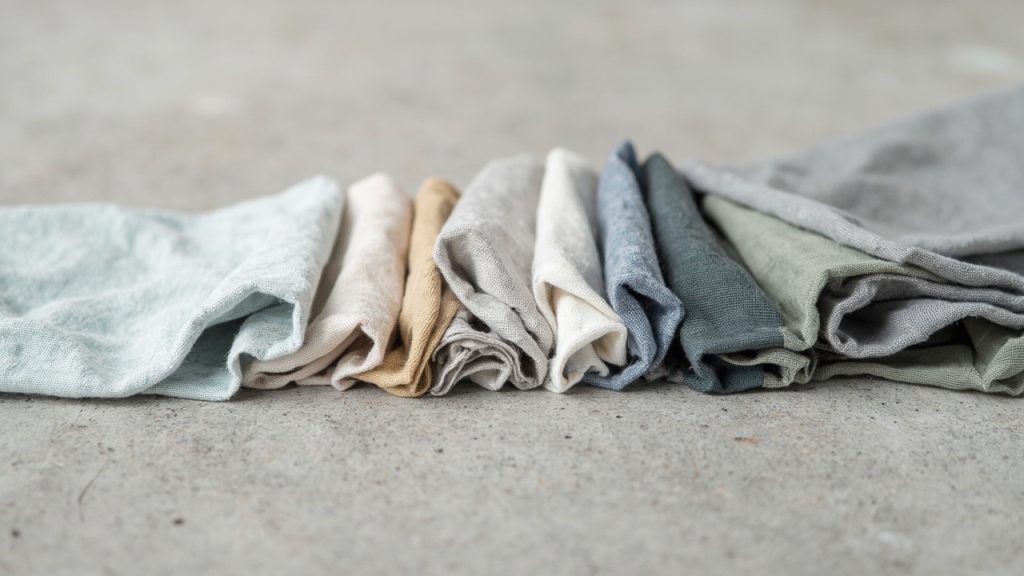
A research team led by Donghua University has published a low-temperature chemical recycling process that breaks down polyester while keeping more than 96 percent of the cotton and spandex in blended fabrics intact. Reported in the August 1 issue of the Journal of Hazardous Materials, the method tackles one of the most stubborn barriers to recycling stretch apparel: elastane fibers usually degrade or dissolve alongside polyester, leaving textile recyclers with a useless sludge. For sustainability and sourcing teams, the result is a potential step toward truly circular polyester-cotton-spandex blends.
The solvent-based process completely depolymerizes polyethylene terephthalate (PET) at 80 degrees Celsius in 80 minutes and recovers its primary building block, terephthalic acid at roughly 99 percent purity and 99 percent monomer recovery. Researchers combined ethylene glycol and potassium hydroxide with sulfolane, a polar aprotic solvent already used in industrial chemistry. They found that sulfolane alters the hydrogen-bonding environment around ethylene glycol while swelling the PET matrix, letting reactive species attack polyester’s ester bonds while leaving the polyurethane-based spandex largely untouched. Previous attempts achieved high polyester recovery but completely depolymerized the spandex at 120 degrees Celsius.
The team tested the process on waste PET fabric, PET/cotton and PET/spandex fabrics supplied by textile manufacturer Yuyue Home Textile. They reported that more than 96 percent of the cotton and spandex companions survived with structural integrity, while dyes migrated into the solvent phase. The study is honest about limits: it does not include a commercial-scale demonstration, nor does it prove that recovered fibers retain mechanical performance sufficient for re-spinning into new garments.
For OEM and ODM suppliers, the implication is to expect buyer questions about recycled-polyester roadmaps earlier than headlines suggest. EU brands preparing for the Digital Product Passport and brand-level recycled-content targets will want to know what share of a garment’s polyester can be chemically recycled and what percentage of spandex survives. Mills that already run GRS-certified recycled lines, OEKO-TEX Standard 100 testing and detailed fiber-blend ledgers will be better positioned to answer those questionnaires.
Fashion buyers should treat the result as a research milestone, not a commercial process. Real post-consumer garments rarely arrive as clean PET/cotton/spandex; they often contain nylon, coatings, printing inks and water-repellent finishes. Scaling the sulfolane process will require solvent-recovery systems that meet the latest guidance on reproductive toxicity. Until then, mechanical recycling and PET-bottle-to-fiber remain the workhorses for recycled polyester.
Northern Garment works with GRS-traceable recycled-polyester mills and maintains fiber-composition documentation at the fabric and garment level to help buyers answer Digital Product Passport and brand-level recycled-content questions.
Sources: [Sourcing Journal: Can Polyester Be Recycled Without Destroying the Spandex?]