News

Latest updates from Quanzhou Northern Garment, including OEM & ODM apparel manufacturing, factory developments, product updates, quality and compliance, and industry insights for global B2B buyers.

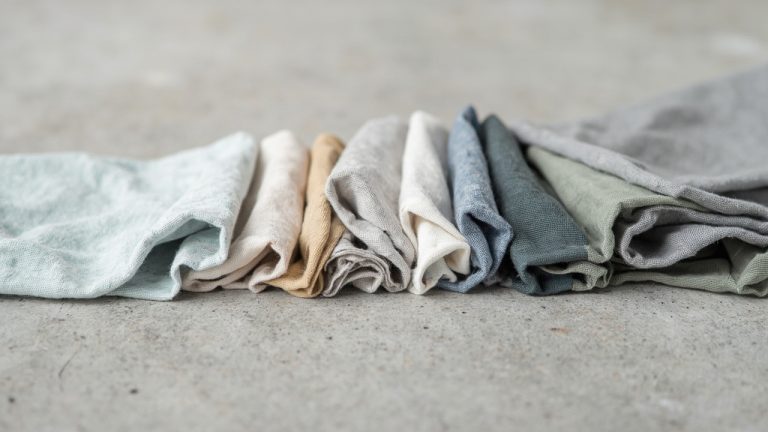
Textile specialists reviewing fabric samples for material traceability and assurance

Textile Exchange Tightens Materials Matter Assurance Ahead of 2026 Effective Date

09/05/2026

Textile Exchange published two new assurance policies on August 6, 2026, adding practical certification and audit guidance to its Materials Matter Standard. The move matters to apparel buyers because it shifts the conversation from broad sustainability claims toward a more consistent system for assessing materials, organizations and risk.The first document, the Materials Matter Criteria for Certification Bodies, defines requirements for the independent organizations that will conduct certification. The second, the Materials Matter Risk and Sampling Criteria and Tools Policy, explains how certification bodies should assess risk and plan audit sampling. Textile Exchange says the policies are intended to improve accuracy, consistency and transparency across the standard.Why the assurance rules matterA material claim is only as useful as the controls behind it. For brands sourcing outerwear, swimwear, activewear or hoodies, a garment can combine several inputs: shell fabric, lining, insulation, elastic, thread, zippers, labels and packaging. Each component can carry different documentation, transaction and chain-of-custody requirements.The new assurance framework gives certification bodies a common basis for deciding where audit attention should be concentrated. A risk-based approach may increase scrutiny where supply chains are complex, where material conversion involves several facilities, or where the evidence supporting a claim is incomplete. That should encourage suppliers to organize records before an audit rather than treating certification as a final-stage paperwork exercise.Timeline for buyers and suppliersAccording to Textile Exchange, the two policies become effective on December 31, 2026. The organization is taking a phased approach: 2026 is focused on preparation, followed by an additional year of optional uptake. The policies become mandatory from December 31, 2027, with audits moving to the Materials Matter Standard by that deadline.This transition window gives sourcing teams time to map their current certified-material programs against the new framework. It also allows factories, mills and trim suppliers to identify missing data while commercial pressure is still manageable.Practical steps for apparel procurement teamsBuild a material-level evidence map. List every claimed input in the bill of materials and connect it to its supplier, scope certificate, transaction evidence and production lot.Check subcontracting visibility. Printing, dyeing, lamination, embroidery and washing may introduce additional sites that need to be documented.Align purchase orders and claims. Product descriptions, fiber content, certification references and quantities should remain consistent across commercial and compliance records.Run a sample trace. Select one finished style and test whether the team can follow the evidence backward from packed goods to material purchase.Discuss readiness early. Buyers should ask strategic suppliers how they are preparing for the effective date and which process changes may affect lead time or cost.What this means for OEM/ODM partnershipsFor apparel manufacturers, the commercial advantage will come from making traceability usable. Buyers need concise answers: which materials are covered, which facilities are involved, what evidence is available and where risks remain. A supplier that can connect technical development, purchasing and production records is better placed to support those answers.Brands should avoid assuming that a certificate alone resolves every sourcing question. The stronger approach is to combine certification with disciplined bills of materials, approved-supplier controls, lot-level records and clear change management when a fabric or trim must be substituted.Source: Textile Exchange, “New measures to strengthen Materials Matter assurance,” August 6, 2026.
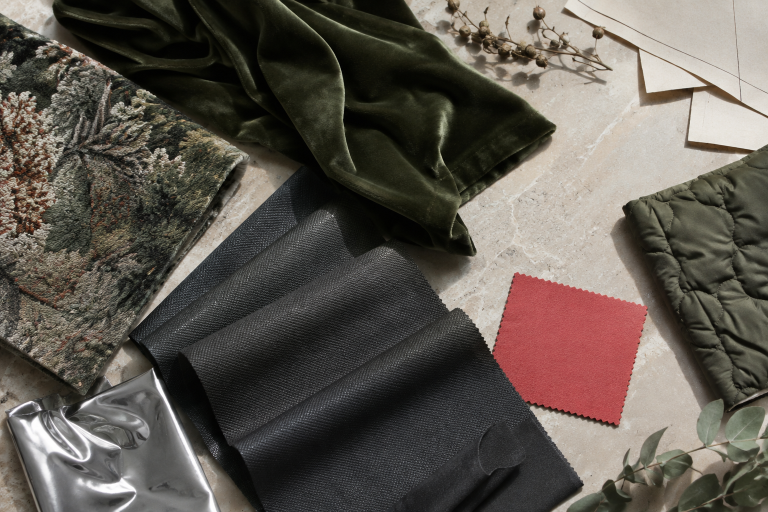

AI-generated still life of green velvet, botanical jacquard, charcoal fabric and reflective textile swatches

Texworld’s AW27–28 Trend Book Puts Texture and Material Experimentation in Focus

09/04/2026

With the August 31–September 2 Texworld Apparel Sourcing Paris dates now behind the industry, its Autumn-Winter 2027–2028 trend framework offers a starting point for the next round of fabric development. In its June 9 announcement, organizer Messe Frankfurt introduced Autopsy, a trend book organized around twelve creative signals rather than the four broad narrative worlds used in earlier editions. The organizer scheduled its presentation for the Paris-Le Bourget event and made the book available through its trend resources. From nature-led surfaces to reflective finishes The published framework spans several distinct material directions. Florabiote connects botanical ideas with velvet and jacquard; Paleogreen uses subdued greens and layered, weathered surfaces; Aquamorphosis explores fluidity, translucency and reflective effects. Other signals introduce stronger color contrasts or more restrained, architectural forms. These are creative forecasts, not measured sales results. The announcement does not establish which materials buyers ordered most or how consumers will respond to finished collections. Buyer analysis: turn a visual idea into a testable brief For an apparel sourcing team, the next step is to translate a preferred direction into a precise sample request. A photograph of an attractive surface cannot specify fabric weight, fiber blend, stretch, handle or the way a material behaves after washing. Start with a small development matrix: one core fabric, one texture variation and one color alternative for each product concept. Ask the mill or garment partner to identify what is available from existing production and what requires new development. This makes cost and timing discussions more concrete before a collection expands into multiple styles. Practical checks for outerwear and lifestyle apparel Textured materials: Request samples large enough to assess seams, pattern placement and appearance under different light. Review abrasion and pilling requirements against the intended use.Coated or reflective surfaces: Specify the desired visual effect separately from performance claims. Ask how care, folding and repeated handling affect the finish before approving it for a garment.Layered constructions: Evaluate the complete combination of shell, lining and insulation. A successful fabric swatch does not by itself establish the drape or comfort of a finished jacket.Seasonal colors: Set an approved color reference and a clear process for lab-dip review. Keep a commercially familiar option alongside experimental shades when testing a new concept. For OEM and ODM discussions, a useful brief ends with the target product, intended customer, expected order quantity and approval deadline. That gives suppliers a basis for proposing workable alternatives when a trend-led material exceeds the budget or development window. Source: Messe Frankfurt: Autopsy, the new trend book by Texworld Apparel Sourcing Paris, June 9, 2026. Product-development recommendations are Northern Garment’s editorial analysis; this article does not claim on-site reporting.

AI-generated illustration of a garment development studio with fabric swatches, a navy jacket and the New York skyline

CFDA and SOURCING by Informa Bring New York Manufacturing to September Marketplace

09/04/2026

New York manufacturing will take a more prominent place in next week’s apparel sourcing calendar. The Council of Fashion Designers of America (CFDA) and FASHION by Informa have announced a partnership connecting local production businesses with international brands and buyers. According to the CFDA’s July 30 announcement, the initiative is scheduled to debut at the Javits Center on September 9–11, 2026. Plans include a showcase of six to eight New York City manufacturers and two CFDA-led educational sessions. A further showcase and educational program are planned for February 2027. A sourcing conversation that includes local production The announcement frames the collaboration around access to domestic manufacturing, craftsmanship and stronger production networks. For visitors preparing their September appointments, it adds a specific reason to investigate local development and manufacturing partners alongside the wider sourcing offer. This is a preview of the announced program, not a report on completed meetings or orders. Exhibitor availability and meeting arrangements should be confirmed directly with the organizers. Buyer analysis: compare production models by task For apparel brands, the useful question is where each stage of a collection should happen. A nearby development partner may be appropriate for frequent fittings or limited runs, while an overseas OEM or ODM partner may suit a different combination of materials, construction and order volume. Neither geography alone establishes the best choice. Prepare the same technical brief for each prospective supplier. Include the bill of materials, measurements, construction details, target quantities and required delivery date. Ask suppliers to separate sample development, material procurement and bulk production in their quotations so that comparisons cover the same scope. Three questions to take into supplier meetings What is included in the lead time? Clarify whether it begins after fabric approval, deposit payment or final sample sign-off, and whether transport is included.Who owns the approved specifications? Establish how patterns, graded measurements and approved material references will be documented if development and production use different partners.How will quality be checked? Agree on inspection stages and the procedure for resolving differences between the approved sample and finished garments. For outerwear, swimwear and activewear programs, shortlist suppliers by demonstrated category capability before comparing price. A well-documented handover and a realistic approval calendar can matter as much as the distance between the brand and the factory. Source: CFDA: CFDA and SOURCING by Informa Debut Partnership, July 30, 2026. Buyer analysis is Northern Garment’s editorial interpretation. Featured image: AI-generated conceptual illustration of an apparel development studio; not a photograph of the event or a named manufacturer.

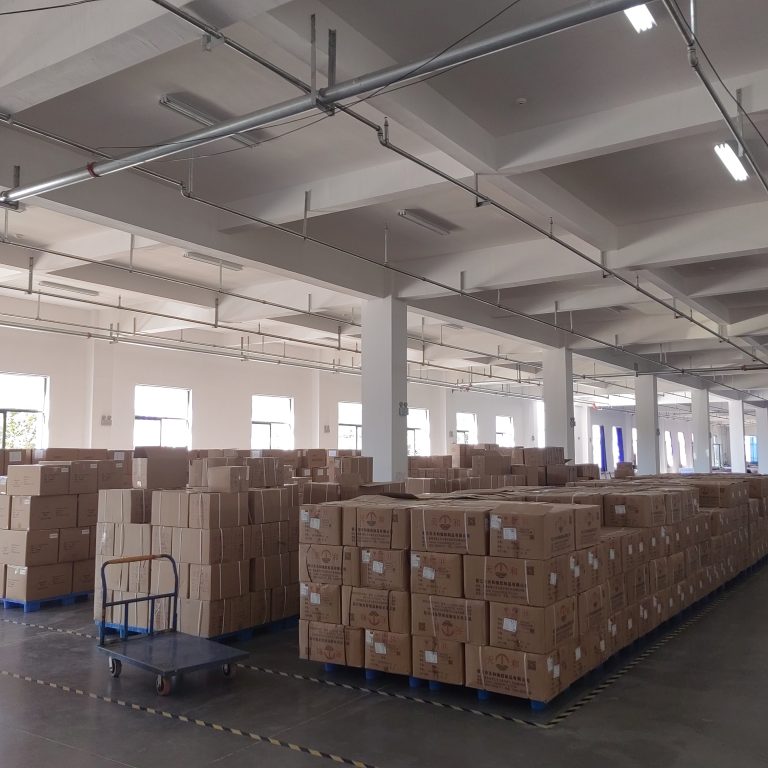
Cartons of auxiliary materials palletized and ready for outbound dispatch at Quanzhou Northern Garment

Quanzhou Northern Garment Stages Auxiliary Materials for 60,000-Piece Outerwear Run to the Netherlands

08/31/2026

Most conversations about apparel sourcing focus on fabric, fit, and finishing. Equally important — and less visible to the buyer sitting at the other end of an email thread — is what happens with the small components that hold a garment together: zippers, buttons, snaps, labels, interlinings, elastics, threads, and packaging. At Quanzhou Northern Garment, those components are managed in a dedicated auxiliary materials zone that operates as its own internal supply chain. The auxiliary warehouse is organized around a heavy-duty racking system that runs the length of the floor. Trims, fastenings, packaging, and small-batch consumables are sorted by category, with each SKU traced from receipt to issue. Palletized cartons are staged in clearly marked lanes, color-coded floor tape separates walkways from storage zones, and a flatbed trolley stays on standby at the end of each row so that pickers can move a batch from rack to staging without waiting on forklifts. Staging follows the same logic as a finished-goods dispatch. When a production order is released, the merchandising team issues a trim card that lists every auxiliary item required — by type, color, size, and quantity — for the style run. Warehouse staff pull the cartons, verify lot numbers against the trim card, and group them onto pallets sized for either LCL or FCL outbound. Each pallet is photographed, weighed, and labeled before it moves from staging to the loading bay. This is also where 5S discipline shows up most clearly. Walkways are kept clear, the floor is graded for slip resistance, lighting is upgraded to LED for accurate color matching on trims, and all racking is inspected on a quarterly cycle. The discipline is operational, not cosmetic: a missing button lot or a mismatched zipper pull can stall an entire cutting line, and the staging process is designed to catch those errors before they reach the sewing floor. That staging discipline is currently being put to work on a 60,000-piece outerwear run for a Netherlands-based buyer. Trims, labels, and packaging for the full program are pre-staged against released specifications, with cartons grouped by style and size run so that the production line can pull what it needs without breaking flow. The shipment is scheduled to clear via FOB Xiamen, and the auxiliary warehouse is the last checkpoint before pallets move from the staging zone onto the loading bay. For OEM and ODM buyers, the practical impact is shorter reaction time on style changes. Because trims and packaging are pre-staged against released tech-packs, last-minute spec updates from buyers — a button color swap, a logo revision on a woven label, a packaging change for a specific retail channel — can usually be absorbed without re-opening the sourcing window. The auxiliary warehouse functions as a buffer that lets production keep moving while buyer decisions are still being finalized. Across 12+ years of OEM/ODM production, the factory has refined its outbound logistics around FOB Xiamen, with regular LCL consolidations for smaller development runs and dedicated FCL capacity for full production programs like the Netherlands run currently in staging. Auxiliary staging sits one step upstream of that logistics flow and is the reason a typical production order can move from a confirmed tech-pack to a loaded container on a tight calendar. Buyers who want to see the staging process in person are welcome to schedule a factory visit; the auxiliary zone is part of the standard tour route alongside the cutting, sewing, and finishing lines. Sources: factory capability statement, Quanzhou Northern Garment Co., Ltd.

Textile quality control and laboratory testing

Quanzhou Northern Garment Adds 3D Digital Sampling to Pre-Production Workflow for Faster Buyer Iteration

08/31/2026

Quanzhou Northern Garment Co., Ltd. has completed integration of 3D digital sampling into its pre-production workflow, extending the factory's existing fabric lab and pattern-making capabilities into a fully digital iteration loop for overseas buyers. The new line sits between tech-pack intake and physical sample production. Designers and merchandising teams can now upload buyer specifications and receive photoreal 3D garment renders within 48 hours, including fabric drape simulation, seam behavior, and zipper / button placement checks. Buyers review the renders, request adjustments in writing, and receive a revised render before any fabric is cut. Once the digital sample is approved, the same data set drives marker nesting and cutting-file generation on the factory floor, eliminating the rework loop that traditionally sits between buyer comments, pattern adjustment, and physical sample re-sew. For short-run and development programs, the change is most visible at the timing level. A three-round development cycle that previously took 18 to 24 days from first tech pack to approved fit sample can now complete in 8 to 12 days, with each iteration reduced from 6 to 8 days of physical work to roughly 2 to 3 days of render revision. Capacity is preserved for buyers who need physical samples for fit sessions, retailer line reviews, or e-commerce photography 鈥?physical sampling remains available on request and is fully integrated with the digital output. For production programs, the bigger impact is on first-pass yield. Pattern data generated from the 3D sample flows directly into cutting, reducing the marker re-make rate that historically contributed to fabric waste at the start of each new style. The factory's QC team has incorporated 3D-vs-physical tolerance checks into its AQL 2.5 inspection routine for new developments, flagging any garment whose measured dimensions fall outside the digital sample specification. The investment reflects a broader industry shift toward digital product development as buyers tighten development calendars and demand faster response on trend-driven programs. The factory's R&D team will continue expanding the digital fabric library, with priority on performance outerwear, swimwear, and activewear substrates that currently require the most physical iteration. Buyers interested in trialing the digital sampling workflow on a development order can request a sample tech pack from the factory's merchandising team. Sources: factory capability statement, Quanzhou Northern Garment Co., Ltd.

Bangladesh garment factory operations amid energy supply disruptions

Bangladesh RMG Output Drops 30-40% as LNG Shortage Disrupts Peak Shipping Season

08/31/2026

Bangladesh's ready-made garment sector is heading into peak shipping season with both hands tied behind its back. Gas shortages triggered by a fire at one of the country's two floating LNG terminals in July have curtailed textile and apparel output across major industrial zones, with industry officials estimating production has dropped by 30 to 40 percent. The Bangladesh Garment Manufacturers and Exporters Association (BGMEA) is now asking international buyers to grant one- to two-week shipment extensions. The disruption goes deeper than idled sewing lines. Natural gas runs upstream through the entire textile chain, supplying captive power generation as well as the boilers and steam needed for dyeing, washing, drying, and finishing. A dyehouse shutdown can stop a sewing factory even when the lights stay on, which is why a "power restoration" headline does not translate into immediate order recovery. New research from the Centre for Policy Dialogue (CPD), drawing on data from 350 RMG factories, frames the crisis as a structural vulnerability rather than a one-off. The sector is locked into carbon-intensive production at the same time that domestic gas reserves are declining and imported LNG is becoming the marginal fuel source. CPD research director Khondaker Golam Moazzem warned that "relying solely on imported LNG will not be sustainable in the long run." The CPD study finds no silver-bullet technology. Washing and dyeing, though representing a small share of installed machines, are the most energy-intensive stage. Sewing accounts for over 85 percent of machine capacity but offers limited savings from substitution alone. Cutting, at just 5.5 percent of machine stock, holds 27.3 percent of the potential savings identified. Solar offset could trim average monthly energy costs by an estimated 15.7 percent at a 30 percent offset level, but the highest observed offset in the sample was only 10 percent. Rooftop solar can also reduce cost volatility for 96 percent of factories, yet it cannot replace the gas-fired boilers used for thermal finishing. Financing remains a binding constraint: the smallest factories in the sample showed a 57.3 percent energy-efficiency gap, versus 8.9 percent for the largest, mostly because of older machinery and limited access to capital. H&M is financing supplier projects through its Green Fashion Initiative, with five of 24 current projects in Bangladesh, and is pushing for corporate power purchase agreements to expand renewable access. CPD recommends blended finance, concessional lending, and standardized appraisal frameworks to widen that pipeline. For B2B buyers, the message is risk-management: expect slippage on Bangladesh-origin programs through the fall peak, and diversify across India, Pakistan, and Vietnam where renewable adoption is moving faster. Order placement should now factor in energy-driven delivery risk, not just price. Sources: https://wwd.com/sourcing-journal/industry-news/bangladesh-rmg-energy-crisis-1239129058/, https://wwd.com/sourcing-journal/sustainability/bangladesh-bidec-bgmea-fans-retrofit-energy-crisis-1239166465/

Apparel industry adapts to new US-Canada trade tariffs

US 50% Tariff on Canadian Outerwear Reshapes Fall Sourcing Strategies for US Retailers

08/31/2026

With 50 percent US tariffs on Canadian goods now in force, outerwear is taking one of the heaviest hits of any apparel category this fall. According to University of Delaware professor of fashion and apparel studies Dr. Sheng Lu, roughly 36 percent of garments labeled "Made in Canada" in recent product-level evaluations fall into the outerwear category, covering coats, jackets, and blazers. For US retailers carrying premium Canadian outerwear, that means a structural cost increase that cannot easily be worked around. The affected products reach US shelves primarily through premium department stores such as Neiman Marcus, Bloomingdale's, and Saks Fifth Avenue. Specialty and off-price channels are less exposed. For brands like Canada Goose, Kanuk, Moose Knuckles, and Quartz Co., the constraint is even tighter: outerwear has a short sell-through window, and order books were locked in months ago. Dr. Lu notes that brands and retailers are unlikely to cancel existing orders at this stage, given that flexibility on premium outerwear is far more limited than on basic items like T-shirts. Where does that leave pricing? Dr. Lu expects a "mix of measures." Some tariff cost will be absorbed by brands and retailers because there is no immediate alternative manufacturing base for these specialized products. Price elasticity is low. But the 50 percent rate is substantial enough that some share of the increase will inevitably reach the consumer, particularly on higher-priced coats and jackets. The longer-term signal is more concerning than the fall sticker shock. The USMCA formal six-year review in July did not produce unanimous support for renewal. Instead, the current US administration has signaled an annual review process, adding new procedural steps from federal register announcements to public comment and hearings. If that process drags on without resolution until USMCA expires in 2036, there is little incentive for companies on either side of the border to commit to new sourcing investments. For B2B apparel buyers, the practical read is straightforward: Canadian-made outerwear is now a higher-cost, higher-risk category. Sourcing teams that previously diversified between Canada and Asia should reassess their country mix for fall-winter programs. Asian OEM/ODM partners with proven down jacket, wool coat, and technical outerwear capabilities can absorb category demand that Canada can no longer serve at competitive landed cost. Order timing, label origin documentation, and USMCA-compliant material sourcing will all need fresh review for any program that historically leaned on Canadian production. Sources: https://wwd.com/sourcing-journal/trade/outerwear-us-canada-trade-war-tariffs-retail-prices-1239173169/, https://wwd.com/sourcing-journal/industry-news/50-percent-tariffs-section-338-canada-trade-deal-usmca-ustr-1239146745/

Bangladesh Factory Fan Retrofit Energy Efficiency

Bangladesh Garment Factories Slash Energy Costs 50% With Ceiling Fan Retrofit

08/30/2026

Bangladesh's ready-made garment industry is testing a low-tech, high-impact decarbonization play: retrofitting existing ceiling fans with brushless DC motors instead of replacing them. The Bangladesh Garment Manufacturers and Exporters Association (BGMEA) signed a memorandum of understanding last week with Bangladesh Industrial Development & Engineering Company (BIDEC) to roll the technology out to member factories.Bangladesh factories can run a thousand ceiling fans each, and the country's installed base of roughly one million units is largely old and inefficient. Founder Kazi Mohammad Ibrahim estimates that converting those fans to brushless DC drives could save the industry 217,440 megawatt-hours of electricity per year, avoid 271,452 tons of CO2-equivalent emissions, and cut annual electricity costs by more than $17 million. Trials at 42 factories have already shown efficiency gains of 47% to 65%.The economics are unusually friendly. A new fan costs around $50, a retrofit about $30, and Ibrahim pegs the payback period at roughly 2.4 years with an internal rate of return around 300%. For factory owners navigating Bangladesh's intensifying gas shortages and load-shedding, the upgrade also addresses a worker welfare problem: traditional fans run at 55-60°C on the sewing floor during peak summer, while the retrofitted units hold closer to 35-40°C — a meaningful reduction in indoor heat stress.For B2B buyers and sourcing teams, the story matters on three levels. First, supplier-side energy and carbon metrics are increasingly part of vendor scorecards under CSRD, CSDDD, and brand-level Scope 3 reporting, so factory-level efficiency improvements directly affect buyer reporting. Second, production stability in a key sourcing country improves when individual factories are insulated from grid volatility. Third, the model demonstrates a credible "micro-sustainability" template — small, repeatable retrofits with measurable ROI — that can be replicated by OEM/ODM partners in Vietnam, Cambodia, and elsewhere.BGMEA director Shah Rayeed Chowdhury framed energy efficiency as "no longer only an environmental issue; it is increasingly a business and competitiveness issue" — a useful lens for any sourcing conversation heading into 2027.Sources: Sourcing Journal — Bangladesh's Factory Fans Get Second Wind, Sourcing Journal — Bangladesh Gas Crisis Exposes RMG's Decarbonization Catch-22

US-Canada Outerwear Tariff 2026

US-Canada Trade War: What 50% Tariffs Mean for Outerwear Sourcing This Fall

08/30/2026

The U.S. administration's 50% tariff on Canadian goods, announced this weekend, will land hardest on one apparel category: outerwear. According to University of Delaware professor Dr. Sheng Lu, nearly 36% of "Made in Canada" garments in his recent product-level evaluation fell into the outerwear category — coats, jackets, and blazers carried by premium retailers including Neiman Marcus, Bloomingdale's, and Saks Fifth Avenue.For B2B buyers and sourcing teams, the immediate question is what happens to fall-season orders already on the books. Lu's assessment is that most will ship: these orders were placed months ago, often in 2025, and the short sell-through window of seasonal outerwear leaves little room to cancel. Premium Canadian brands such as Canada Goose, Kanuk, Moose Knuckles, and Quartz Co. also lack a quick switch to alternative sourcing bases because their product specifications — down fill weights, technical membranes, particular seam constructions — are tightly bound to Canadian manufacturing.Price elasticity is therefore expected to be low. Retailers are likely to absorb part of the cost increase, but a portion will reach consumers, especially on USMCA-non-compliant items. For Asian and other non-Canadian apparel OEM/ODM suppliers, the longer-term signal is more important: the U.S. has signalled that the formal six-year USMCA review will be replaced by an annual review process, which could persist until the agreement's 2036 expiry. That uncertainty complicates any sourcing decision that places Canada inside a multi-year supply chain plan.For outerwear buyers evaluating Q4 2026 and Spring 2027 programs, the practical read-through is to widen the sourcing base beyond a single country, lock in fabric and trim prices earlier in the cycle, and confirm USMCA status on every shipment. Suppliers able to certify origin, capacity, and lead time flexibility will be in a stronger position through the rest of this trade-dispute cycle.Sources: Sourcing Journal — Outerwear Sticker Shock Likely Amid US-Canada Trade War, Sourcing Journal — Canada Talks Crumble and 50% Tariffs Take Effect

Stacked fabric swatches showing recycled polyester and spandex textile samples on neutral background

New Polyester Recycling Process Preserves Spandex for Stretch Apparel

08/27/2026

A research team led by Donghua University has published a low-temperature chemical recycling process that breaks down polyester while keeping more than 96 percent of the cotton and spandex in blended fabrics intact. Reported in the August 1 issue of the Journal of Hazardous Materials, the method tackles one of the most stubborn barriers to recycling stretch apparel: elastane fibers usually degrade or dissolve alongside polyester, leaving textile recyclers with a useless sludge. For sustainability and sourcing teams, the result is a potential step toward truly circular polyester-cotton-spandex blends. The solvent-based process completely depolymerizes polyethylene terephthalate (PET) at 80 degrees Celsius in 80 minutes and recovers its primary building block, terephthalic acid at roughly 99 percent purity and 99 percent monomer recovery. Researchers combined ethylene glycol and potassium hydroxide with sulfolane, a polar aprotic solvent already used in industrial chemistry. They found that sulfolane alters the hydrogen-bonding environment around ethylene glycol while swelling the PET matrix, letting reactive species attack polyester’s ester bonds while leaving the polyurethane-based spandex largely untouched. Previous attempts achieved high polyester recovery but completely depolymerized the spandex at 120 degrees Celsius. The team tested the process on waste PET fabric, PET/cotton and PET/spandex fabrics supplied by textile manufacturer Yuyue Home Textile. They reported that more than 96 percent of the cotton and spandex companions survived with structural integrity, while dyes migrated into the solvent phase. The study is honest about limits: it does not include a commercial-scale demonstration, nor does it prove that recovered fibers retain mechanical performance sufficient for re-spinning into new garments. For OEM and ODM suppliers, the implication is to expect buyer questions about recycled-polyester roadmaps earlier than headlines suggest. EU brands preparing for the Digital Product Passport and brand-level recycled-content targets will want to know what share of a garment’s polyester can be chemically recycled and what percentage of spandex survives. Mills that already run GRS-certified recycled lines, OEKO-TEX Standard 100 testing and detailed fiber-blend ledgers will be better positioned to answer those questionnaires. Fashion buyers should treat the result as a research milestone, not a commercial process. Real post-consumer garments rarely arrive as clean PET/cotton/spandex; they often contain nylon, coatings, printing inks and water-repellent finishes. Scaling the sulfolane process will require solvent-recovery systems that meet the latest guidance on reproductive toxicity. Until then, mechanical recycling and PET-bottle-to-fiber remain the workhorses for recycled polyester. Northern Garment works with GRS-traceable recycled-polyester mills and maintains fiber-composition documentation at the fabric and garment level to help buyers answer Digital Product Passport and brand-level recycled-content questions. Sources: [Sourcing Journal: Can Polyester Be Recycled Without Destroying the Spandex?]