Texworld’s AW27–28 Trend Book Puts Texture and Material Experimentation in Focus
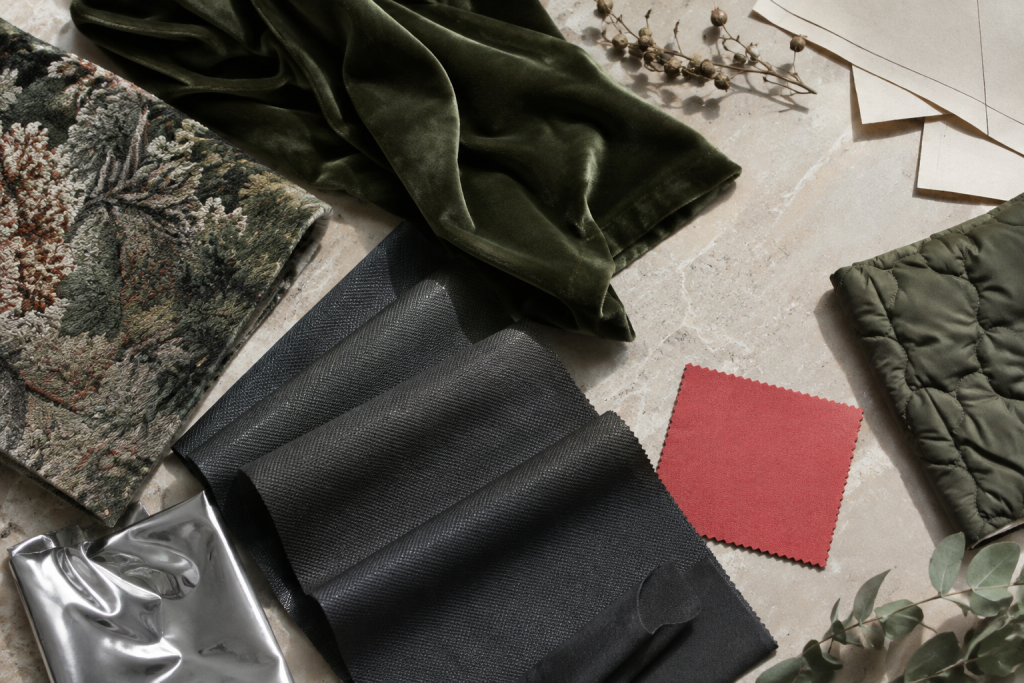
With the August 31–September 2 Texworld Apparel Sourcing Paris dates now behind the industry, its Autumn-Winter 2027–2028 trend framework offers a starting point for the next round of fabric development.
In its June 9 announcement, organizer Messe Frankfurt introduced Autopsy, a trend book organized around twelve creative signals rather than the four broad narrative worlds used in earlier editions. The organizer scheduled its presentation for the Paris-Le Bourget event and made the book available through its trend resources.
From nature-led surfaces to reflective finishes
The published framework spans several distinct material directions. Florabiote connects botanical ideas with velvet and jacquard; Paleogreen uses subdued greens and layered, weathered surfaces; Aquamorphosis explores fluidity, translucency and reflective effects. Other signals introduce stronger color contrasts or more restrained, architectural forms.
These are creative forecasts, not measured sales results. The announcement does not establish which materials buyers ordered most or how consumers will respond to finished collections.
Buyer analysis: turn a visual idea into a testable brief
For an apparel sourcing team, the next step is to translate a preferred direction into a precise sample request. A photograph of an attractive surface cannot specify fabric weight, fiber blend, stretch, handle or the way a material behaves after washing.
Start with a small development matrix: one core fabric, one texture variation and one color alternative for each product concept. Ask the mill or garment partner to identify what is available from existing production and what requires new development. This makes cost and timing discussions more concrete before a collection expands into multiple styles.
Practical checks for outerwear and lifestyle apparel
- Textured materials: Request samples large enough to assess seams, pattern placement and appearance under different light. Review abrasion and pilling requirements against the intended use.
- Coated or reflective surfaces: Specify the desired visual effect separately from performance claims. Ask how care, folding and repeated handling affect the finish before approving it for a garment.
- Layered constructions: Evaluate the complete combination of shell, lining and insulation. A successful fabric swatch does not by itself establish the drape or comfort of a finished jacket.
- Seasonal colors: Set an approved color reference and a clear process for lab-dip review. Keep a commercially familiar option alongside experimental shades when testing a new concept.
For OEM and ODM discussions, a useful brief ends with the target product, intended customer, expected order quantity and approval deadline. That gives suppliers a basis for proposing workable alternatives when a trend-led material exceeds the budget or development window.
Source: Messe Frankfurt: Autopsy, the new trend book by Texworld Apparel Sourcing Paris, June 9, 2026. Product-development recommendations are Northern Garment’s editorial analysis; this article does not claim on-site reporting.