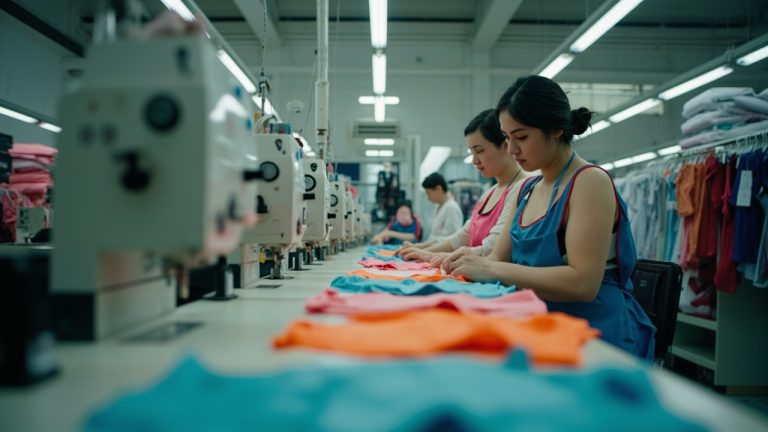
Fabric Sourcing

Apparel industry adapts to new US-Canada trade tariffs

US 50% Tariff on Canadian Outerwear Reshapes Fall Sourcing Strategies for US Retailers

08/31/2026

With 50 percent US tariffs on Canadian goods now in force, outerwear is taking one of the heaviest hits of any apparel category this fall. According to University of Delaware professor of fashion and apparel studies Dr. Sheng Lu, roughly 36 percent of garments labeled "Made in Canada" in recent product-level evaluations fall into the outerwear category, covering coats, jackets, and blazers. For US retailers carrying premium Canadian outerwear, that means a structural cost increase that cannot easily be worked around. The affected products reach US shelves primarily through premium department stores such as Neiman Marcus, Bloomingdale's, and Saks Fifth Avenue. Specialty and off-price channels are less exposed. For brands like Canada Goose, Kanuk, Moose Knuckles, and Quartz Co., the constraint is even tighter: outerwear has a short sell-through window, and order books were locked in months ago. Dr. Lu notes that brands and retailers are unlikely to cancel existing orders at this stage, given that flexibility on premium outerwear is far more limited than on basic items like T-shirts. Where does that leave pricing? Dr. Lu expects a "mix of measures." Some tariff cost will be absorbed by brands and retailers because there is no immediate alternative manufacturing base for these specialized products. Price elasticity is low. But the 50 percent rate is substantial enough that some share of the increase will inevitably reach the consumer, particularly on higher-priced coats and jackets. The longer-term signal is more concerning than the fall sticker shock. The USMCA formal six-year review in July did not produce unanimous support for renewal. Instead, the current US administration has signaled an annual review process, adding new procedural steps from federal register announcements to public comment and hearings. If that process drags on without resolution until USMCA expires in 2036, there is little incentive for companies on either side of the border to commit to new sourcing investments. For B2B apparel buyers, the practical read is straightforward: Canadian-made outerwear is now a higher-cost, higher-risk category. Sourcing teams that previously diversified between Canada and Asia should reassess their country mix for fall-winter programs. Asian OEM/ODM partners with proven down jacket, wool coat, and technical outerwear capabilities can absorb category demand that Canada can no longer serve at competitive landed cost. Order timing, label origin documentation, and USMCA-compliant material sourcing will all need fresh review for any program that historically leaned on Canadian production. Sources: https://wwd.com/sourcing-journal/trade/outerwear-us-canada-trade-war-tariffs-retail-prices-1239173169/, https://wwd.com/sourcing-journal/industry-news/50-percent-tariffs-section-338-canada-trade-deal-usmca-ustr-1239146745/

US-Canada Outerwear Tariff 2026

US-Canada Trade War: What 50% Tariffs Mean for Outerwear Sourcing This Fall

08/30/2026

The U.S. administration's 50% tariff on Canadian goods, announced this weekend, will land hardest on one apparel category: outerwear. According to University of Delaware professor Dr. Sheng Lu, nearly 36% of "Made in Canada" garments in his recent product-level evaluation fell into the outerwear category — coats, jackets, and blazers carried by premium retailers including Neiman Marcus, Bloomingdale's, and Saks Fifth Avenue.For B2B buyers and sourcing teams, the immediate question is what happens to fall-season orders already on the books. Lu's assessment is that most will ship: these orders were placed months ago, often in 2025, and the short sell-through window of seasonal outerwear leaves little room to cancel. Premium Canadian brands such as Canada Goose, Kanuk, Moose Knuckles, and Quartz Co. also lack a quick switch to alternative sourcing bases because their product specifications — down fill weights, technical membranes, particular seam constructions — are tightly bound to Canadian manufacturing.Price elasticity is therefore expected to be low. Retailers are likely to absorb part of the cost increase, but a portion will reach consumers, especially on USMCA-non-compliant items. For Asian and other non-Canadian apparel OEM/ODM suppliers, the longer-term signal is more important: the U.S. has signalled that the formal six-year USMCA review will be replaced by an annual review process, which could persist until the agreement's 2036 expiry. That uncertainty complicates any sourcing decision that places Canada inside a multi-year supply chain plan.For outerwear buyers evaluating Q4 2026 and Spring 2027 programs, the practical read-through is to widen the sourcing base beyond a single country, lock in fabric and trim prices earlier in the cycle, and confirm USMCA status on every shipment. Suppliers able to certify origin, capacity, and lead time flexibility will be in a stronger position through the rest of this trade-dispute cycle.Sources: Sourcing Journal — Outerwear Sticker Shock Likely Amid US-Canada Trade War, Sourcing Journal — Canada Talks Crumble and 50% Tariffs Take Effect

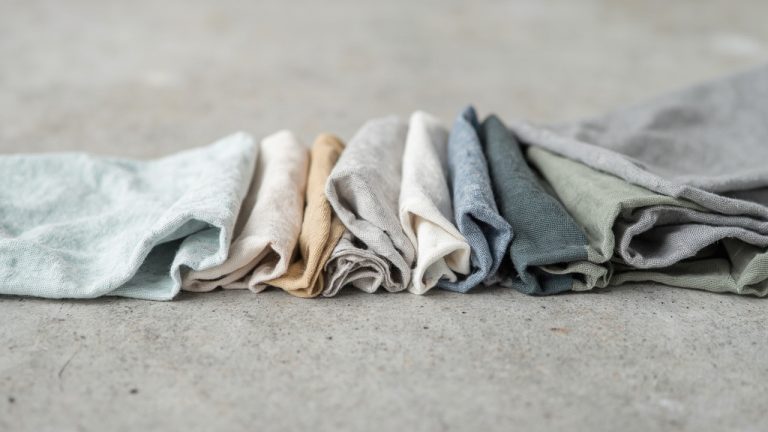
Stacked fabric swatches showing recycled polyester and spandex textile samples on neutral background

New Polyester Recycling Process Preserves Spandex for Stretch Apparel

08/27/2026

A research team led by Donghua University has published a low-temperature chemical recycling process that breaks down polyester while keeping more than 96 percent of the cotton and spandex in blended fabrics intact. Reported in the August 1 issue of the Journal of Hazardous Materials, the method tackles one of the most stubborn barriers to recycling stretch apparel: elastane fibers usually degrade or dissolve alongside polyester, leaving textile recyclers with a useless sludge. For sustainability and sourcing teams, the result is a potential step toward truly circular polyester-cotton-spandex blends. The solvent-based process completely depolymerizes polyethylene terephthalate (PET) at 80 degrees Celsius in 80 minutes and recovers its primary building block, terephthalic acid at roughly 99 percent purity and 99 percent monomer recovery. Researchers combined ethylene glycol and potassium hydroxide with sulfolane, a polar aprotic solvent already used in industrial chemistry. They found that sulfolane alters the hydrogen-bonding environment around ethylene glycol while swelling the PET matrix, letting reactive species attack polyester’s ester bonds while leaving the polyurethane-based spandex largely untouched. Previous attempts achieved high polyester recovery but completely depolymerized the spandex at 120 degrees Celsius. The team tested the process on waste PET fabric, PET/cotton and PET/spandex fabrics supplied by textile manufacturer Yuyue Home Textile. They reported that more than 96 percent of the cotton and spandex companions survived with structural integrity, while dyes migrated into the solvent phase. The study is honest about limits: it does not include a commercial-scale demonstration, nor does it prove that recovered fibers retain mechanical performance sufficient for re-spinning into new garments. For OEM and ODM suppliers, the implication is to expect buyer questions about recycled-polyester roadmaps earlier than headlines suggest. EU brands preparing for the Digital Product Passport and brand-level recycled-content targets will want to know what share of a garment’s polyester can be chemically recycled and what percentage of spandex survives. Mills that already run GRS-certified recycled lines, OEKO-TEX Standard 100 testing and detailed fiber-blend ledgers will be better positioned to answer those questionnaires. Fashion buyers should treat the result as a research milestone, not a commercial process. Real post-consumer garments rarely arrive as clean PET/cotton/spandex; they often contain nylon, coatings, printing inks and water-repellent finishes. Scaling the sulfolane process will require solvent-recovery systems that meet the latest guidance on reproductive toxicity. Until then, mechanical recycling and PET-bottle-to-fiber remain the workhorses for recycled polyester. Northern Garment works with GRS-traceable recycled-polyester mills and maintains fiber-composition documentation at the fabric and garment level to help buyers answer Digital Product Passport and brand-level recycled-content questions. Sources: [Sourcing Journal: Can Polyester Be Recycled Without Destroying the Spandex?]

Sustainable cotton field at harvest with mature cotton bolls and a smallholder farmer in light clothing at the edge of the field, photographed at golden hour

CmiA Verified Cotton Farmers Surge in 2025: What Apparel OEMs Need to Know

08/25/2026

The Aid by Trade Foundation, operator of the Cotton made in Africa (CmiA) initiative, reported a sharp increase in verified sustainable cotton farmers in its 2025 program update. For apparel brands and retailers with sustainability commitments, this is a meaningful signal: the verified-cotton supply base is expanding faster than demand, which changes the negotiating position of OEM factories serving EU and US buyers with cotton-heavy programs.CmiA is one of the most widely recognized sustainability standards for cotton outside the organic and recycled-cotton niche. Its verification covers water management, pesticide use, child-labor protections, and smallholder farmer income. Major apparel brands have used CmiA-labelled cotton in mass-market basics and innerwear programs for years — and they are now under public pressure to scale the volume.For Asian OEM and ODM partners, the trend lands in three concrete ways:1. Certificate-led sampling — EU buyers are asking factories to confirm that their cotton suppliers hold CmiA, GOTS, GRS, or Better Cotton certification at the fiber stage, not just at the finished-goods stage. A fabric mill invoice with a CmiA claim on the cotton bale is becoming a routine sample-room request.2. Chain-of-custody documentation — Mass-balance and physical-segregation claims need to be backed by documentation that survives a third-party audit. OEM partners without a documented chain-of-custody flow risk having their CmiA-labelled orders downgraded or rejected by the buyer's compliance team.3. Pricing dynamics — With verified cotton supply growing faster than retail demand, the historical "premium" for verified cotton has narrowed. OEM partners who can absorb the lower premium into their costing will be more competitive on EU RFQs in 2026.Practical steps for cotton-heavy OEM programs:Ask fabric suppliers for current CmiA / Better Cotton / GOTS certificates before sampling, not after the PO is confirmed.Build a one-page chain-of-custody flow showing bale → yarn → fabric → finished garment, with the verifying body noted at each step.Track the buyer's sustainability reporting calendar — many EU brands align their verified-cotton targets with their annual CSRD disclosures, which means RFQ timing is moving earlier in the year.Quanzhou Northern Garment works with CmiA-, GOTS-, and Better Cotton-sourced cotton for selected knitwear, hoodie, and children's wear programs. We maintain fabric-mill traceability files per project and can share the documentation at the sampling stage to shorten EU buyers' CSDDD-aligned onboarding workflow.The Aid by Trade Foundation's growth numbers are not just a feel-good sustainability headline — they are an early indicator of where the next round of EU sourcing questions will land. OEMs that prepare documentation now will move through those questionnaires with less friction than competitors scrambling in Q3 and Q4.

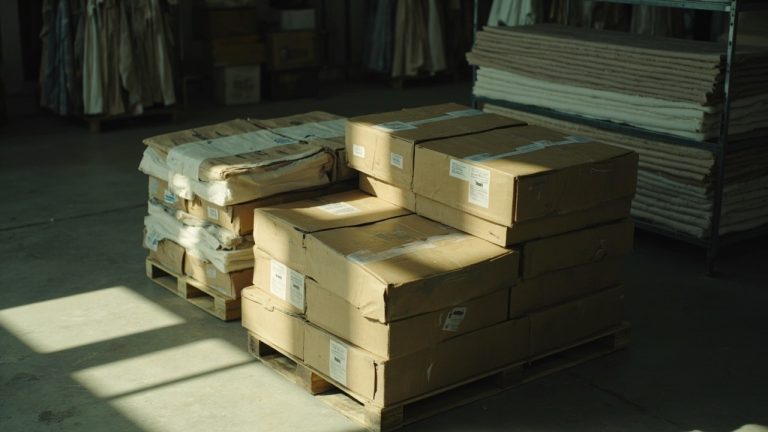
Neatly stacked cartons of finished garments on pallets inside a clean apparel factory warehouse, with fabric rolls on racks in the background under soft natural light.

ESPR Destruction Ban Live Since July 2026: How Apparel Suppliers Are Repositioning Inventory and Compliance

08/21/2026

The European Union’s Ecodesign for Sustainable Products Regulation (ESPR) reached its first operational milestone on 19 July 2026, when the prohibition on destroying unsold apparel and footwear took effect for large EU operators. While the headline text of the regulation has been public for over a year, July’s enforcement date is the first point at which compliance activity in the supply chain becomes commercially material — and it is the first time that an EU sustainability rule has translated directly into a factory-side reporting obligation in Asia.For OEM/ODM suppliers, the practical implications split into three categories. First, inventory planning is no longer a buyer-side problem alone. EU brands are now asking factories to confirm minimum production runs, accept sub-MOQ reorder quantities for replenishment, and reduce end-of-line rejection rates that would otherwise cascade into unsold stock at the brand’s warehouse. Second, traceability documentation is moving up the priority list. The destruction ban is enforced alongside the textile Digital Product Passport (DPP) framework, which means the same data fields that feed the DPP — fibre composition, manufacturing location, finishing chemistry — are now the data points that determine whether a finished garment can be donated, recycled, or returned to the supplier. Third, sample strategy is being re-examined. Multi-round counter-samples are standard for development, but brands are now asking suppliers to consolidate sample rounds and to retain returned samples for resale or repurposing rather than treating them as waste.For a Quanzhou-based apparel manufacturer, the response is layered. Drawing on more than twelve years of experience supplying European private-label brands, the team is taking three concrete steps with AW27 buyers: documenting fibre origin and finishing chemistry at the yarn-batch level to feed future DPP records; offering smaller production replenishment windows with a 30-day re-cut option for slow-moving SKUs; and the ability to consolidate counter-sample rounds into a single courier dispatch where buyer timelines allow. The goal is to remove the operational friction that the destruction ban would otherwise create at the buyer–supplier interface.Looking ahead through the rest of 2026, the EU is expected to publish further delegated acts under ESPR covering repair pathway labelling, recycled-content thresholds, and material durability indicators. Suppliers that treat the July destruction ban as the first in a series of compliance milestones — not as a one-off reporting exercise — will be positioned ahead of the next round of EU RFQs.Source: iExcellents / European Commission ESPR framework, 2026-07-19.

Quality inspector scanning a fabric sample QR code label inside a modern garment factory for Digital Product Passport compliance

EU ESPR Study Outlines Digital Product Passport Data Fields for Textile Apparel

08/20/2026

The European Commission's Joint Research Centre (JRC) published its "Study on DPP Content for Textile Apparel Products under ESPR" in May 2026, providing the most detailed roadmap yet for the data fields that branded apparel and their suppliers will be expected to publish through Digital Product Passports (DPP) under the Ecodesign for Sustainable Products Regulation. The study is preparatory work for the textile delegated act that the European Commission is expected to adopt around 2027. Because mandatory compliance is typically enforced 18 to 24 months after a delegated act enters force, brand owners and manufacturers supplying the EU market should treat 2028 as the earliest realistic go-live for mandatory textile DPPs, with phased implementation continuing through 2030 under the ESPR Working Plan. According to the JRC study and follow-on analyses from SGS, Intertek and other testing houses, the proposed data fields fall into four clusters: material composition and fiber origin, manufacturing and supply chain traceability, durability and repairability indicators, and end-of-life and environmental performance data. Each cluster is intended to feed a single, machine-readable DPP record accessible to consumers, recyclers and regulators through a QR code or NFC tag on the finished garment. For Quanzhou Northern Garment and other OEM/ODM suppliers in the region, the practical implication is that EU buyers will start asking for granular material and process documentation well before DPP becomes mandatory. Buyers' sustainability and compliance teams are already mapping their Tier 1 and Tier 2 supplier base against the draft field list, and suppliers that can provide fiber certificates, dye-house records, and finishing-chemical inventories in a structured format will be positioned ahead of those still relying on generic OEKO-TEX or GOTS certificates. Recommended near-term steps for apparel manufacturers preparing for DPP include: verifying that fiber composition records are traceable to yarn batch level; centralising finishing chemical inventories and SDS sheets in a single supplier data system; documenting repairability features such as seam type, reinforcement points, and replacement component availability; and preparing a standard DPP data export template that can be adapted to the final delegated act once published. As the EU Working Plan continues to roll out, suppliers that treat DPP readiness as part of their OEM/ODM service offering — not as a buyer-side compliance problem — will be the ones selected for the next round of European sourcing programs.

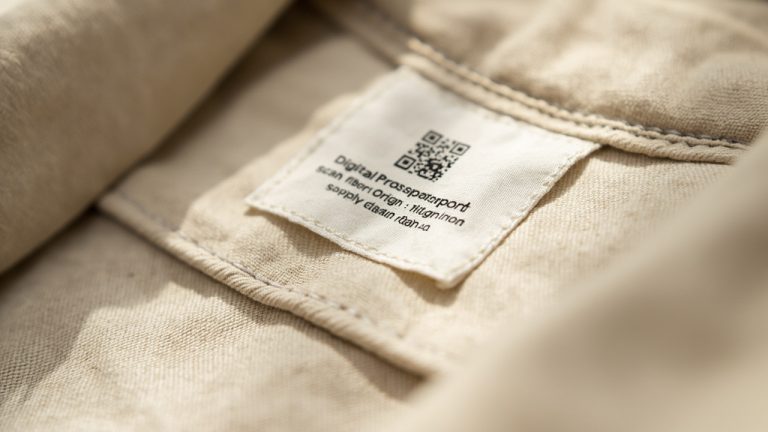
Close-up photo of a beige fabric label with a QR code and partially legible Digital Product Passport text, showing woven clothing material.

EU Digital Product Passport for Textiles Hits Operational Phase for SS27 Buyers

08/19/2026

As of the first half of 2026, the European Union's Ecodesign for Sustainable Products Regulation (ESPR) has moved from policy text to operational reality for textile and apparel products placed on the EU market. The textile Digital Product Passport (DPP) delegated act — adopted in late 2025 and now in force — is the first sectoral regulation that turns voluntary sustainability disclosure into a hard compliance requirement for every garment sold into the European Union.According to reporting from Ecotextile News and Just-Style, the data points every DPP must capture at garment level include fibre composition with country of origin, manufacturing facility identifiers, chemical compliance status, durability and care information, repair pathway availability, and end-of-life recyclability classification. For OEM/ODM buyers, this is no longer a CSR checkbox — it is now upstream data that the factory must capture, retain, and make machine-readable through a registered DPP provider.For buyers planning SS27 and AW27 collections into the European market, three concrete actions are now table stakes:Lock DPP-ready suppliers early. Buyers should confirm the factory's DPP provider integration and the data fields they can populate before issuing the tech-pack, not after PO. The cost of retrofitting traceability records mid-season is materially higher than capturing them at sampling.Treat fibre origin documentation as a sourcing constraint. Country-of-fibre data, not just country-of-sew, is now part of the compliance perimeter. Buyers specifying organic cotton, recycled polyester, or specialty bast fibres should ask for chain-of-custody documents at the yarn level, not the finished-goods level.Build repair and end-of-life language into care labels now. The DPP framework rewards products that disclose repair pathway and recyclability classification. Buyers who integrate those disclosures into care-label design from SS27 onward will avoid costly last-minute artwork changes when enforcement tightens in 2027.The broader lesson is that the DPP is, in practice, an extension of the audit conversation that the apparel industry has been having for a decade around social compliance — only now it lives in a standardised data layer that the European Commission, member-state authorities, and consumers can all read. Buyers who treat compliance as a data integration project with their factory partners will move faster than those who treat it as a marketing footnote.Northern Garment supports buyers through this transition with DPP-ready documentation templates, a mill-direct fabric sourcing chain with retained yarn-level records, and a sampling team in Quanzhou that can integrate DPP data fields into the tech-pack from the first counter-sample onward. If your SS27 line is destined for the EU market, our sourcing desk is open for an early-stage data planning conversation.Source: Ecotextile News, 2026-08-12

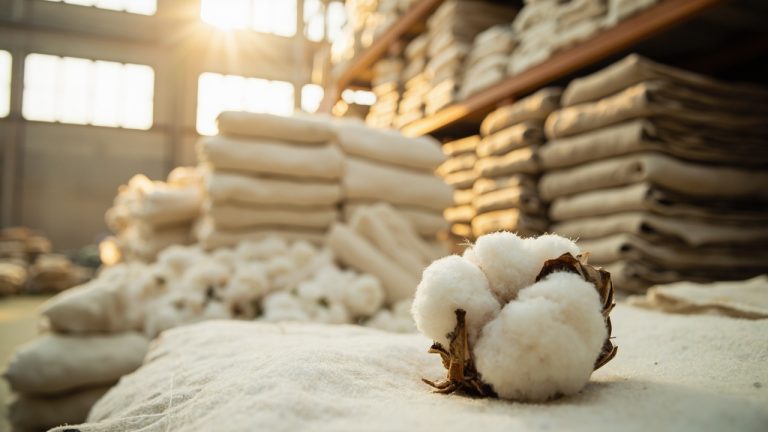
White cotton bales stacked in a textile mill warehouse with greige fabric rolls, illustrating 2026/27 cotton supply constraints from climate and rising input costs

Cotton Supply Squeeze 2026/27 Reshapes Fabric Sourcing for OEM/ODM

08/18/2026

Global cotton supply is heading into another contraction. According to Ecotextile News' latest field reporting, total cotton area worldwide is forecast to decline in the 2026/27 marketing year as farmers respond to three compounding pressures: rising input costs (fertiliser, fuel, irrigation), persistent drought in major growing regions, and tougher competition from man-made fibres on price-performance grounds.For brands and buying teams planning SS27 and AW28 cotton-heavy collections, the practical effect is that traditional cotton sourcing calendars will no longer hold. Fibre availability, not just price, is becoming the binding constraint. Mills that locked forward contracts in Q1 2026 are now reporting reduced allocation, and spot cotton quotes are showing wider regional spreads than at any point in the past three seasons.For a Quanzhou-based OEM/ODM partner, the response is a layered one. Drawing on more than a decade of mill relationships in Jiangsu, Shandong and Anhui, our sourcing team is taking three concrete steps with buyers for the upcoming seasons:Forward booking earlier in the season. Where buyers confirm 60% of the volume at tech-pack sign-off rather than at PO, we can lock yarn allocation with the mill. The cost premium is typically 2-4% but the supply security is real, especially for ringspun and combed cotton counts that run on tighter capacity.Blending as a design strategy, not a fallback. Cotton-polyester, cotton-modal and cotton-recycled blends are being engineered at the yarn stage to keep the hand-feel and dye uptake of cotton while reducing exposure to spot market volatility. Buyers who treat blending as a deliberate design choice — for performance, drape, or sustainability — tend to be more satisfied with the result than those who treat it as a cost-down lever.Recycled cotton and GOTS-certified organic as risk hedges. The recycled cotton market has matured enough in 2026 that it can absorb meaningful volume for hoodies, sweatshirts and outerwear shells. For buyers with their own sustainability targets, this also creates a cleaner story for downstream DPP and CSRD reporting under EU rules coming online in 2027.The broader lesson is that cotton supply in 2026 is no longer a commodity call — it is a sourcing strategy. Buyers who treat their fabric sourcing as a fixed line item in the cost sheet will find themselves respecifying mid-season; buyers who treat it as a planning conversation with the factory from sampling onward will keep their collections on time.Northern Garment supports buyers at both ends: mill-direct fabric sourcing with documented chain-of-custody, and an in-house sampling team that can build and ship counter-samples within seven working days, including alternate-fabric substitutions. If your SS27 line is cotton-heavy and you want a second opinion on fibre allocation, our sourcing desk is open.Source: Ecotextile News, 2026-06-02

Garment workers sewing colorful swimwear on industrial sewing machines inside a clean Chinese apparel factory workshop

Inside Our Swimwear Manufacturing Process: From Fabric to Container Loading

08/17/2026

Behind every women’s swimwear order that lands on a retailer’s shelves sits a chain of decisions: which fabric to source, how to grade a pattern across six sizes, when to inline-inspect a seam, and how to load a 40HQ so it arrives at its destination without claim. At Quanzhou Northern Garment Co., Ltd. — a Jinjiang-based apparel manufacturer serving B2B buyers across Europe, North America, Australia and the Middle East for more than 12 years — that chain is broken into eight controlled stages. This article walks through each one, so sourcing teams and private-label brands can see exactly what happens between an approved tech-pack and a container sailing out of Xiamen. Step 1 — Fabric Sourcing & Lab Testing Every swimwear build begins with the fabric. We work with a curated list of Chinese mills (and selected Italian/Indonesian suppliers on request) that ship the four families our buyers ask for most: 80% Nylon / 20% Spandex — the mainstream choice for one-piece swimsuits and bikini briefs, soft hand-feel, matte finish.82% Polyester / 18% Spandex — preferred for sublimation prints, chlorine-resistant variants available.Recycled Nylon (REPREVE® / ECONYL®) — for buyers building a sustainability story into the collection.Lining fabrics — power mesh for tummy-control panels, lightweight nylon lining for cupping. Every fabric lot is logged with a batch code and sent to our in-house lab for the four tests that matter most for swimwear: color fastness to chlorinated water, color fastness to sea water, UV protection (UPF 50+ where required), and AZO-free / REACH compliance. OEKO-TEX Standard 100 certification — currently in its eighth year of annual renewal — covers the full fabric library our production lines draw from, and reports can be attached to every shipment on request. Step 2 — Pattern Making & Sample Development Once the buyer’s tech-pack lands, our pattern makers translate it into graded CAD files across the buyer’s size run (typically XS–XXL, or 6 sizes for European wholesale). Two physical fit samples are produced before bulk: a pre-production sample (PPS) shipped by express courier for buyer approval, and an inline fit sample pulled from the first cut batch for in-line verification. Standard lead time from tech-pack receipt to PPS dispatch is 7–10 working days, including one round of pattern revision at no charge. Buyers working on their first private-label swimwear capsule typically start at 300–500 pieces per style per color to validate the fit before scaling. Step 3 — Spreading & Cutting Cut planning starts with a marker that minimizes fabric waste, typically 87–92% material utilization depending on style complexity. Fabric is spread on long cutting tables in layers of 30–80 plies (depending on fabric weight and stretch), then cut using computer-controlled straight knives and band knives for curved panels. Each cut bundle is bar-coded with the style, color, size and lay number so it can be traced back to the exact fabric lot through every downstream station. Step 4 — Printing, Sublimation & Solid Dye For printed swimwear (the majority of our orders), heat-transfer sublimation printing is the default. Artwork files from the buyer are color-separated in-house, printed on transfer paper, and pressed onto polyester-blend fabric at 200 °C. For solid colors, we work with reactive-dye mills for color accuracy across production lots. All printed panels are inspected under D65 light booths against the buyer-approved lab-dip before they move to sewing. Step 5 — Sewing: The Heart of the Garment Sewing is where most swimwear quality issues are won or lost. Our swimwear lines run four-thread overlock machines for main seams (which deliver stretch plus durability), coverstitch machines for hems, and dedicated elastic-application stations for waistbands, leg openings and under-bust bands. Hardware — metal rings, sliders, hook-and-eye closures, plastic adjusters — is sourced from approved suppliers and applied in a separate sub-line to keep the main assembly flow clean. An average bikini set involves 18–22 sewing operations; a one-piece with tummy-control lining can run to 35. Line balancing — assigning the right number of operators to each operation so the bundle flows without bottlenecks — is what keeps our standard swimwear line at a daily output of 1,800–2,400 finished pieces per line without compromising on the four-point inline checks performed at every station. Step 6 — Inline & Final Quality Control QC happens in two layers. Inline QC is performed by station-checkers walking the line: seam type and SPI (stitches per inch), elastic stretch recovery, print registration, hardware attachment. Final QC takes place on a dedicated inspection table under D65 lighting, with each piece checked against an AQL 2.5 sampling plan (General Inspection Level II) for defects such as skipped stitches, broken needles (recorded via the needle-control log every shift), fabric flaws, and measurement drift outside the spec sheet tolerance of ±1 cm. Buyers ordering for the EU market can request metal-needle detection on the final line at no additional charge — a small step that has saved more than one shipment from a costly recall. Step 7 — Folding, Polybag & Carton Packing Approved pieces are folded to a standard presentation, individually sealed in OPP polybags (custom-printed polybags and hangtags available on request for orders above 1,000 pieces per style), and packed into export cartons sized for either a 20ft or 40ft HQ container. Standard inner-pack is 6 pieces per polybag inner, 4 inners per carton = 24 pieces per master carton, but we adjust to the buyer’s retail-floor planogram where required. Step 8 — Container Loading & Shipment Cartons are palletized, stretch-wrapped, and loaded into containers by our logistics team at the Jinjiang factory gate, with photographic loading reports sent to the buyer at completion. A typical 40HQ holds roughly 28,000–32,000 bikini sets depending on packaging density, and a typical 20ft holds about half that. We ship FOB Xiamen as standard, with EXW factory and CIF/DDP quotes available on request. Lead time from deposit to ex-factory is typically 35–45 days for orders in the 2,000–10,000 piece range. What This Means for Buyers Sourcing From Us If you are a private-label brand, a buying office, or a wholesaler evaluating swimwear suppliers, the workflow above is what you can expect on every order — from the first sample courier to the last carton loaded at our gate. We support OEM (build to buyer’s tech-pack) and ODM (develop from your brief into tech-pack and samples) for women’s, men’s and children’s swimwear, with an MOQ starting at 300 pieces per style per color for development runs and tiered pricing down to FOB prices that compete with larger Vietnamese and Indonesian mills on mid-volume orders. Send your tech-pack, reference images, or a quick brief to our sourcing team for a same-week response with a sample plan and indicative pricing. Quanzhou Northern Garment Co., Ltd. — OEM/ODM swimwear, outerwear and activewear manufacturer based in Jinjiang, Fujian, China. Annual capacity 2,000,000+ garments. OEKO-TEX Standard 100 (year 8). Serving buyers in 20+ countries since 2013.


Stacked cotton bales and rolls of polyester filament yarn in a textile warehouse.

Cotton Futures and Polyester Filament Outlook: 2026 Price Drivers for Sourcing Teams

08/07/2026

JINJIANG, China — Cotton and polyester filament together account for roughly 75 percent of the fiber volume used in mid-market apparel, and the price movements in both inputs over the past 18 months have shifted sourcing economics in ways that sourcing teams should plan around through the rest of 2026. The Cotton #2 futures contract closed the 2024/25 marketing year with a marked divergence between the New York and Zhengzhou contracts, reflecting different supply dynamics in the United States and China. New York cotton has traded in a relatively tight band through the first half of 2026, supported by a smaller US crop and steady export demand, while Chinese cotton on the ZCE has been more volatile on the back of state reserve rotations and shifting import flows from Brazil and Australia. For garment exporters, the practical implication is that cotton-heavy programs — typically 100 percent cotton jersey, brushed flannel, terry, and denim — face a more variable cost base than they did two years ago. The bench planning assumption that worked in 2023 (flat 12-month cotton pricing) is no longer reliable. Sourcing teams should expect 8–15 percent variation in landed cotton fabric costs over a six-month sourcing window, depending on which cotton futures month they lock against. Polyester Filament: More Volatile Than Cotton Polyester filament pricing has been the more dramatic story. Para-xylene (PX), the upstream feedstock for purified terephthalic acid (PTA), and PTA itself have all moved sharply over the past 12 months on the back of capacity additions in China and shifting crude oil benchmarks. The filament yarn price index most commonly used by mid-market apparel mills in China closed 2025 roughly 18 percent higher than the 2024 average, then softened in early 2026 as new PTA capacity came online. Spot prices for 75D/72F DTY (the most common polyester filament yarn used in knit outerwear and activewear) traded in a 25 percent range over the past 12 months — a degree of volatility that makes downstream polyester-blend fabric pricing significantly harder to lock. For sourcing teams, the practical implication is that polyester-heavy programs (most fleece, activewear, and bonded outerwear shells) are exposed to upstream feedstock volatility in a way that pure cotton programs historically were not. Cotton-Polyester Spread and Substitution Effects The relative price of cotton to polyester filament has narrowed considerably since 2024. As of mid-2026, the cotton-to-polyester price ratio sits close to its three-year average, after a brief period in late 2024 when cotton was unusually expensive relative to synthetics. The current spread suggests that the substitution pressure between cotton and polyester for mid-market apparel is roughly stable, with no strong near-term incentive for buyers to shift category blends in either direction. For sourcing teams running volume programs, this is a useful planning signal. The current pricing environment does not favor a wholesale shift from cotton to polyester (or vice versa) on cost grounds alone. Decisions should continue to be driven by end-use performance, brand positioning, and regulatory considerations (such as the recycled-content preferences of EU buyers). What Buyers Are Doing in 2026 Based on conversations with export-facing factories and intermediary agents, the most common 2026 buyer response to fiber price volatility has been to extend price-lock windows and to hedge fabric commitments through longer-term framework agreements. The traditional 30-day fabric price quote has largely disappeared for cotton-heavy and polyester-heavy programs. In its place: Quarterly price locks with explicit raw-material pass-through clauses 6-month framework agreements on core fabric references Forward orders on commodity fabrics placed 4–6 months ahead of need Hedging on the polyester side via PTA futures, available to larger mills and some larger garment factories Practical Implications for Sourcing Teams For a factory running 30–50 styles across cotton and polyester-blend fabrics, the practical 2026 playbook looks like this: Lock cotton-heavy styles early. Commit fabric 4–6 months ahead and lock against the front-month futures, not the cash market. Use quarterly price reviews on polyester blends. Polyester filament is too volatile to lock for longer than a quarter without an explicit pass-through clause. Track PTA capacity additions. New PTA capacity in China continues to add supply, which will pressure polyester filament prices through 2026. Watch the cotton reserve rotation. Chinese state cotton reserve sales continue to influence the Zhengzhou cotton price. Reserve sale schedules are published quarterly. Plan for a wider landed-cost band. Plan sourcing budgets against an 8–15 percent landed-cost band for cotton fabrics and a 15–25 percent band for polyester-blend fabrics. The Bottom Line for Q4 2026 Cotton and polyester filament pricing is more volatile than it has been in five years, and that volatility is unlikely to fully normalize through 2026. Sourcing teams that lock cotton-heavy programs early, hedge polyester exposure with quarterly reviews, and plan against wider landed-cost bands will be better positioned than those still operating on flat 12-month pricing assumptions.