Cotton Supply Squeeze 2026/27 Reshapes Fabric Sourcing for OEM/ODM
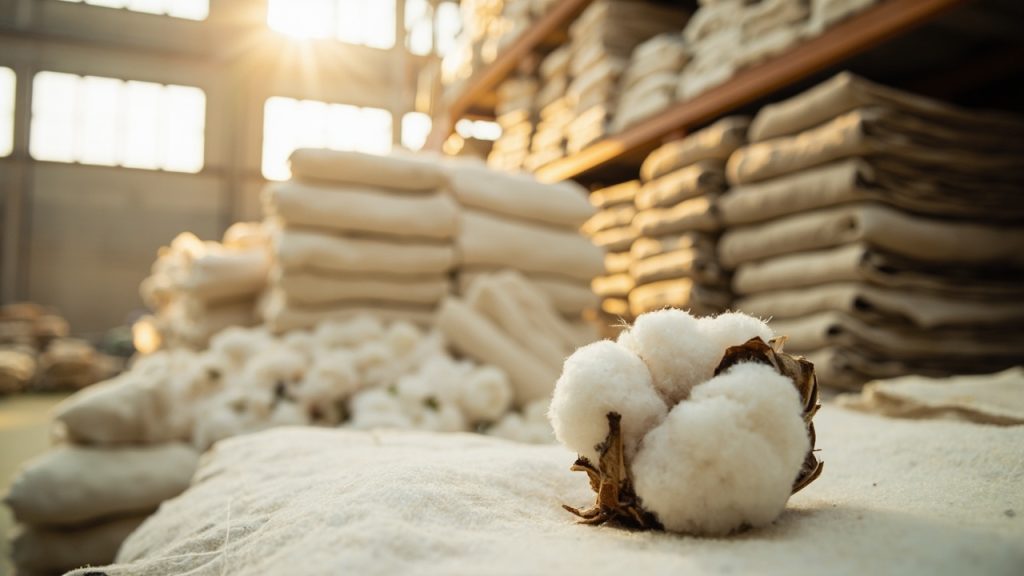
Global cotton supply is heading into another contraction. According to Ecotextile News’ latest field reporting, total cotton area worldwide is forecast to decline in the 2026/27 marketing year as farmers respond to three compounding pressures: rising input costs (fertiliser, fuel, irrigation), persistent drought in major growing regions, and tougher competition from man-made fibres on price-performance grounds.
For brands and buying teams planning SS27 and AW28 cotton-heavy collections, the practical effect is that traditional cotton sourcing calendars will no longer hold. Fibre availability, not just price, is becoming the binding constraint. Mills that locked forward contracts in Q1 2026 are now reporting reduced allocation, and spot cotton quotes are showing wider regional spreads than at any point in the past three seasons.
For a Quanzhou-based OEM/ODM partner, the response is a layered one. Drawing on more than a decade of mill relationships in Jiangsu, Shandong and Anhui, our sourcing team is taking three concrete steps with buyers for the upcoming seasons:
- Forward booking earlier in the season. Where buyers confirm 60% of the volume at tech-pack sign-off rather than at PO, we can lock yarn allocation with the mill. The cost premium is typically 2-4% but the supply security is real, especially for ringspun and combed cotton counts that run on tighter capacity.
- Blending as a design strategy, not a fallback. Cotton-polyester, cotton-modal and cotton-recycled blends are being engineered at the yarn stage to keep the hand-feel and dye uptake of cotton while reducing exposure to spot market volatility. Buyers who treat blending as a deliberate design choice — for performance, drape, or sustainability — tend to be more satisfied with the result than those who treat it as a cost-down lever.
- Recycled cotton and GOTS-certified organic as risk hedges. The recycled cotton market has matured enough in 2026 that it can absorb meaningful volume for hoodies, sweatshirts and outerwear shells. For buyers with their own sustainability targets, this also creates a cleaner story for downstream DPP and CSRD reporting under EU rules coming online in 2027.
The broader lesson is that cotton supply in 2026 is no longer a commodity call — it is a sourcing strategy. Buyers who treat their fabric sourcing as a fixed line item in the cost sheet will find themselves respecifying mid-season; buyers who treat it as a planning conversation with the factory from sampling onward will keep their collections on time.
Northern Garment supports buyers at both ends: mill-direct fabric sourcing with documented chain-of-custody, and an in-house sampling team that can build and ship counter-samples within seven working days, including alternate-fabric substitutions. If your SS27 line is cotton-heavy and you want a second opinion on fibre allocation, our sourcing desk is open.
Source: Ecotextile News, 2026-06-02