Custom Jacket Manufacturing Workflow: How Production Travels from Tech Pack to Russia

A custom jacket for a Russian buyer is not just a piece of outerwear. It is a cold-climate system: a heavy-duty shell, a measured amount of insulation, a tailored fit over layered garments, and a packaging plan that has to clear GOST-R paperwork at the destination port. Below is the complete workflow that takes one such jacket from the first design conversation to a fully delivered order in Moscow, and it ends where every production story should — with a buyer who has come back for a second season.
1. Design Brief and Tech Pack Development
Every Russian-market jacket program starts with a written brief. For winter parkas and down jackets, that brief typically specifies a fill power target (550 to 800), a temperature rating (often minus 25 to minus 35 °C), a length preference (mid-thigh to below-knee), and the inclusion or exclusion of a real or faux fur hood trim. The tech pack that follows translates these decisions into measurable inputs: shell composition, lining weight, zipper brand and size, snap spacing, stitch length, and a full size chart in EUR and RUS gradations. Skipping this step is the single most common reason a sample round costs extra weeks.
2. Pattern Making and Grading
From the approved tech pack, the pattern maker drafts a paper block in the base size, then runs it through grading software to produce the full size run — typically EU 46 through EU 60 for the Russian market, with RUS 50 through RUS 64 marked alongside. The marker is then optimized for the chosen shell width, usually 150 cm, to balance fabric yield against cut-piece handling speed. A well-built marker can save 4 to 7 percent of fabric across an 8,000-piece order.
3. Material Sourcing and Lab Testing
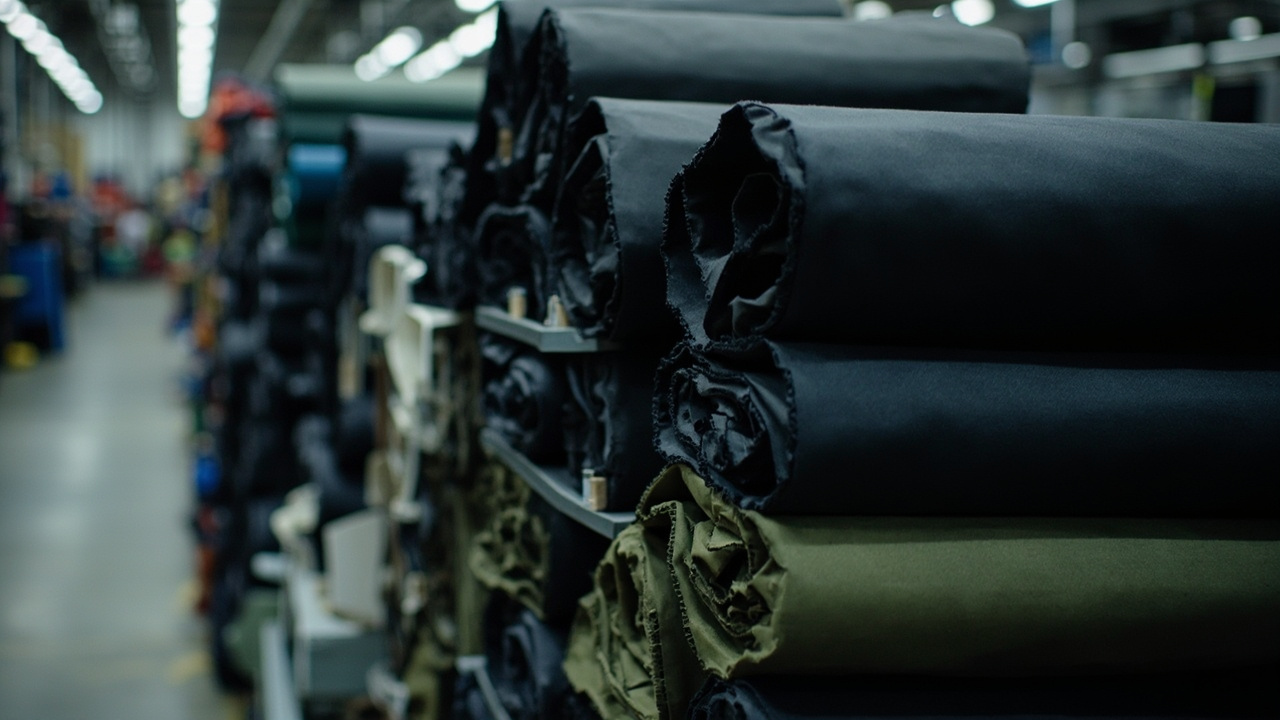
For a Russian winter jacket, the BOM typically runs to 30 to 40 line items: shell fabric, lining, insulation, hood trim, main zipper, secondary zippers, snaps, elastic tapes, drawcord, toggles, woven labels, care labels, hangtags, and polybags. Each lot is checked against OEKO-TEX Standard 100 before it enters the cutting room, and the shell goes through water-resistance, colorfastness to rubbing and perspiration, and seam-slippage tests. Insulation lots are checked for fill power and down-to-feather ratio; synthetic lots are checked for loft recovery after compression.
4. Sample Development
Most Russian buyers run two to three sample rounds before signing off on bulk production. The first round, usually called a proto, verifies the silhouette and the basic construction. The second round, the fit sample, confirms grading across the size run and locks down fabric behavior. The third round, the pre-production sample, uses the actual bulk fabric and trims and serves as the contractual reference. Each round is documented with photographs and a written fit report so changes are tracked, not improvised.
5. Pre-Production Planning
Once the sample is approved, the merchandising and production teams hold a pre-production meeting. The output of that meeting is a confirmed production calendar, a fabric and trim delivery plan against that calendar, and a critical-path list of the items most likely to delay shipment — usually zippers, snaps, and fur trim sourced through long-lead suppliers. Locking these early is what separates an on-time Vladivostok departure from a missed sailing.
6. Cutting
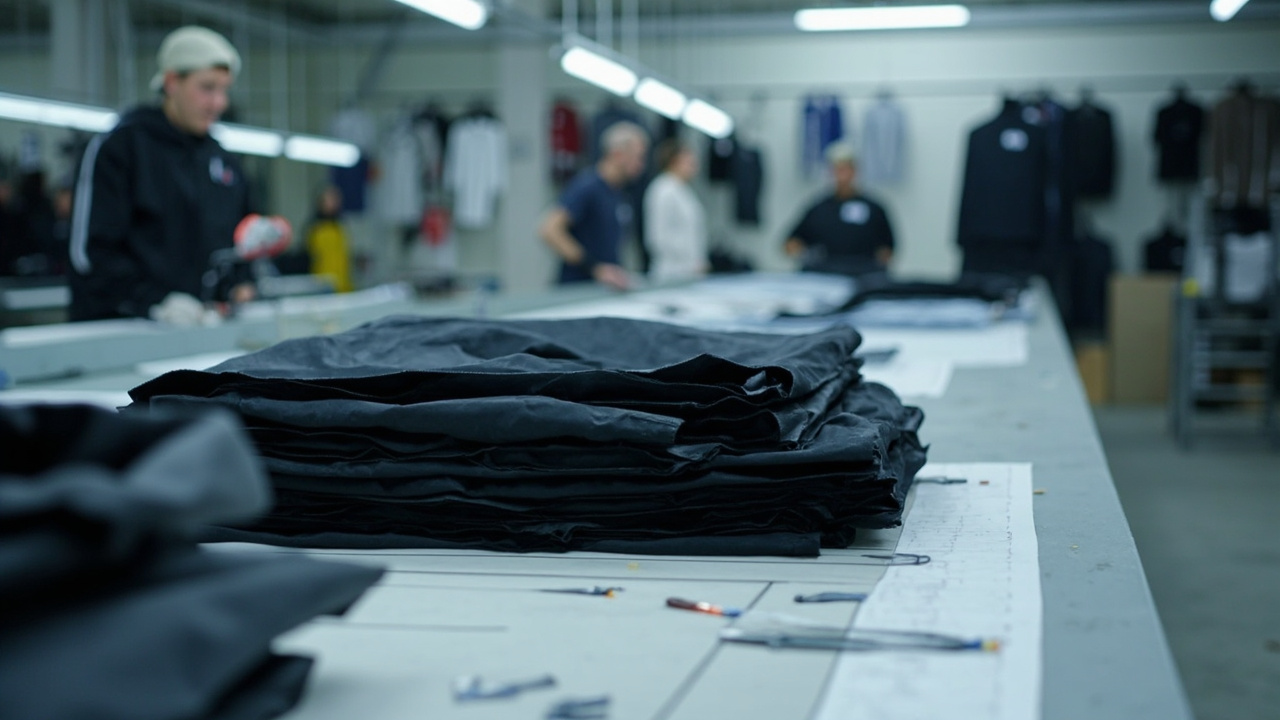
Bulk fabric is laid on the cutting table in layers, typically 60 to 120 layers depending on fabric thickness. The marker is placed on top and traced, and the cut is executed either by a straight-knife machine for standard shells or by a computer-controlled cutting machine for high-precision panels such as yokes, sleeve tops, and hood pieces. Each bundle — one bundle per size and per cut panel — is barcoded and routed to the correct sewing line.
7. Embroidery and Print Application
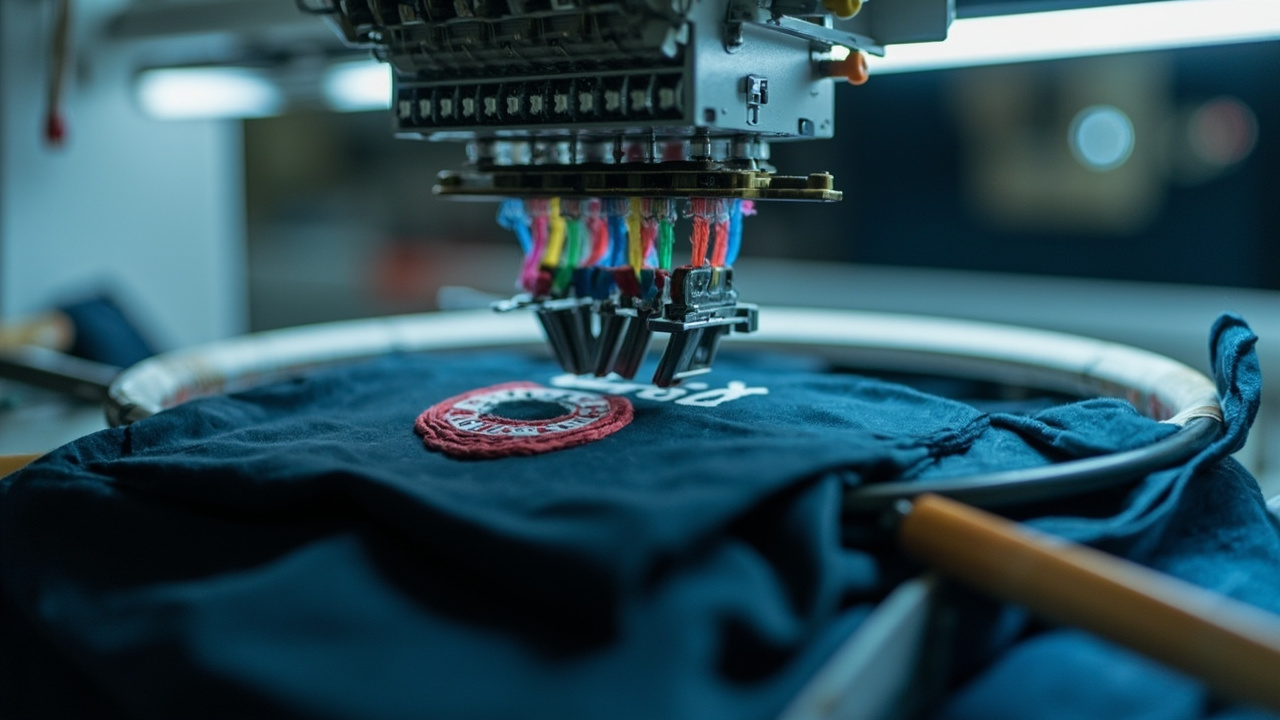
If the buyer’s logo or back graphic is part of the design, embroidery files are digitized to match the chosen thread color and fabric weight. Logo placement is usually the left chest, the right sleeve, or the back yoke. Print applications — typically TPU film or screen print — are heat-pressed after sewing, not before, so the print covers the seam and the final shape rather than the flat panel.
8. Sewing Assembly
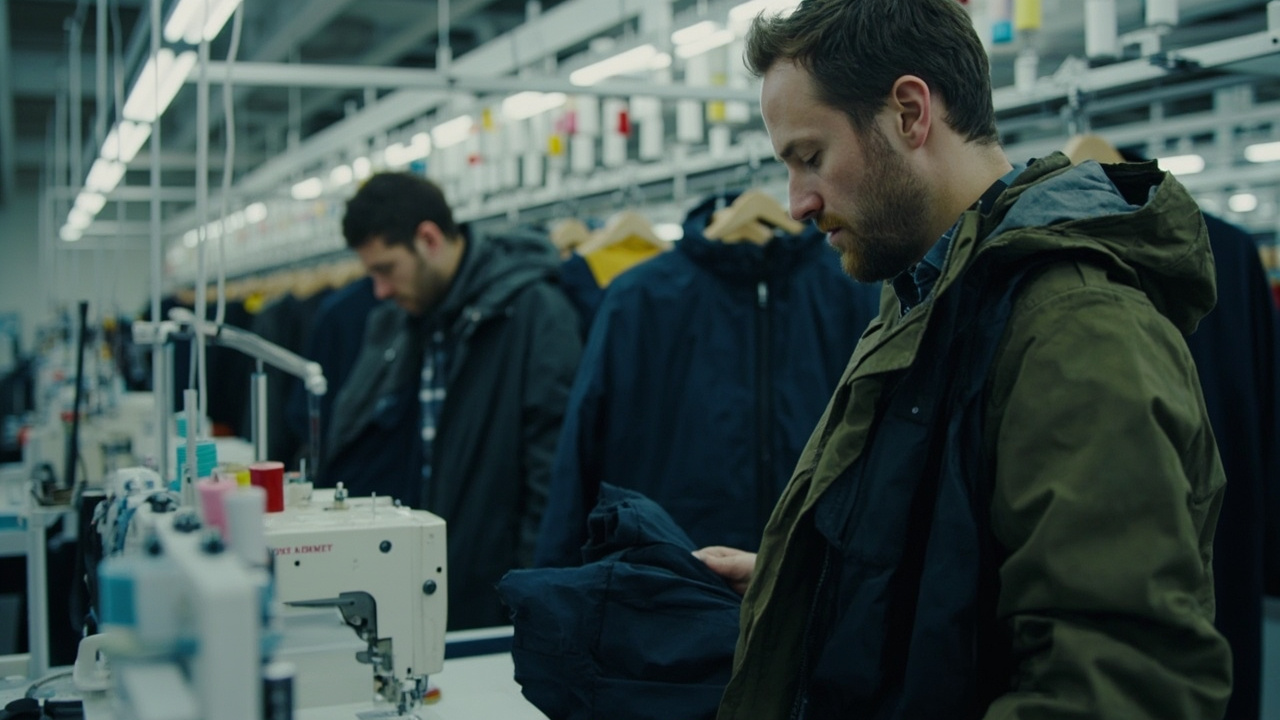
A single winter jacket can run through 25 to 35 sequential operations on the sewing line. The order matters: shell panels are joined first, insulation is set and stitched into chambers, the lining is attached, the zipper is inserted, and the hood, pockets, cuffs, and hem are closed in the final stages. Each operation has its own QC check — seam alignment, stitch density, no missed stitches, no fabric distortion — and most lines run a QC auditor at the end of every 30 to 50 pieces.
9. Insulation Filling
For down jackets, filling is done by weight per size, with grams calibrated to the fill-power target and the design temperature rating. Filling machines weigh each jacket as the down is blown into chambers, and the operator verifies that the chambers are evenly distributed. Synthetic insulation is cut into panels of the correct gram weight and stitched into the lining.
10. Finishing
Finishing covers buttonhole cutting, snap attachment, steam pressing, thread trimming, and loose-end removal. Pressing is the operation that gives a jacket its final shape, especially on the lapels, hem, and sleeve crown. A poorly pressed jacket reads as cheap regardless of how well it was sewn.
11. Final Quality Inspection
Inspection happens twice. A 100 percent inspection is run on every jacket for visual and functional defects — broken stitches, fabric flaws, misaligned pockets, loose snaps, zipper function. A second inspection is run as an AQL audit on a statistical sample drawn from the packed shipment, with measurements checked against the original tech pack tolerances. Anything that fails either round is either repaired on the spot or marked for rework and re-inspected before packing.
12. Packing and Labeling
Approved jackets are folded to spec, polybagged with silica desiccant, and packed into individual boxes or master cartons depending on the buyer’s retail channel. Russian-market cartons require care labels in Russian (or bilingual), country-of-origin labeling that meets EAC rules, and a barcode format compatible with the buyer’s warehouse system. Master cartons are weighed and labeled with the same data plus the gross weight for the freight forwarder.
13. Shipping to Russia
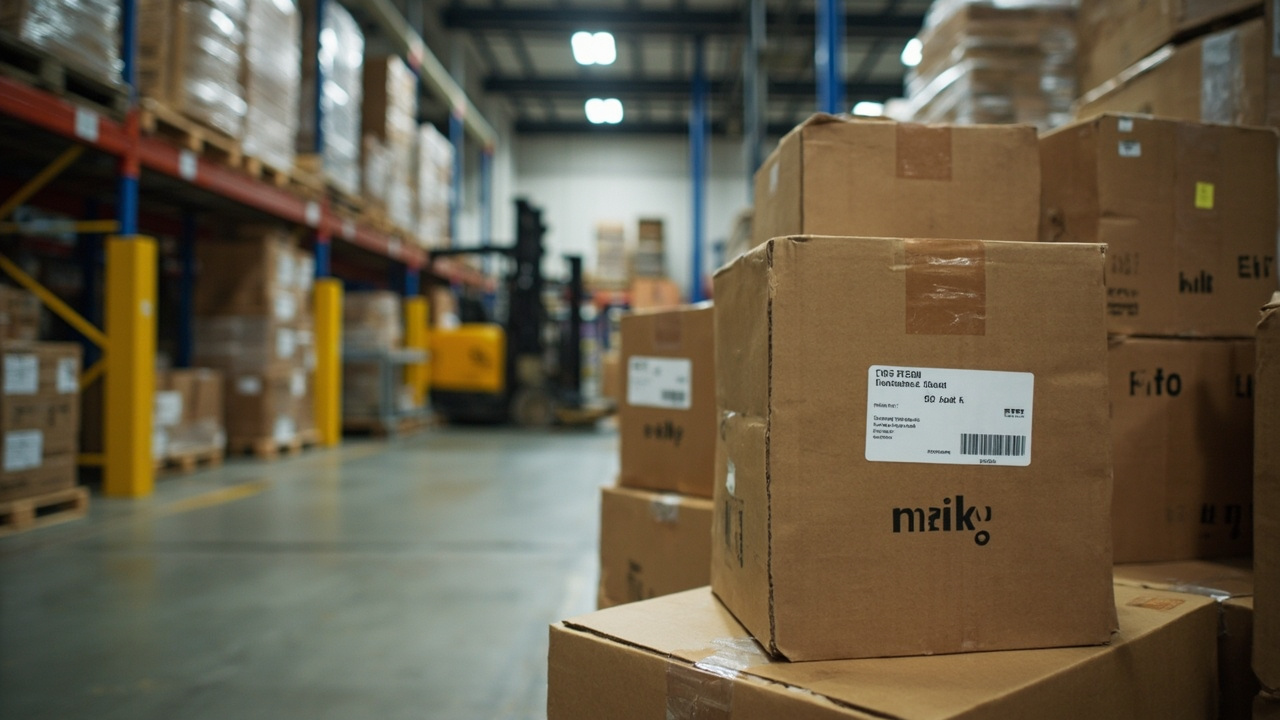
For a full 40-foot HQ container of around 8,000 to 12,000 mid-weight jackets, the standard route is sea freight from Shanghai or Ningbo to Vladivostok (about 7 to 10 days port-to-port) followed by rail or truck transit into central Russia. Total transit time is typically 25 to 35 days from factory gate to Moscow warehouse, with 35 to 45 days for Saint Petersburg. Documentation is the slow point: commercial invoice, packing list, certificate of origin, and the EAC conformity paperwork that Russian customs require before release. Documentation errors is the most common cause of clearance delays.
14. Customer Reception and Repeat Order
For a Russian buyer working on a winter delivery window, on-time arrival in Moscow is the first half of satisfaction. The second half is that the production matches the approved pre-production sample within the agreed tolerance, that the size run holds, and that the cartons open with the right mix. When both halves are met, the same buyer returns for the next season’s program with the same tech pack and a small set of refinements — exactly what happened on the program this article is based on. A repeat order from a Russian winter buyer, after a clean first delivery, is the most reliable signal that a factory has earned a place in their supply chain.
Closing Notes on the Russian Winter Jacket Program
A full production cycle from design brief to Moscow delivery typically runs 75 to 110 days, with about 60 to 75 of those days inside the factory and the remaining 15 to 35 in transit and customs. The bottlenecks are almost always upstream: a late fur-trim shipment, a delayed zipper draw, or a fabric mill that misses a window. Factories that win repeat Russian business are the ones that lock those upstream lines early, run a disciplined sample-and-approval cycle, and treat documentation for EAC clearance as part of the production timeline rather than an afterthought at the end.