Inside Our Swimwear Manufacturing Process: From Fabric to Container Loading
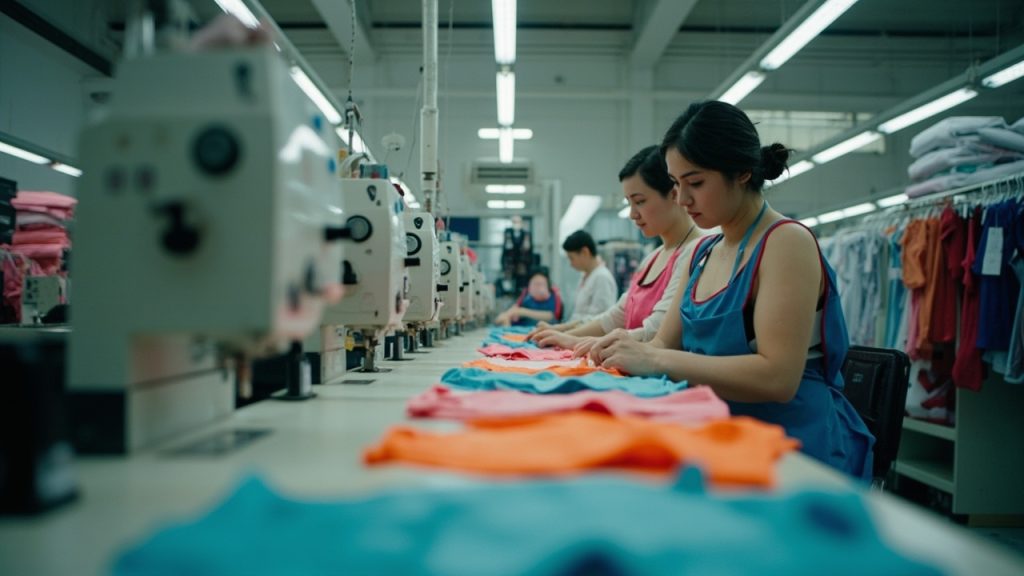
Behind every women’s swimwear order that lands on a retailer’s shelves sits a chain of decisions: which fabric to source, how to grade a pattern across six sizes, when to inline-inspect a seam, and how to load a 40HQ so it arrives at its destination without claim. At Quanzhou Northern Garment Co., Ltd. — a Jinjiang-based apparel manufacturer serving B2B buyers across Europe, North America, Australia and the Middle East for more than 12 years — that chain is broken into eight controlled stages. This article walks through each one, so sourcing teams and private-label brands can see exactly what happens between an approved tech-pack and a container sailing out of Xiamen.
Step 1 — Fabric Sourcing & Lab Testing
Every swimwear build begins with the fabric. We work with a curated list of Chinese mills (and selected Italian/Indonesian suppliers on request) that ship the four families our buyers ask for most:
- 80% Nylon / 20% Spandex — the mainstream choice for one-piece swimsuits and bikini briefs, soft hand-feel, matte finish.
- 82% Polyester / 18% Spandex — preferred for sublimation prints, chlorine-resistant variants available.
- Recycled Nylon (REPREVE® / ECONYL®) — for buyers building a sustainability story into the collection.
- Lining fabrics — power mesh for tummy-control panels, lightweight nylon lining for cupping.
Every fabric lot is logged with a batch code and sent to our in-house lab for the four tests that matter most for swimwear: color fastness to chlorinated water, color fastness to sea water, UV protection (UPF 50+ where required), and AZO-free / REACH compliance. OEKO-TEX Standard 100 certification — currently in its eighth year of annual renewal — covers the full fabric library our production lines draw from, and reports can be attached to every shipment on request.
Step 2 — Pattern Making & Sample Development
Once the buyer’s tech-pack lands, our pattern makers translate it into graded CAD files across the buyer’s size run (typically XS–XXL, or 6 sizes for European wholesale). Two physical fit samples are produced before bulk: a pre-production sample (PPS) shipped by express courier for buyer approval, and an inline fit sample pulled from the first cut batch for in-line verification.
Standard lead time from tech-pack receipt to PPS dispatch is 7–10 working days, including one round of pattern revision at no charge. Buyers working on their first private-label swimwear capsule typically start at 300–500 pieces per style per color to validate the fit before scaling.
Step 3 — Spreading & Cutting
Cut planning starts with a marker that minimizes fabric waste, typically 87–92% material utilization depending on style complexity. Fabric is spread on long cutting tables in layers of 30–80 plies (depending on fabric weight and stretch), then cut using computer-controlled straight knives and band knives for curved panels. Each cut bundle is bar-coded with the style, color, size and lay number so it can be traced back to the exact fabric lot through every downstream station.
Step 4 — Printing, Sublimation & Solid Dye
For printed swimwear (the majority of our orders), heat-transfer sublimation printing is the default. Artwork files from the buyer are color-separated in-house, printed on transfer paper, and pressed onto polyester-blend fabric at 200 °C. For solid colors, we work with reactive-dye mills for color accuracy across production lots. All printed panels are inspected under D65 light booths against the buyer-approved lab-dip before they move to sewing.
Step 5 — Sewing: The Heart of the Garment
Sewing is where most swimwear quality issues are won or lost. Our swimwear lines run four-thread overlock machines for main seams (which deliver stretch plus durability), coverstitch machines for hems, and dedicated elastic-application stations for waistbands, leg openings and under-bust bands. Hardware — metal rings, sliders, hook-and-eye closures, plastic adjusters — is sourced from approved suppliers and applied in a separate sub-line to keep the main assembly flow clean.
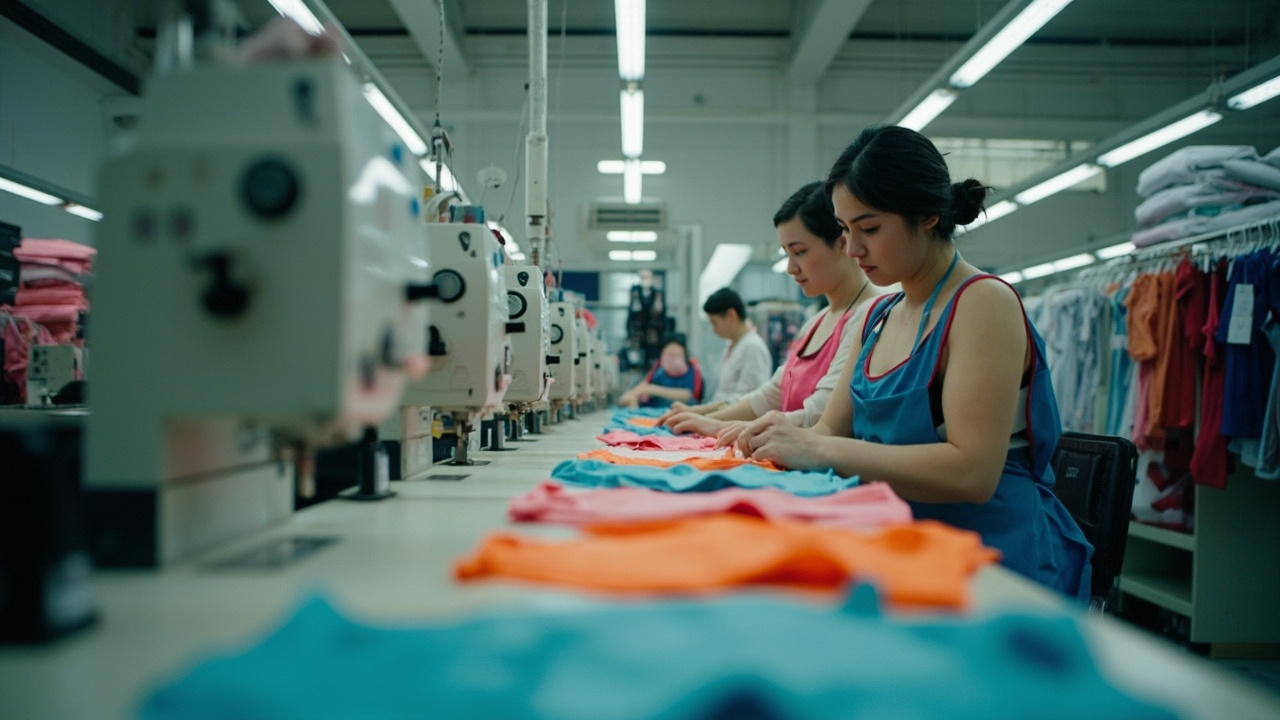
An average bikini set involves 18–22 sewing operations; a one-piece with tummy-control lining can run to 35. Line balancing — assigning the right number of operators to each operation so the bundle flows without bottlenecks — is what keeps our standard swimwear line at a daily output of 1,800–2,400 finished pieces per line without compromising on the four-point inline checks performed at every station.
Step 6 — Inline & Final Quality Control
QC happens in two layers. Inline QC is performed by station-checkers walking the line: seam type and SPI (stitches per inch), elastic stretch recovery, print registration, hardware attachment. Final QC takes place on a dedicated inspection table under D65 lighting, with each piece checked against an AQL 2.5 sampling plan (General Inspection Level II) for defects such as skipped stitches, broken needles (recorded via the needle-control log every shift), fabric flaws, and measurement drift outside the spec sheet tolerance of ±1 cm.
Buyers ordering for the EU market can request metal-needle detection on the final line at no additional charge — a small step that has saved more than one shipment from a costly recall.
Step 7 — Folding, Polybag & Carton Packing
Approved pieces are folded to a standard presentation, individually sealed in OPP polybags (custom-printed polybags and hangtags available on request for orders above 1,000 pieces per style), and packed into export cartons sized for either a 20ft or 40ft HQ container. Standard inner-pack is 6 pieces per polybag inner, 4 inners per carton = 24 pieces per master carton, but we adjust to the buyer’s retail-floor planogram where required.
Step 8 — Container Loading & Shipment
Cartons are palletized, stretch-wrapped, and loaded into containers by our logistics team at the Jinjiang factory gate, with photographic loading reports sent to the buyer at completion. A typical 40HQ holds roughly 28,000–32,000 bikini sets depending on packaging density, and a typical 20ft holds about half that. We ship FOB Xiamen as standard, with EXW factory and CIF/DDP quotes available on request. Lead time from deposit to ex-factory is typically 35–45 days for orders in the 2,000–10,000 piece range.
What This Means for Buyers Sourcing From Us
If you are a private-label brand, a buying office, or a wholesaler evaluating swimwear suppliers, the workflow above is what you can expect on every order — from the first sample courier to the last carton loaded at our gate. We support OEM (build to buyer’s tech-pack) and ODM (develop from your brief into tech-pack and samples) for women’s, men’s and children’s swimwear, with an MOQ starting at 300 pieces per style per color for development runs and tiered pricing down to FOB prices that compete with larger Vietnamese and Indonesian mills on mid-volume orders.
Send your tech-pack, reference images, or a quick brief to our sourcing team for a same-week response with a sample plan and indicative pricing.
Quanzhou Northern Garment Co., Ltd. — OEM/ODM swimwear, outerwear and activewear manufacturer based in Jinjiang, Fujian, China. Annual capacity 2,000,000+ garments. OEKO-TEX Standard 100 (year 8). Serving buyers in 20+ countries since 2013.