New Polyester LCA Adds Southeast Asia Data for Apparel Material Decisions
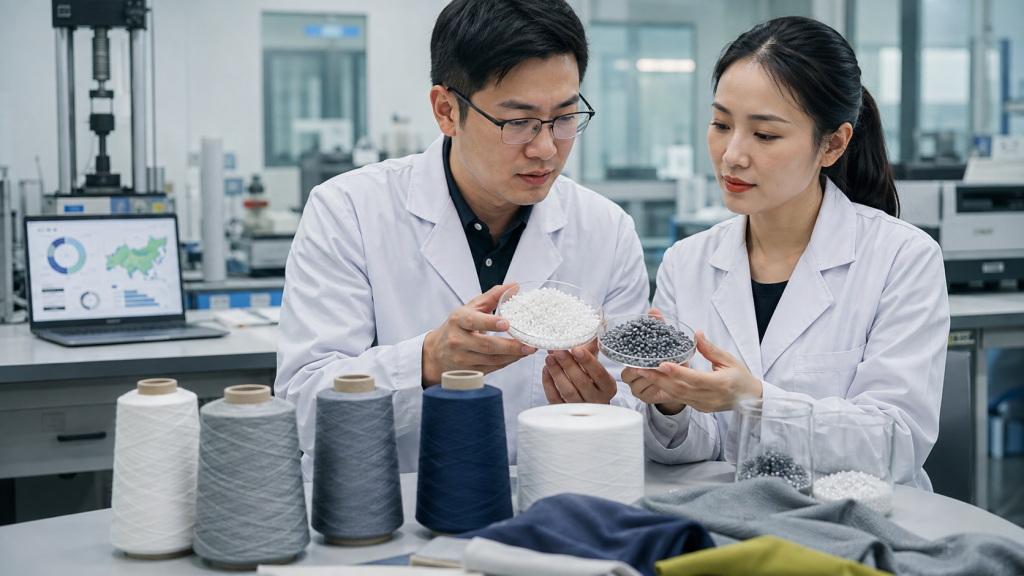
Textile Exchange has published a new life-cycle assessment study designed to close important data gaps around virgin and recycled polyester. The study includes what the organization describes as the first publicly available environmental-impact data for virgin PET production in Southeast Asia, a major global production region.
The research also examines hotspots in thermomechanical and chemical recycling routes and applies Textile Exchange’s LCA+ approach, which adds a human-rights assessment to conventional environmental analysis. For apparel sourcing teams, the main lesson is that the word “polyester” does not describe one uniform impact profile.
Regional data makes sourcing context more visible
Life-cycle results depend on where raw materials and energy come from, which processes are included and how efficiently facilities operate. Regional primary data can therefore give buyers a more relevant basis for discussing polyester sourced in Asia than a generic global average.
That does not mean teams should copy one study value directly into every product footprint. Textile Exchange cautions against simplistic comparisons across studies, datasets and regions. Different boundaries, allocation methods, feedstocks and energy assumptions can produce results that look comparable while measuring different things.
Recycling route matters
Thermomechanical recycling usually melts and reprocesses suitable polyester feedstock. Chemical routes break material down through different processes before rebuilding polymer inputs. Each route can have different requirements for feedstock quality, energy, yield and contamination control.
Apparel buyers should avoid treating all recycled polyester as operationally identical. A useful supplier discussion should cover:
- the feedstock source and whether it is textile waste, bottles or another stream;
- the recycling technology and production location;
- the energy mix and major processing steps;
- yield, waste and treatment of co-products;
- chain-of-custody evidence and applicable certification;
- fiber performance requirements, including strength, color and chemical limits.
How to use the findings in product development
Teams can use the study to improve questions and scenario analysis before finalizing a material specification. Begin with the product’s performance needs, identify feasible virgin and recycled routes, then compare supplier-specific evidence using consistent boundaries. If the data is incomplete, record the uncertainty rather than turning a broad average into a precise marketing claim.
Manufacturers can support this work by linking yarn and fabric lots to mill information, test reports, certificates and production records. This creates a stronger evidence trail when a brand needs to verify recycled content or update a product footprint.
The study also reinforces a broader point: environmental indicators should be considered alongside human rights, quality, durability and commercial feasibility. A single carbon number cannot capture every sourcing risk. Better decisions come from transparent assumptions, comparable data and clear documentation from polymer production through finished fabric.
Source: Textile Exchange — New LCA study clarifies environmental impact of polyester.