AAFA Heat Stress Toolkit Turns Extreme Heat into an Apparel Sourcing Issue
The American Apparel & Footwear Association launched an open Heat Stress Toolkit on September 16, 2026 to support industry efforts to protect workers from extreme temperatures. Heat risk belongs in sourcing and production planning because unsafe conditions can harm workers, reduce productivity and destabilize delivery.
Apparel factories can face heat from outdoor weather, crowded production areas, steam, ironing, drying and limited airflow. Risk varies by temperature, humidity, workload, clothing, acclimatization and worker health, so a single temperature limit cannot replace a site assessment.
Prevention starts before a heat event
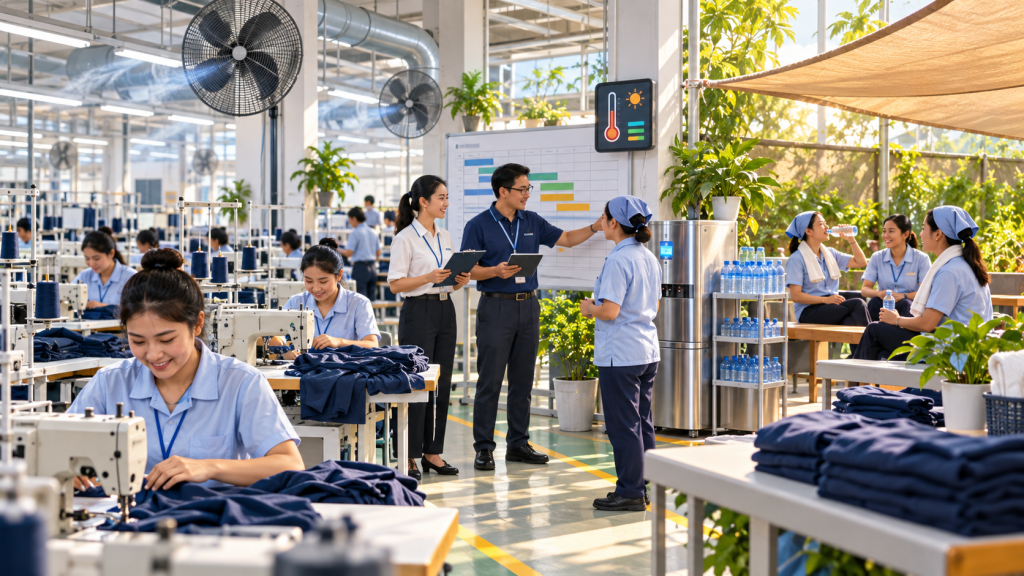
Facilities should identify hot zones, monitor conditions, maintain ventilation and prepare shaded or cooled rest areas. Drinking water must be accessible, and supervisors and workers need training on symptoms and response.
New and returning workers may require gradual acclimatization. Production plans should allow work-rest schedules to change when conditions worsen without pressuring teams to hide symptoms.
Buyers influence factory heat risk
- Set achievable lead times and avoid late changes that create excessive overtime.
- Include heat controls in health-and-safety reviews.
- Ask how temperature and humidity are monitored by work area.
- Review access to water, rest, ventilation and first aid.
- Check whether workers can report symptoms without penalty.
- Plan contingency capacity instead of demanding unsafe recovery schedules.
Factories need clear action levels
A written plan should assign responsibility, define monitoring frequency and describe actions as risk rises. Controls can include fans or local exhaust, schedule changes, additional breaks, job rotation and stopping work when conditions cannot be controlled.
Training should help people recognize heavy sweating, weakness, dizziness, headache, nausea, confusion and loss of consciousness. Emergency procedures should prioritize immediate cooling and medical assistance according to professional guidance.
Measure effectiveness, not paperwork
Factories can track heat readings, symptoms, first-aid cases, absenteeism and production disruptions. Worker feedback helps confirm whether water and rest are actually accessible. Trends by department may reveal equipment or ventilation problems.
Brands should avoid treating the toolkit as a certificate. The value comes from using its guidance in local risk assessment, investment and daily supervision. Legal requirements and occupational-health advice in each country still apply.
Safe planning supports reliable delivery
Heat controls may require schedule flexibility, but prevention reduces severe incidents and unplanned shutdowns. Buyers and suppliers should discuss seasonal risks during order placement and agree on realistic capacity under hot conditions.
Worker protection and supply reliability reinforce each other. A sourcing program that builds heat risk into calendars, audits and factory improvement is better prepared for rising temperatures.
Source: American Apparel & Footwear Association — Heat Stress Toolkit announcement.