3D Digital Sampling Adoption: How to Evaluate OEM Vendors Before Committing
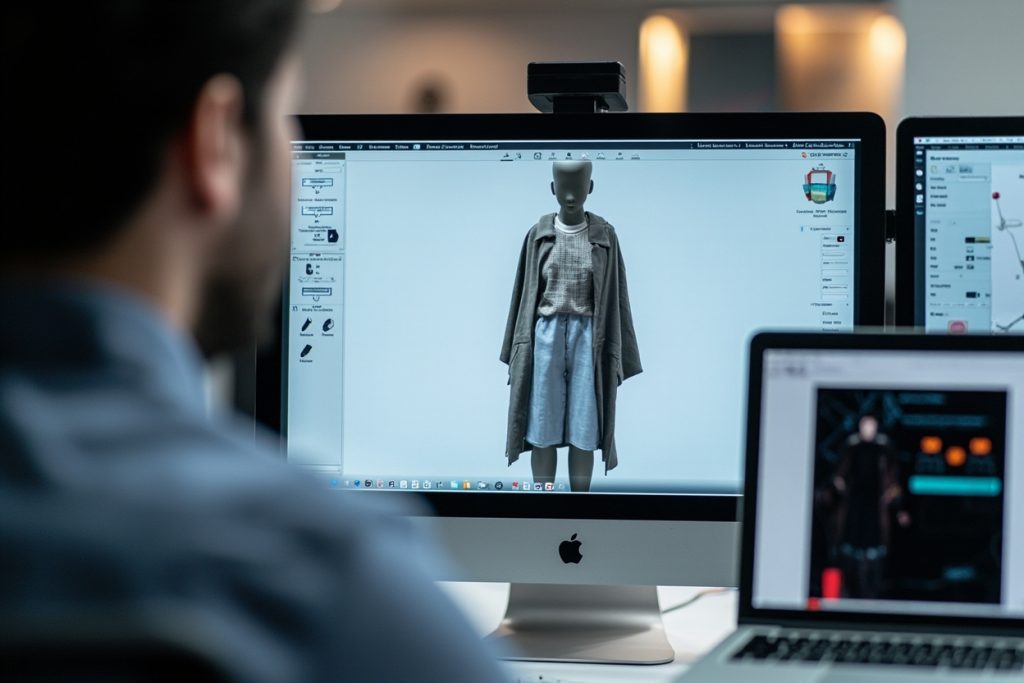
JINJIANG, China — 3D digital sampling — the use of 3D garment design software to create virtual samples before producing physical prototypes — has moved from a niche capability to a mainstream expectation in mid-market apparel sourcing over the past three years. For 2026, the question is no longer whether to adopt 3D sampling but how to evaluate OEM vendors on their 3D capability and how to integrate 3D samples into existing development workflows.
The current state of 3D sampling in apparel is fragmented. Some vendors use 3D for early concept visualization only. Others use it for fit approval on complex garments. A smaller subset uses 3D for full development including pattern validation, marker planning, and bulk-production fit verification. The cost and time savings — and the level of buyer expectation — vary significantly across these use cases.
What 3D Sampling Actually Does
For a typical mid-market woven shirt or knit top, 3D sampling can replace the first physical sample (the proto sample) with a virtual sample rendered from the factory’s pattern files. The virtual sample can be reviewed for silhouette, proportion, and rough fabric behavior; physical samples are still required for final fit approval and material hand-feel evaluation.
For more complex garments — outerwear, technical knits, multi-component constructions — 3D sampling can also be used for construction validation, component layout, and material yield analysis. The benefit increases with garment complexity, but the implementation cost and skill requirement also increase.
Time and Cost Savings
For a vendor running 3D sampling effectively, the typical time savings on first-round sample development is 7–10 calendar days per style. The cost savings are typically 30–50 percent on first-round sample production, primarily because the number of physical proto samples is reduced from 2–3 per style to 1 per style.
For a mid-market brand running 50–100 styles per season, the aggregated savings are substantial — both in direct sample cost and in compressed development timelines that allow later fabric commitments and faster replenishment cycles.
How to Evaluate OEM Vendors on 3D Capability
For a sourcing team evaluating 3D capability at potential OEM partners, the practical evaluation framework includes:
- Software platform. Which 3D software is the vendor using? Leading platforms include CLO3D, Browzwear, Optitex, and Style3D. Ask about licensing, version, and number of licensed users.
- Pattern digitization workflow. Can the vendor digitize a 2D pattern from PDF or DXF into the 3D platform accurately? What is the typical pattern digitization time per style?
- Fabric library. How many fabric references are pre-loaded in the vendor’s 3D library? Are physical fabric swatches linked to digital fabric definitions for accurate drape simulation?
- Sample turnaround. Can the vendor deliver a 3D garment render within 3–5 working days of receiving a 2D pattern and fabric specification?
- Integration with bulk production. Does the vendor use the 3D pattern for marker planning? Can the 3D pattern be exported as a production-ready 2D marker?
Practical 2026 Implementation
For sourcing teams rolling out 3D sampling across their vendor base:
- Pilot with 2–3 vendors on a contained program. Select 5–10 styles for 3D sampling as a pilot, with both 3D and physical samples produced in parallel.
- Standardize the 3D deliverable. Specify what the vendor delivers for each 3D sample: rendered images, fit notes, fabric behavior annotations, and pattern validation.
- Build a 3D fabric library with your fabric mills. The most expensive part of 3D setup is the fabric library. Coordinate with your fabric mills to obtain digital fabric definitions for your top 20–30 fabric references.
- Train your internal team on 3D review. Internal fit and design teams need to be able to evaluate 3D samples confidently. Plan for 2–3 months of training before making 3D the primary sample format.
- Use 3D for fit approval on simple programs. 3D is most useful for relatively simple garment constructions where fit verification is the primary objective. For complex outerwear and technical knits, physical samples remain essential.
The Bottom Line
3D digital sampling is now a baseline expectation in mid-market apparel sourcing. The vendors that have invested in 3D capability, fabric libraries, and internal training are delivering 7–10 day time savings on first-round samples and 30–50 percent cost savings on sample production. For sourcing teams that have not yet integrated 3D sampling into their development workflow, 2026 is the year to begin.