Intertextile Shanghai Signals Buyer Demand for Performance, Sustainable and Digital Fabrics
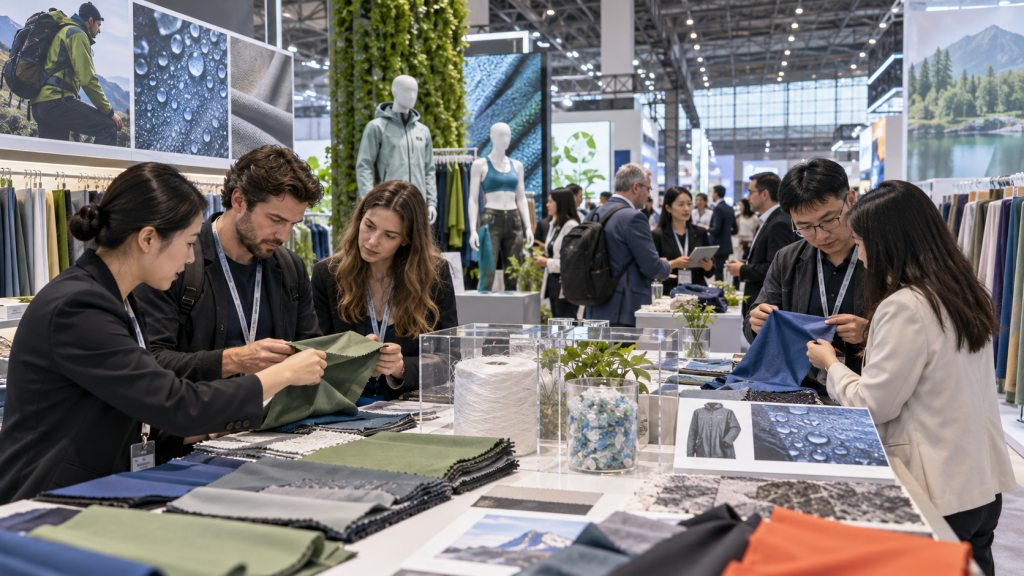
Intertextile Shanghai Apparel Fabrics — Autumn Edition brought the global textile supply chain to Shanghai from August 25–27, 2026. Ahead of the event, organizer Messe Frankfurt said the show would span 240,000 square meters and feature more than 3,500 exhibitors from 30 countries and regions.
The scale is notable, but the event’s structure gives apparel buyers a clearer sourcing signal. Its program concentrated on four pillars: Fashion Forward, Sustainability, Performance Textiles and Textile Future. Together, they show that material selection is moving beyond appearance and price toward a combined assessment of function, evidence and production capability.
Performance requirements are becoming more specific
Functional materials were positioned for sportswear, outdoor and lifestyle applications. For buyers, this means specifications should identify the performance required by the finished garment rather than requesting a generic “technical fabric.”
An outerwear brief may need measurable targets for hydrostatic pressure, moisture-vapor transmission, air permeability, abrasion resistance and seam performance. A swimwear or activewear program may prioritize stretch recovery, chlorine or perspiration resistance, colorfastness and dimensional stability. Test methods, conditioning and pass criteria should be agreed before sampling so results from competing mills can be compared.
Sustainability evidence must travel with the sample
The show’s sustainability focus included natural, bio-based and recycled textile solutions, alongside international standards and certification. These categories create useful options, but a sample label alone is not enough for a sourcing decision.
Buyers should request the fiber composition, material origin, certification scope, transaction-document pathway, chemical-management information and mill-level processing details relevant to the claim. For recycled or bio-based inputs, the team should also clarify feedstock, percentage, chain-of-custody model and any effect on performance or minimum order quantity.
Digital capability is becoming part of supplier evaluation
Intertextile’s Textile Future pillar highlighted smart textiles, AI-supported design and digital manufacturing tools. The commercial question is whether those tools make development faster and more reliable.
A useful digital workflow should connect searchable fabric data, current availability, lab results, color standards, digital sampling and approved specifications. Buyers can test a supplier’s capability by asking how a digital sample is converted into a physical standard, how revisions are controlled and how material data is transferred into the final bill of materials.
A stronger fabric-sourcing scorecard
When comparing mills or materials after a large trade fair, procurement teams can score each option across five areas:
- fitness for the garment’s end use and test requirements;
- traceability and support for environmental or social claims;
- repeatability across lab dips, sampling and bulk production;
- lead time, minimum order quantity, capacity and commercial terms;
- quality of digital data and speed of technical communication.
This approach helps prevent visually attractive samples from advancing without the evidence or production controls needed for bulk orders. It also gives capable OEM and ODM manufacturers a stronger role: they can translate the buyer’s product goal into measurable fabric requirements, coordinate testing and identify construction risks before approval.