Textile Recycling in H1 2026: Scaling Capacity Still Depends on Better Feedstock
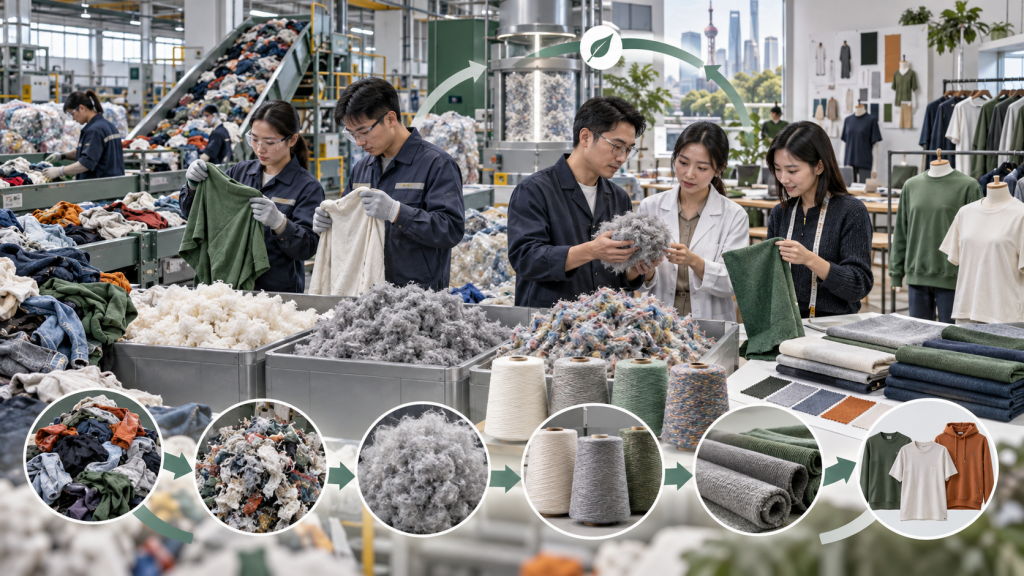
Fashion for Good published The State of Textile Recycling H1/2026 on September 10, presenting an industry view of major developments during the first half of the year. The update arrives as textile-to-textile recyclers move from technical demonstrations toward commercial operation, while feedstock, quality and economics remain central constraints.
For apparel buyers and manufacturers, recycling capacity alone does not create a circular product. Used garments must be collected, sorted and prepared to a specification the recycler can process, and the recovered material must then meet spinning, fabric and finished-garment requirements.
Feedstock quality controls recycling yield
Post-consumer clothing varies by fiber blend, color, finish, contamination and construction. Elastane, coatings, prints, labels and hard trims can reduce recovery or require additional preparation. Buyers should confirm a recycler’s accepted composition and contamination limits before describing a product as recyclable.
Sorting technology can improve identification, but accurate product labels and traceability make the task easier. Digital product data may support future sorting, while physical testing remains necessary when labels are missing or unreliable.
Design decisions determine the available route
A circular design review should take place before bulk approval. Teams need to assess whether mixed fibers are necessary, whether trims can be removed, and whether color and finish choices fit the intended recycling process.
- Composition: keep blends within the recycler’s operating window.
- Elastane: use only the amount needed for product performance and document it accurately.
- Trims: select fasteners and decorations that can be separated efficiently where feasible.
- Finishes: disclose coatings and chemistry that may affect recycling or recovered-fiber safety.
- Durability: protect the first life of the garment; premature failure does not improve circularity.
- Evidence: validate recycled content, quality and chain of custody before making claims.
Factories can make pre-consumer waste more useful
Cutting scraps and rejected fabric are more predictable than mixed post-consumer waste. Garment factories can segregate waste by fiber, color and contamination level, record weights and avoid mixing it with packaging or general waste. This creates a cleaner input and provides operational experience for later closed-loop programs.
A buyer should agree who owns the waste, which recycler receives it and how reported quantities are verified. Claims should distinguish waste diverted from disposal from fiber actually converted into new textile material.
Commercial demand must match technical supply
Recyclers need stable offtake to invest and operate efficiently. Brands can support scale with realistic multi-season volume forecasts, agreed quality ranges and product platforms that use recovered fiber consistently. At the same time, sourcing teams should test strength, pilling, color, hand feel and process stability before committing large volumes.
OEM and ODM partners can run controlled yarn, fabric and garment trials, document production losses and compare recycled inputs against the correct performance benchmark. A pilot should end with a decision on specification, acceptable variability, capacity and cost rather than only a demonstration sample.
The 2026 market is moving, but the operational lesson remains clear: collection, sorting, design, recycling and demand must be connected. Apparel companies that define feedstock and product requirements together will be better positioned to use new capacity credibly.
Source: Fashion for Good — The State of Textile Recycling H1/2026.